10:46 am
March 10, 2022
The 2022 supplemental operating budget, as proposed by the conference committee yesterday, would increase 2021–23 appropriations from funds subject to the outlook (NGFO) by $5.071 billion. That figure is net of changes to the maintenance level (the cost of continuing current services, adjusted by enrollment and inflation) and new policy. Maintenance level changes would reduce appropriations by $1.131 billion ($25.0 million less than in the House- and Senate-passed versions). Policy level changes would increase appropriations by $6.202 billion ($478.9 million more than the Senate-passed version and $1.195 billion less than the House-passed version).
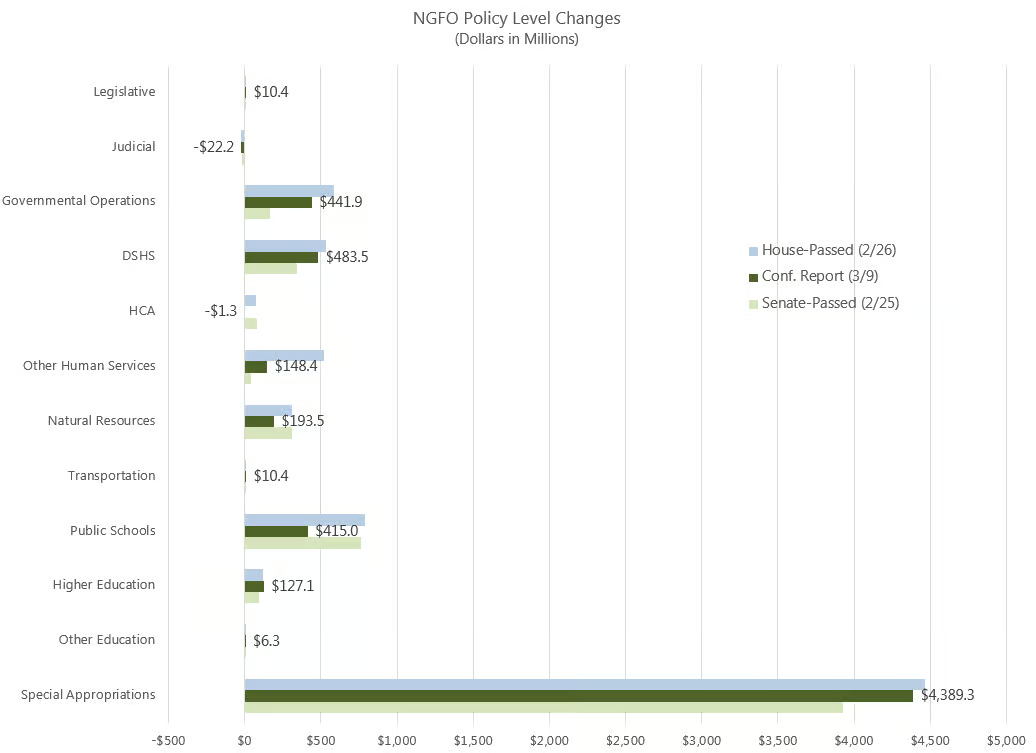
The chart below compares the NGFO policy changes by budget area. (Note that policy level NGFO appropriations for K–12 are lower in the conference committee version than in the House- or Senate-passed versions because funding for K–12 enrollment stabilization will be funded with federal relief instead of the NGFO.)
Some major NGFO spending items include:
- $2.0 billion for the multimodal account (for the transportation budget)
- $650.0 million for the new capital community assistance account (for the capital budget)
- $350.0 million for the family and medical leave insurance account (only to the extent needed to keep the account out of deficit)
- $217.0 million for the liability account (to ensure the account is not in deficit)
- $200.0 million for the community reinvestment account
- $150.0 million for the Washington student loan account
- $120.0 million for a new electric vehicle incentive account
- $100.0 million for the salmon recovery account
- $236.3 million for K–12 inflation rebasing (5.5% in SY 2022–23)
- $90.6 million for K–12 student support staffing
- $202.4 million for DSHS targeted provider rates
Tags: 2022supp