1:14 pm
August 8, 2022
On July 19, the Office of Superintendent of Public Instruction (OSPI) proposed decoupling state timber revenues from the school construction assistance program (SCAP). According to OSPI, this would be a more equitable way to fund school construction.
Details are scant at this point, but it would involve a shift of roughly $30 million a year from a program that funds school construction projects anywhere in the state to a new program that would keep the timber dollars in the counties where they are generated. However, the money would be split between school capital projects and general forest management.
Current Sources of School Construction Funding
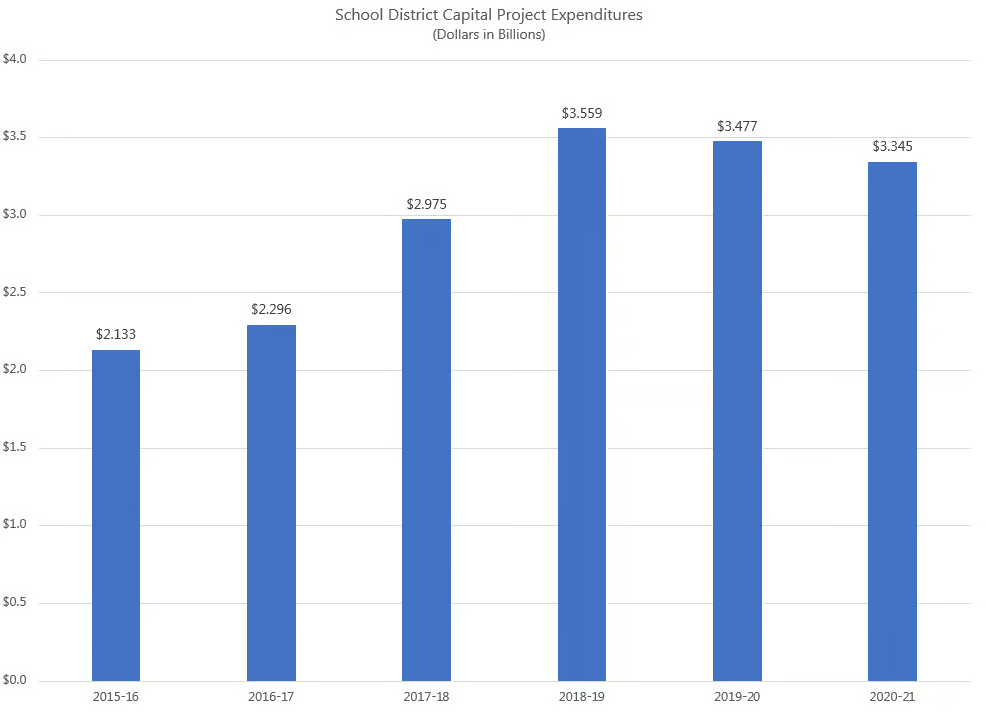
School districts construct and remodel buildings (and make other capital expenditures) using their capital projects funds. According to OSPI, statewide capital expenditures were $3.345 billion in school year 2020–21. Local sources (including bonds) fund most of those expenditures. State funds accounted for $620.9 million of revenues for capital projects in SY 2020–21.
A major source of state funding is the school construction assistance program (SCAP). Under SCAP, the state provides matching funds to help districts build new schools or modernize existing schools. Districts must have local funds for the project (which often means an approved bond) and the state match varies by district (districts with lower assessed property values get a higher state match).
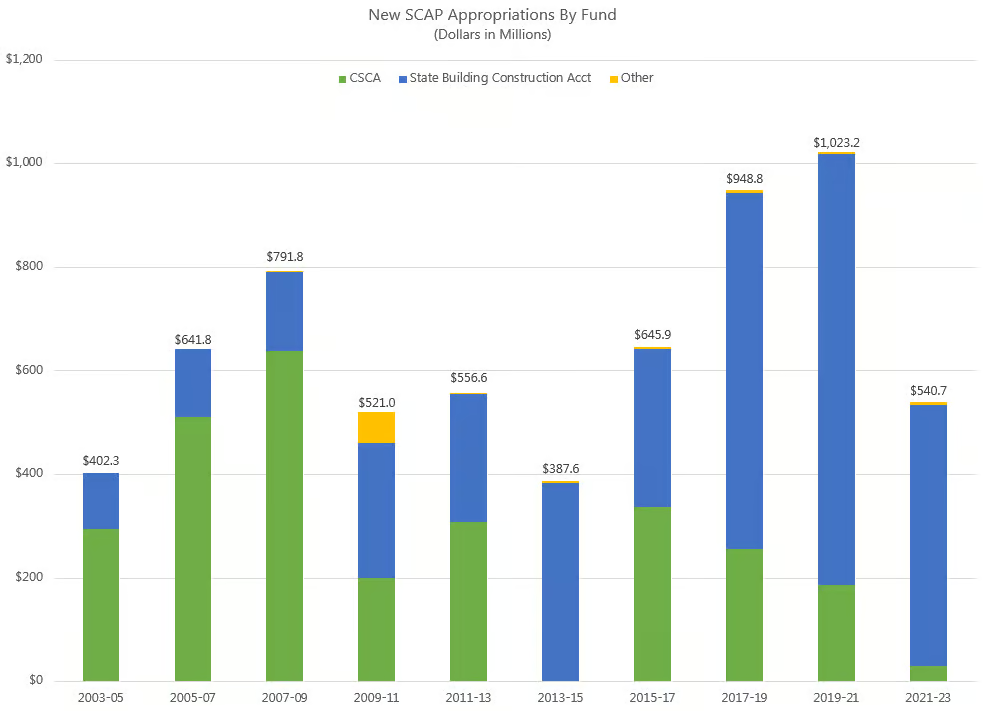
The main SCAP funding sources from the state are the state building construction account (bonds) and the common school construction account (CSCA). As the chart below shows, the state building construction account has been the main source of funding for SCAP in recent biennia.
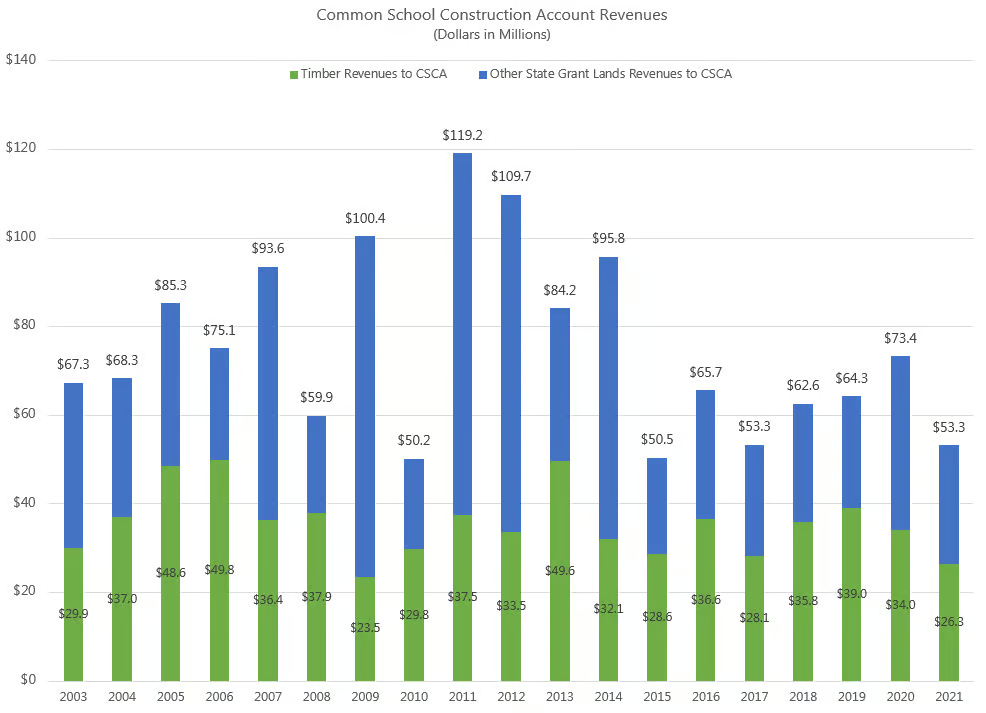
The CSCA was established by Article IX, section 3 of the state constitution. Revenues to the CSCA include the “proceeds derived from the sale or appropriation of timber and other crops from school and state lands.” According to the Department of Natural Resources (DNR), timber sale revenues deposited in the CSCA totaled $26.3 million in 2021. Total revenues from state grant lands deposited in the CSCA were $53.3 million (including, e.g., timber sales and agriculture and commercial leases).
Additionally, if the state Supreme Court upholds the capital gains tax, any capital gains revenues over $500 million a year will be deposited in the CSCA. In the June 2022 revenue forecast, the Economic and Revenue Forecast Council estimates that revenues to the CSCA will be $217.0 million in FY 2023, $257.0 million in FY 2024, and $312.0 million in FY 2027.
Earlier this year, Wahkiakum School District sued the state for not amply funding school facilities. The suit argues that because school construction is based on local approval of bonds, it is unconstitutionally “dependent upon the whim of the district’s voters.” In districts with lower property values, a higher property tax rate is required to fund the same amount of capital spending, which may make bonds less likely to pass.
Pursuant to the state constitution, bond issues must be approved by 60% of voters. They are passed at a lower rate than regular enrichment levies. (For example, in 2020, 289 districts asked voters to approve enrichment levies and they all passed. Twenty-three districts asked voters to approve bond issues and just eight passed.)
Less than half of Washington’s school districts have been able to access the funds from timber harvesting, in part because school bonds, which allow a local community to support the construction of their schools, require 60% voter approval to pass. Districts that have been able to pass bonds and access the funding from timber revenue are located primarily in densely populated areas that are largely removed from trust land activities, such as King, Pierce, and Spokane counties.
For example, OSPI data shows that over the 2012–2021 period, Wahkiakum County generated $5.5 million in common school trust revenue (e.g., timber sales or leases) but no CSCA or state building construction account expenditures occurred in the county.
Although OSPI presents its new proposal with an urban v. rural framing, many districts in rural counties have received SCAP funding. For SCAP projects over the 2015–2022 period, rural counties (as defined here) received 25.1% of the SCAP funding from state sources and accounted for 24.4% of statewide school enrollment (in SY 2020–21).
OSPI Proposal
Under the proposal, “a portion of revenues from timber harvested in the rural communities — which currently are primarily provided to school districts in urban communities — would be retained within the communities that generate the dollars.” Instead of being deposited in the CSCA, the timber revenues would be used to fund:
- The small school district modernization program;
- Efforts to ensure clean water in rural schools;
- Energy efficiency grants in rural schools;
- Career and technical education equipment grants;
- Forest health management;
- Silviculture expansion; and
- Planning, development, and implementation of trust revenue diversification.
Unlike with SCAP, districts would not have to come up with local matching funds to access these dollars. OSPI also proposes that the Legislature backfill the lost timber revenue in the SCAP so that there is no reduction in SCAP funding.
The proposal will be officially made as part of OSPI’s next capital budget request. Some points that will need to be fleshed out:
- Would the revenues be distributed proportionately to the counties that generate them?
- How much of the revenues would go to schools and how much to the forest management items?
Ultimately, while making this change could provide meaningful capital funds for some districts, it’s not clear it would make a substantial difference to statewide school construction policy. Timber revenues are already a small portion of overall state funding for school construction. Moreover, if timber is decoupled from SCAP but the Legislature doesn’t increase funding to SCAP to make up for it, then the proposal could result in less capital funding for schools, since some portion of the money would go to forest management.
Court Decision
Meanwhile, a few days after OSPI’s proposal was announced, the state Supreme Court held that the 1889 federal law that granted land to the state of Washington for schools and other state institutions does not require “DNR to generate revenue specifically from timber harvests on state lands.” But “DNR may elect to do so.”
If DNR changes its policy in the future in a way that reduces timber sales, there would be less revenue to set aside for schools in the counties that currently generate timber revenues.
Categories: Budget , Categories , Education , Energy & Natural Resources.