12:02 pm
July 1, 2024
Today is the first day of fiscal year 2025 and the beginning of the second year of the 2023–25 biennium.
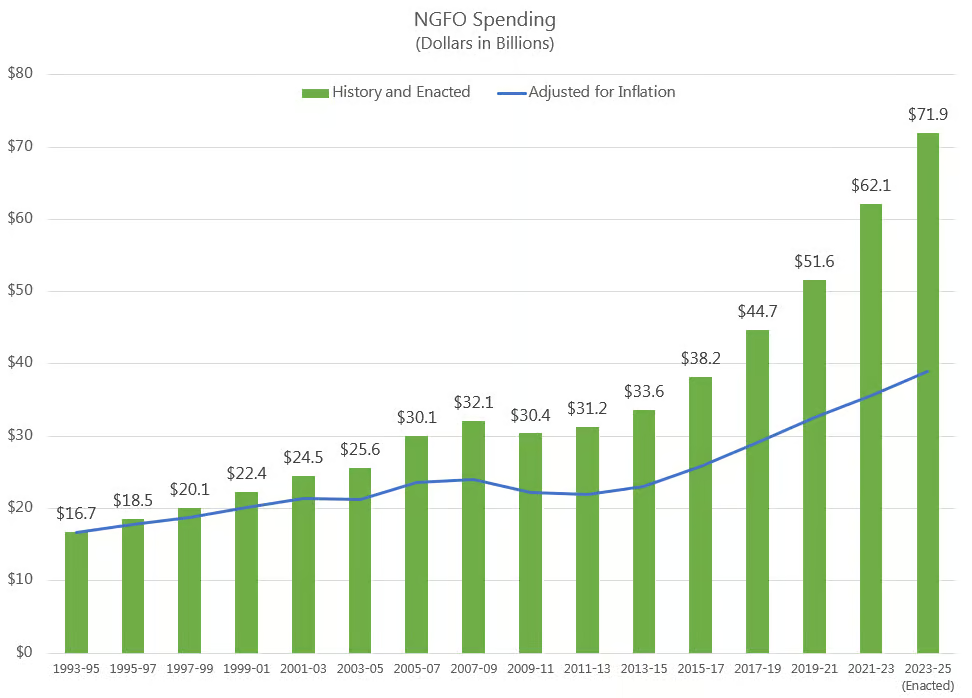
The 2024 supplemental operating budget increased appropriations from funds subject to the outlook (NGFO) by $2.141 billion. Revised NGFO appropriations for 2023–25 total $71.945 billion, which is 15.8% higher than actual 2021–23 spending. (These figures incorporate the governor’s vetoes.)
(For more on the 2024 supplemental, see our policy brief.)
Writing a balanced 2025–27 budget in the next legislative session may be challenging, thanks to a lower revenue forecast and spending decisions the Legislature made previously.
First, the June revenue forecast is lower than the February forecast (by $476.7 million in 2023–25 and $189.0 million in 2025–27). This isn’t an immediate problem, as the enacted budget left a high unrestricted NGFO ending balance for 2023–25. The lower forecast does put the budget out of balance over four years, but the difference could be covered by reserves in the budget stabilization account (BSA, or the rainy day fund). Also, there are three more revenue forecasts before the Legislature writes the 2025–27 budget. The revenue picture could change considerably by then.
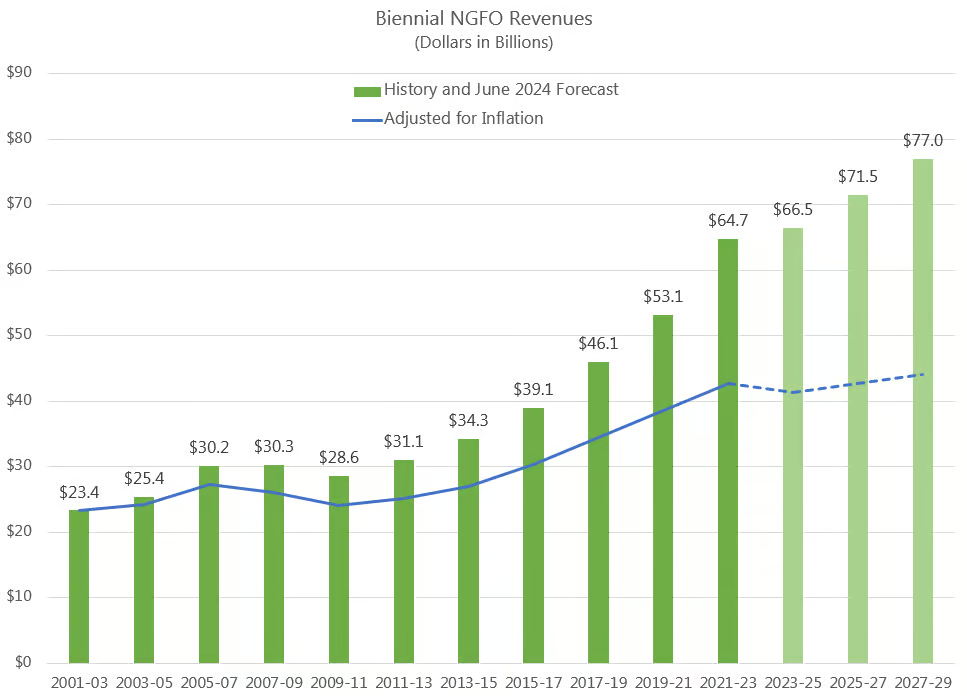
Second, the 2024 supplemental budget balanced over four years because the Legislature assumed 4.5% annual revenue growth in the second biennium (as allowed by the outlook statute). Effectively, the Legislature was able to appropriate more for 2023–25 because the cost of continuing those programs in 2025–27 balanced within an artificially inflated revenue amount. That inflated amount is not realized in the June 2024 forecast for 2025–27. The Feb. 2024 revenue forecast for 2025–27 plus 4.5% annual growth is $1.310 billion higher than the June revenue forecast for 2025–27. Maintaining current programs in 2025–27 would be easier if the Legislature hadn’t assumed the inflated amount.
Third, there will be spending pressures for 2025–27. For example, some Fair Start for Kids Act programs will kick in (the bill was enacted in 2021 but some of the spending increases were phased in over time). Additionally, the state is currently negotiating collective bargaining agreements with state employees—those costs are not included in the outlook. Last month, the director of the Office of Financial Management sent 2025–27 budget instructions to state agencies. He wrote,
Categories: Budget , Economy.. . . the 2025-27 biennium will face a greater number of people needing services, thereby increasing the costs for these programs.
This year’s revenue forecasts will likely support the maintenance of current programs, but not growth. Therefore, operating budget requests should focus on continuing these programs and only addressing caseload increases while not expanding existing programs and services. Agencies should also consider potentially pausing the phase-in of new programs, and the creation of additional programs should be limited to only the highest priorities.