8:20 am
July 1, 2022
Today is the first day of state fiscal year 2023, which is the second year of the 2021–23 biennium.
Earlier this calendar year, the Legislature enacted a historically large 2022 supplemental operating budget. With the supplemental, appropriations from funds subject to the outlook (NGFO) are 24.3% higher in 2021–23 than in 2019–21. Legislators had a substantial four-year budget surplus to work with, and they used most of it for new spending:
- 47.4% for new ongoing spending,
- 32.9% for new one-time spending,
- 14.3% for reserves,
- 4.2% to reduce revenues, and
- 1.2% in transfers to other accounts.
The maintenance level (the cost of continuing current services, adjusted for enrollment and inflation) decreased significantly in 2021–23, which contributed to the surplus and helped to offset the spending on new policy. However, if the trends in the June 2022 caseload forecast hold up, the Legislature will face increased maintenance level costs when writing the 2023–25 budget.
Inflation will be a factor too, for both spending and revenue. As Kriss wrote about the June 2022 revenue forecast (which increased compared to the Feb. 2022 forecast), “What initially appears to be a $2,264 million cumulative gain over the three biennia becomes a $1,227 million cumulative loss when inflation is factored in.”
Although the revenue forecast anticipates slower future growth, revenues are still expected to be significantly higher going forward than in 2019–21, both in nominal and inflation-adjusted terms.
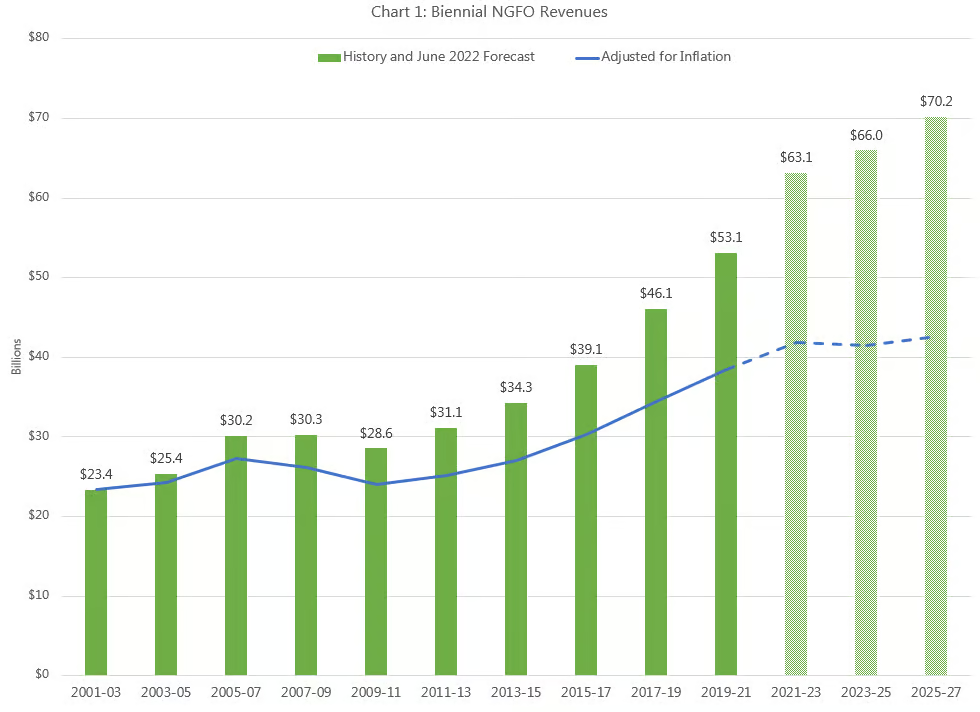
Chart 1 shows the history of biennial NGFO revenues. Although real (adjusted for inflation) 2023–25 revenues are estimated to drop by 0.8% from 2021–23, real 2023–25 revenues are estimated to be 7.9% higher than 2019–21. Real revenues are expected to grow in 2025–27.
Chart 2 shows fiscal year NGFO revenues. Although real revenues are currently estimated to decrease by 4.2% in 2023, they are expected to grow going forward. FY 2023 real revenues are estimated to be 15.4% higher than FY 2019.