
3:39 pm
March 20, 2025
Senate Democrats released a video earlier this week to discuss some of the reasons Washington is facing a budget shortfall. It is not accurate.
First, Ways & Means Committee Vice Chair for Finance Frame says, “Our state relies on sales taxes, which fluctuate with consumer spending, making revenue unpredictable.” This characterization of sales tax revenues is incorrect. According to Pew, sales taxes are considerably less volatile than income or severance taxes. Pew finds that Washington’s tax revenue volatility was the nation’s lowest for the five years ending in 2022.
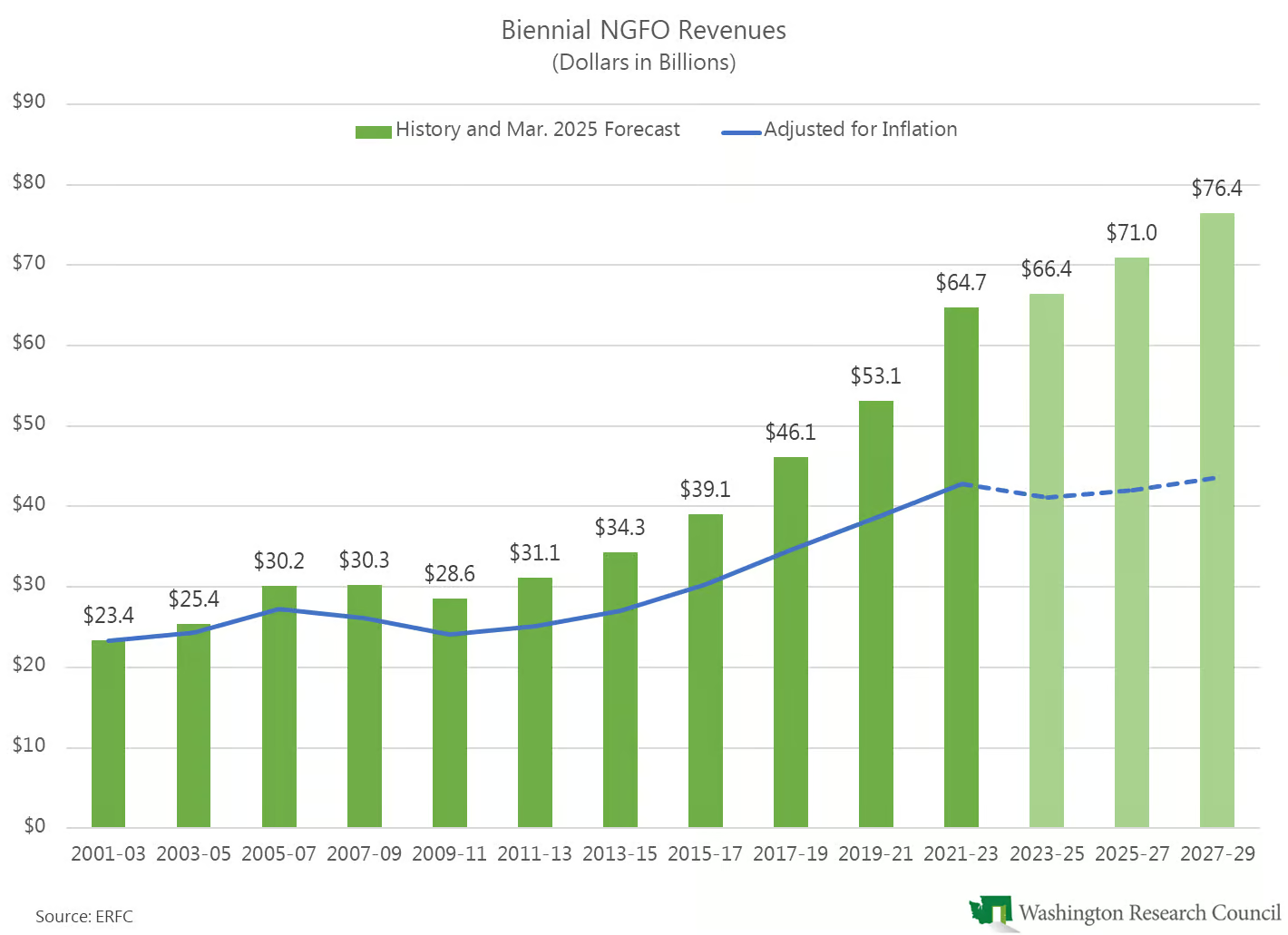
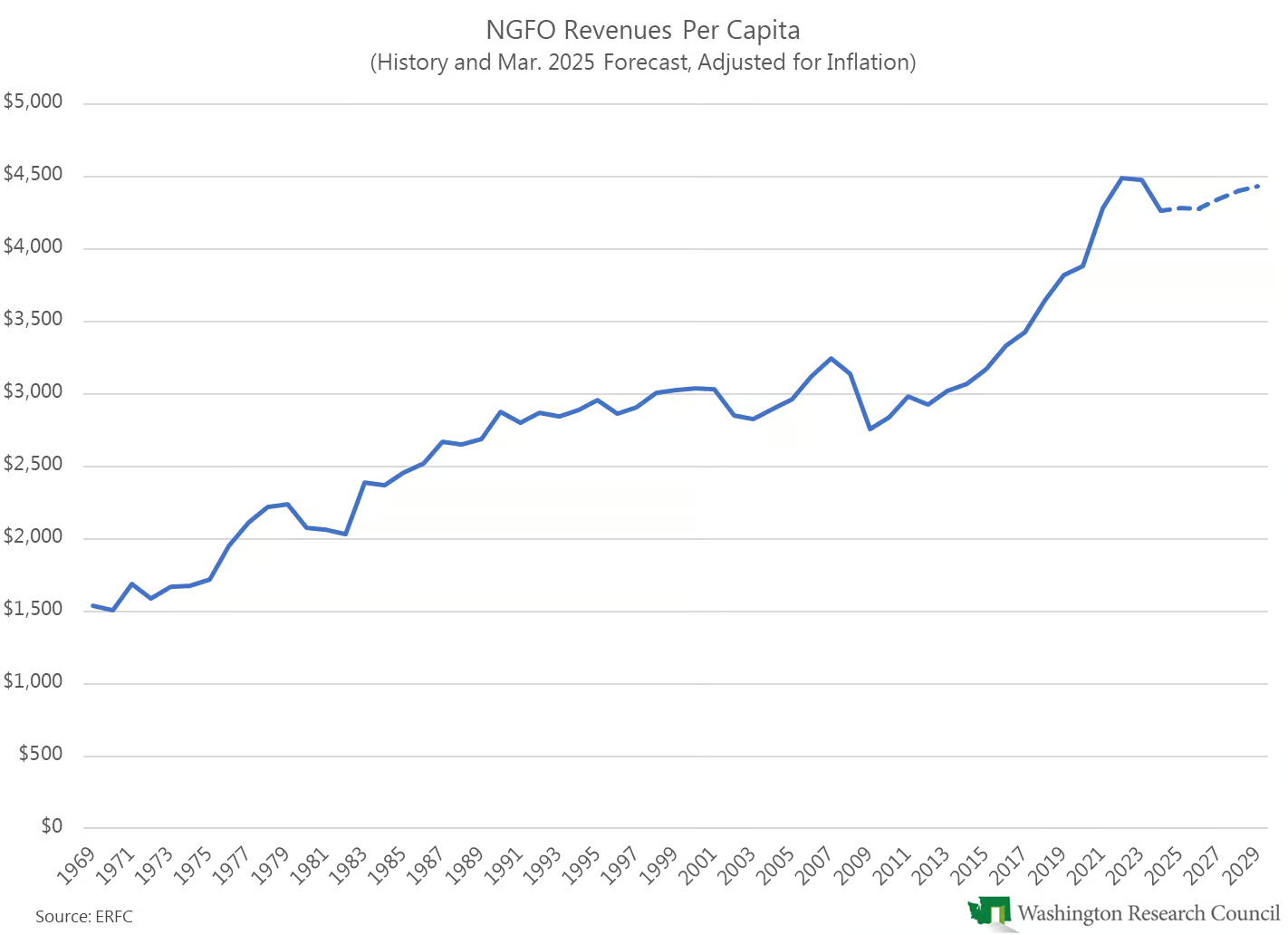
Further, state revenues have increased in every biennium since the Great Recession. Nevertheless, Senate Democrats today proposed a wealth tax, which would be extremely unreliable, and a payroll expense tax, which—based on Seattle’s experience—would be very volatile.
Second, Ways & Means Committee Vice Chair Stanford says, “Caseloads for early learning and childcare, long-term care services, and student financial aid are all growing because more people need support.” There is a material distinction to make when discussing entitlement growth: caseloads could be growing because more people have hardships that mean they qualify under existing eligibility rules. Or caseloads could be growing because the state has changed the rules to expand eligibility.
It’s true that caseload changes in early learning, long-term care, and financial aid make up most of the overall estimated caseload increase for 2025–27. However, early learning and childcare caseloads are growing because the Legislature expanded eligibility for these programs. Similarly, caseloads for College Bound scholarships are growing because the Legislature ended time limits on eligibility. Caseloads for the Washington College Grant are growing because of a revised federal formula for calculating financial aid. (Moreover, the entire caseload increase for the Washington College Grant is funded by the workforce education business and occupation tax surcharge.)
As I showed in a recent analysis of the estimated maintenance level for 2025–27, caseload and utilization changes account for about 37% of the total increase. So why is Washington facing a maintenance level shortfall? Because of spending choices made by the Legislature.
Categories: Budget , Tax Policy.