11:37 am
February 19, 2025
The estimated budget shortfall for 2025–27 is the amount by which the estimated maintenance level exceeds existing resources. (Some estimates of the shortfall also throw in the cost of collective bargaining agreements with employees and other new policies.)
The maintenance level for 2025–27, as estimated in former Gov. Inslee’s operating budget proposal, is $77.227 billion from funds subject to the outlook (NGFO). That consists of the carryforward level (CFL, the biennialized cost of 2023–25 appropriations, adjusted to remove one-time items) plus the maintenance level change (accounting for changes to caseloads, inflation, and other costs). The NGFO maintenance level (ML) changes are estimated to total $4.803 billion.
(Note that this analysis does not reflect the February 2025 caseload forecast. However, overall, the forecast appears to be very close to the November 2024 forecast, on which Inslee’s budget was based. Preliminary estimates from the Office of Financial Management suggest that the new forecast could increase maintenance level costs by about $95 million in 2023–25 and about $62 million in 2025–27.)
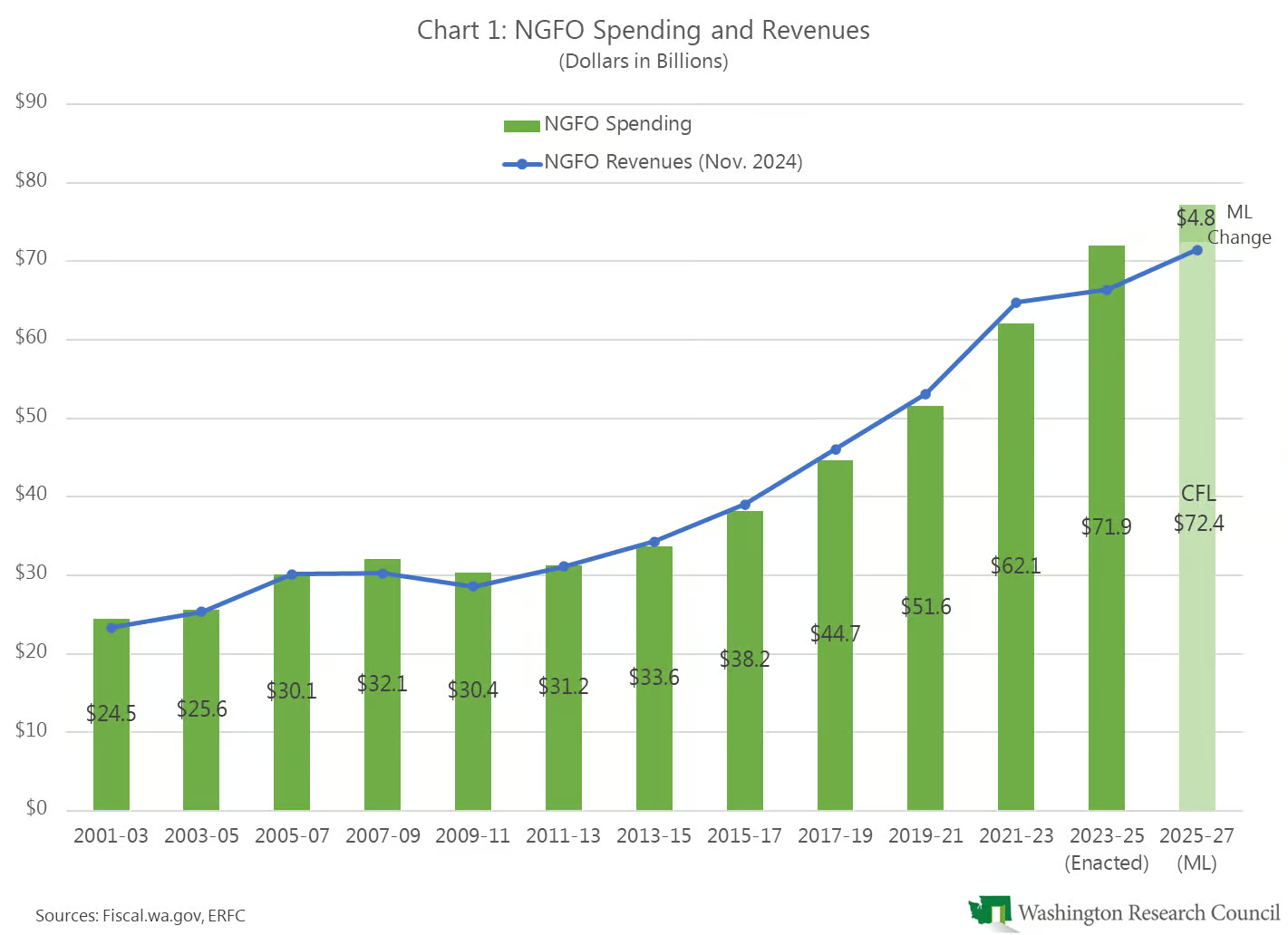
Chart 2 shows how the ML changes are distributed across budget areas. The areas with the most significant ML changes are the Department of Children, Youth, and Families (DCYF), K–12, the Department of Social and Health Services (DSHS), and the Health Care Authority (HCA).
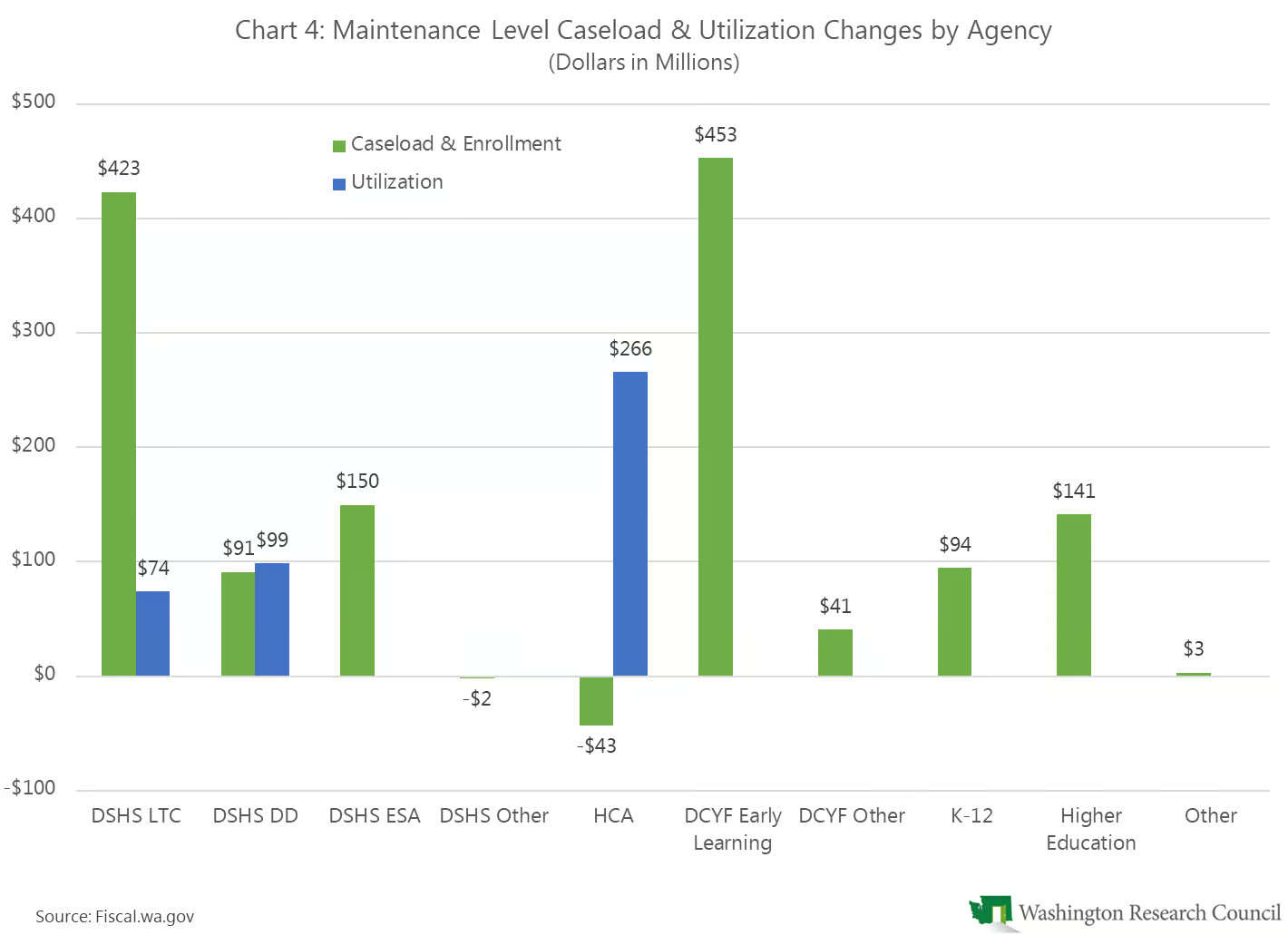
- DCYF ML changes include $494.1 million for caseload and enrollment changes (mainly in early learning) and $775.7 million for changes related to the Fair Start for Kids Act (enacted in 2021, its program changes and costs were phased in over time).
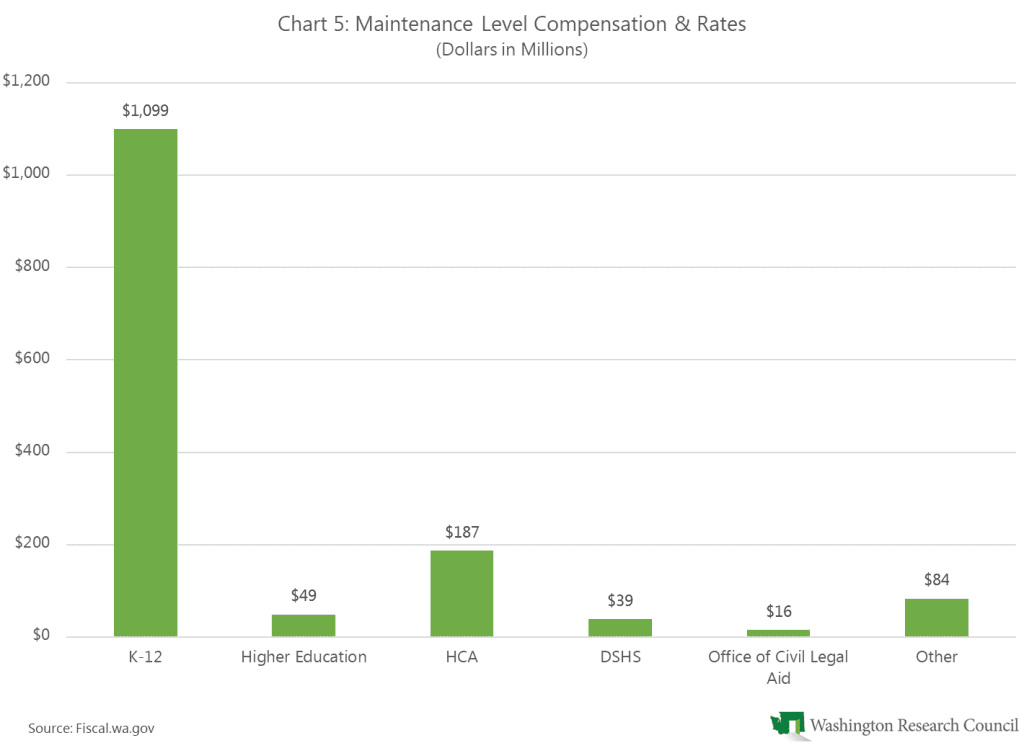
- K–12 ML changes include $1.251 billion for compensation and rates (including the statutory salary inflationary increases for school employees and changes to health, life, and other rates) and $94.5 million for enrollment changes (reductions in general enrollment are offset by increases in enrollment for special education, transition to Kindergarten, and transitional bilingual instruction).
- DSHS ML changes include $662.3 million for caseload changes, mainly in long-term care (LTC), economic services (ESA), and developmental disabilities (DD).
- HCA ML changes include $265.8 million in increased utilization costs, $187.3 million for compensation and rate increases, and $123.3 million for program costs (including, for example, premiums and prescription costs paid by the state for clients who are dually eligible for Medicaid and Medicare).
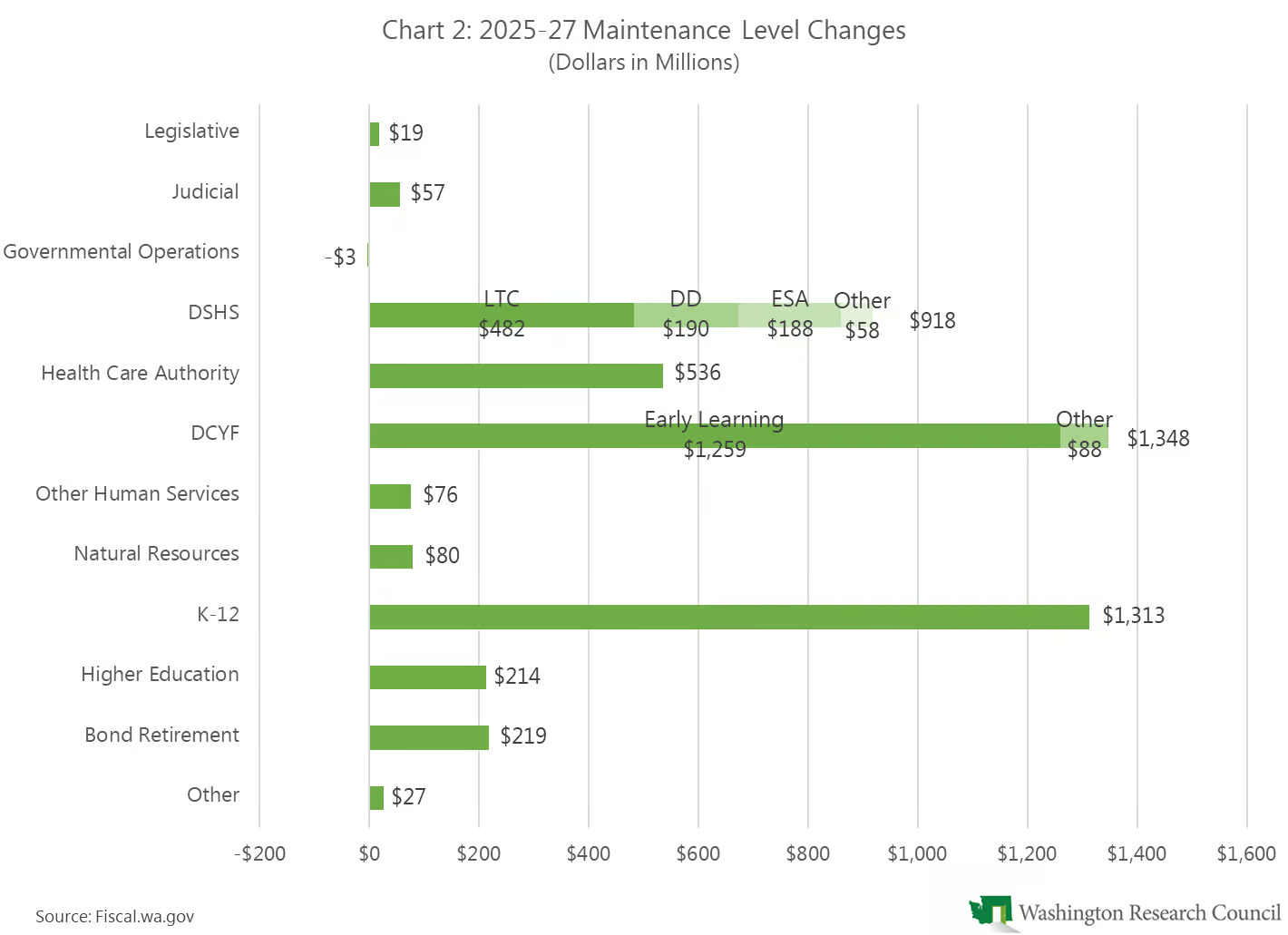
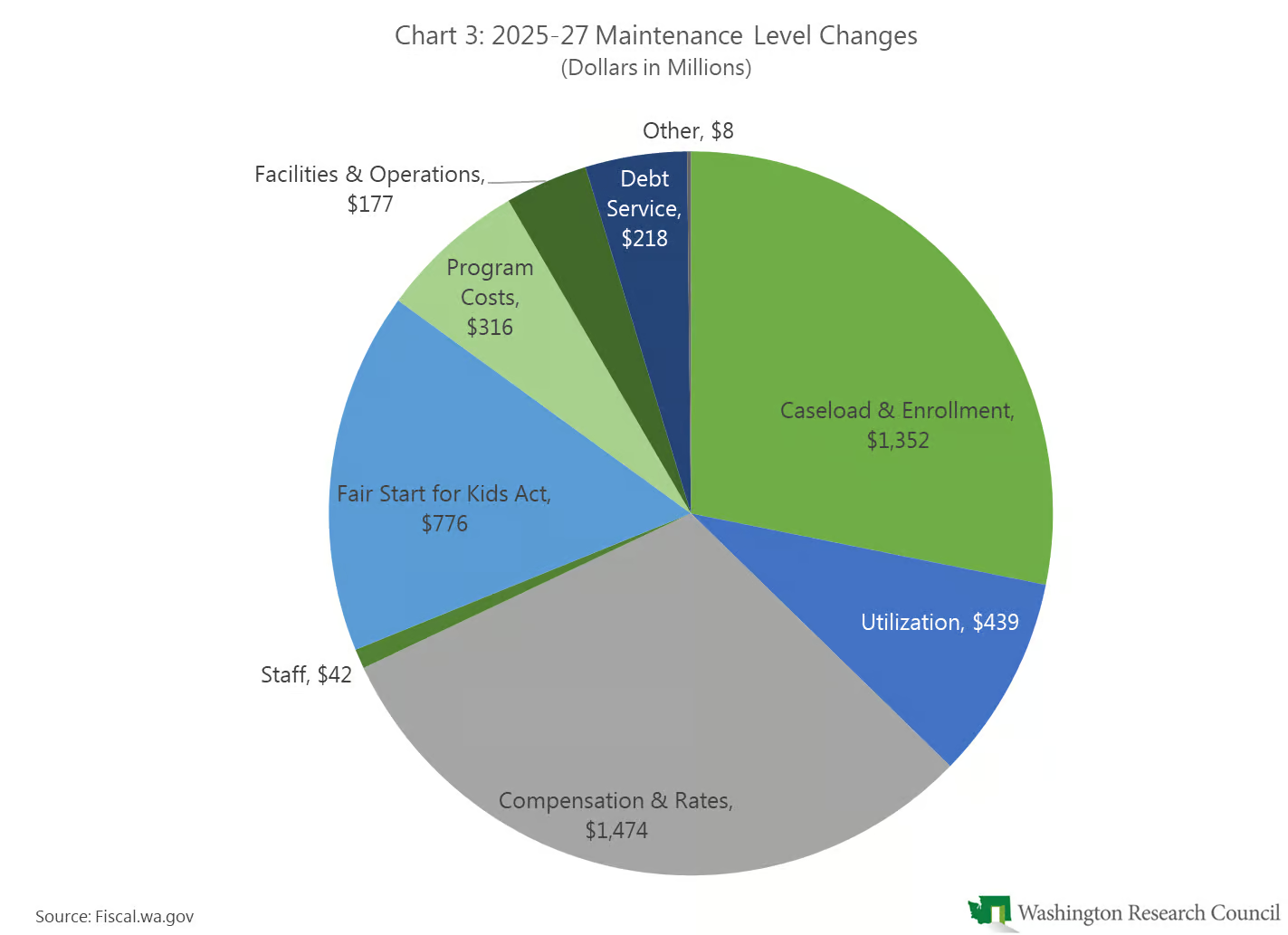
Chart 3 shows the components of the total ML change.
- Caseload, enrollment, and utilization changes (37.3% of the total) reflect the November 2024 caseload forecast. (Chart 4 shows how the caseload and utilization changes are distributed across budget areas.)
- Compensation and rate changes (30.7% of the total) include inflationary adjustments for K–12 salaries, vendor rate adjustments, and provider rate adjustments. (Chart 5 shows how the compensation and rate changes are distributed across budget areas.)
- Fair Start for Kids Act changes (16.2% of the total) include the costs of increasing child care subsidy rates to the 85th percentile of market, expanding income eligibility for Working Connections Child Care to 75% of the state median income, and implementing the Early Childhood Education and Assistance Program (ECEAP) entitlement in FY 2027.
- Program costs (6.6% of the total) include things like changes to program delivery, increased program costs (e.g., for school food services), fire suppression, and the special education safety net.
- Facilities and operations (3.7% of the total) include, for example, the cost of maintaining equipment and systems, lease adjustments, and updating facilities.
Tags: 2025-27