2:04 pm
November 26, 2024
The transportation revenue forecast has been revised down again. As I wrote last month, the September transportation revenue forecast was the first coordinated by the Economic and Revenue Forecast Council and it was the first meaningful update to the motor vehicle fuel tax forecast in over a year.
The transportation revenue forecast includes revenues from motor vehicle fuel taxes (the largest source of transportation revenues); vehicle and driver fees; ferries; tolls; the 0.3% vehicle sales and use tax; the rental car tax; and various other transportation-related sources. It does not include revenues from the carbon emission allowance auctions.
Under the November revenue forecast, transportation revenues are estimated to be $6.806 billion in 2023–25, $6.987 billion in 2025–27, and $7.122 billion in 2027–29. Compared to the February 2024 forecast (on which the current transportation budget is based), revenues are down by $184.7 million (2.6%) for 2023–25, $353.4 million (4.8%) for 2025–27, and $456.0 million (6.0%) for 2027–29.

Chart 2 compares total transportation revenues by forecast. Revenues are never expected to reach the pre-pandemic forecast.

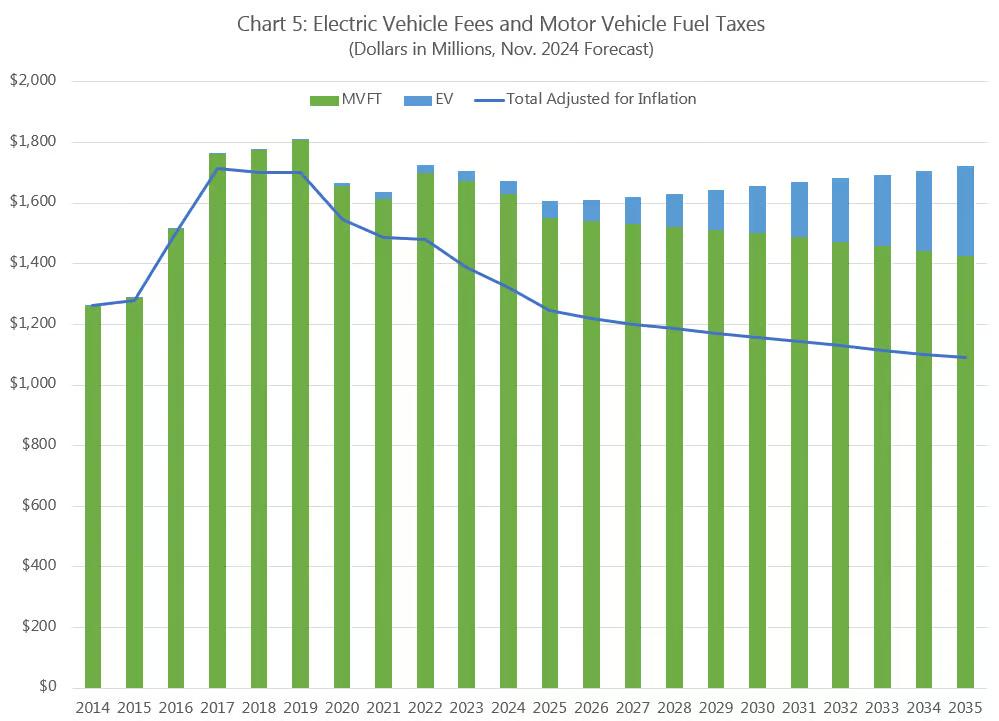
That is largely because revenues from the motor vehicle fuel tax (MVFT) are expected to continue to decline.

In turn, motor vehicle fuel tax revenues are expected to decline because the gasoline consumption forecast is down significantly.

The presentation of the forecast noted that revenues from fees on electric vehicles “will likely partially offset losses in MVFT over the forecast period.” Indeed, under the forecast, beginning in fiscal year 2026, the combination of electric vehicle (EV) fees and MVFT revenues will begin to increase (very slowly). However, the combined total is not expected to ever reach the 2019 high point. Also, the combined total is expected to decline each year when adjusted for inflation.