9:56 am
January 21, 2025
Last week, Superintendent of Public Instruction Reykdal said that the state should make it a goal to direct 50% of the state budget to K–12. In 2019–21, K–12 made up 51.6% of spending from funds subject to the outlook (NGFO). In 2023–25, K–12 accounts for 43.4% of NGFO appropriations.
Policymakers and others from both sides of the aisle have similarly bemoaned the recent decrease in the percentage of the budget that is spent on K–12. It is the perfect soundbite for all sides: Some want to increase the percentage spent on K–12 because they think the state would do so by increasing overall spending. Others want to increase the percentage spent on K–12 because they think the state would limit spending on non-K–12 programs.
No matter the motive, the result would be bad budget policy, as I’ve written multiple times. (See here, here, and here.)
First, the share of the budget devoted to K–12 has no relationship to the adequacy of K–12 funding. If K–12 spending increases but the overall budget increases faster, K–12 spending will fall as a percentage of the budget. Conversely, if the overall budget is cut, K–12 spending could also be cut while increasing as a share of the budget. For example, in 2017–19, K–12 spending totaled $27.4 billion in 2023–25 dollars (50.7% of the budget). In 2023–25, K–12 appropriations increased to $31.2 billion but K–12’s share of the budget decreased (to 43.4%). Which situation is preferable for schools?
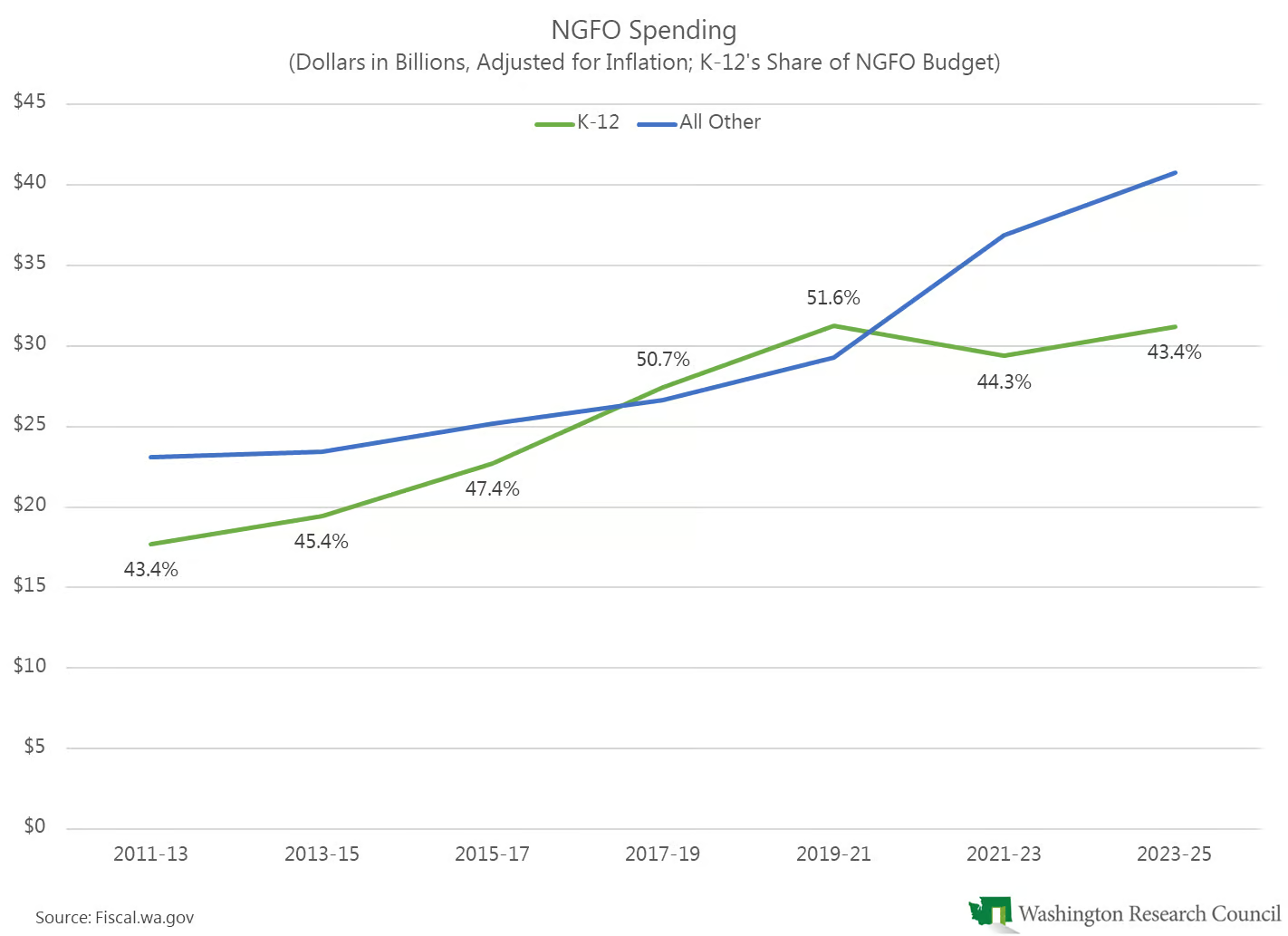
As I showed in this post, given current appropriations, to get to 50% of the budget, the state could shift $4.8 billion from other priorities to K–12, or the state could increase total appropriations by $9.5 billion and use that entire amount for K–12. (Alternatively, the state could cut other spending by $9.5 billion and leave K–12 appropriations unchanged.) Then, for every dollar the state spends on other priorities in the future, it would have to spend a dollar on K–12.
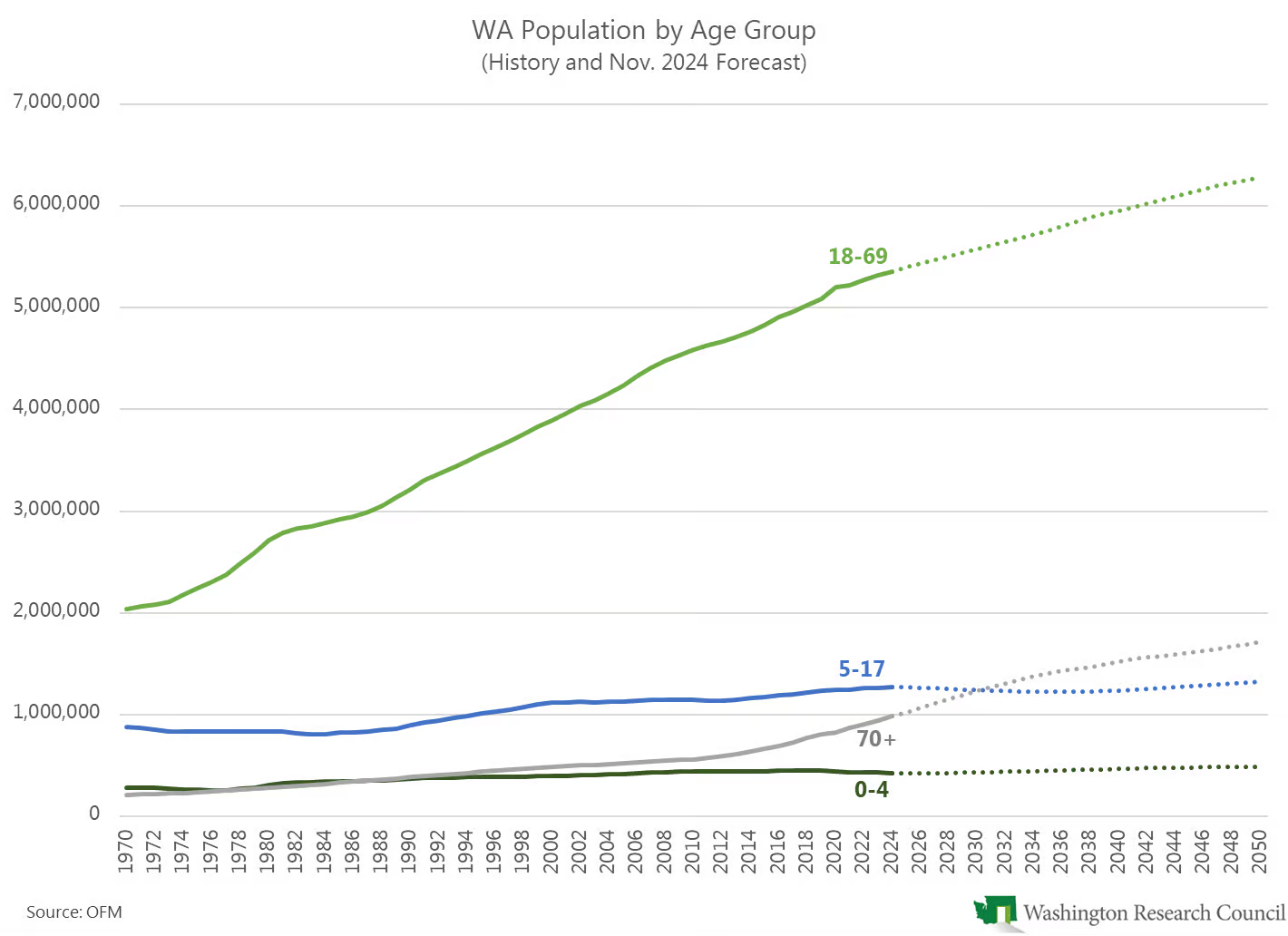
Is that realistic or desirable given that state demographics are changing? The Office of Financial Management’s Nov. 2024 population forecast estimates that Washinton’s population aged 70 and over will exceed our school-aged population beginning in 2031. Does it make sense to arbitrarily focus half of our budget on K–12 when it is likely that more will be needed to care for the elderly?
Why should we set such an arbitrary goal? The state constitution states, “It is the paramount duty of the state to make ample provision for the education of all children residing within its borders.” The state Supreme Court defined “paramount” as meaning that the state must “amply provide for the education of all Washington children as the State’s first and highest priority before any other State programs or operations.” K–12 must be the state’s first priority, not the majority of state spending.
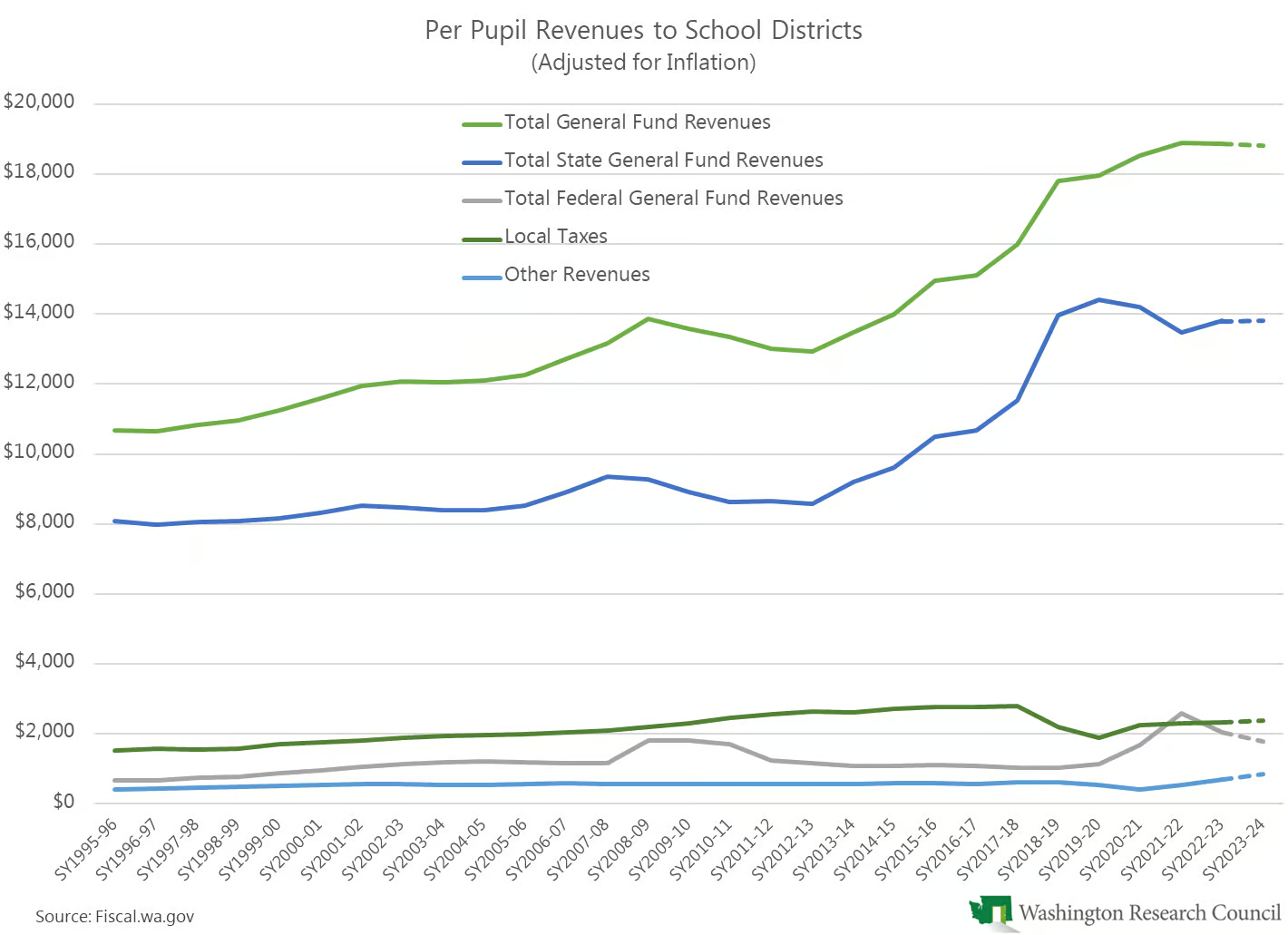
A better way to measure the adequacy of K–12 funding is to look at per-pupil funding from all sources.