9:31 am
May 3, 2023
As passed by the Legislature, the 2023–25 operating budget increases appropriations for public schools from funds subject to the outlook (NGFO) by $2.908 billion (compared to the enacted 2022 supplemental). Of the increase, $2.563 billion is the cost of continuing current services, adjusted for inflation and enrollment (the maintenance level). Just $345.6 million is due to new policies.
However, these figures are net of $721.9 million in savings from reducing the state’s payments toward the unfunded actuarial accrued liability (which is nearly funded) in the Teachers’ Retirement System plan 1. (For background on this policy change, see here.) Were it not for those savings, the new K–12 policies in the budget would total $1.067 billion.
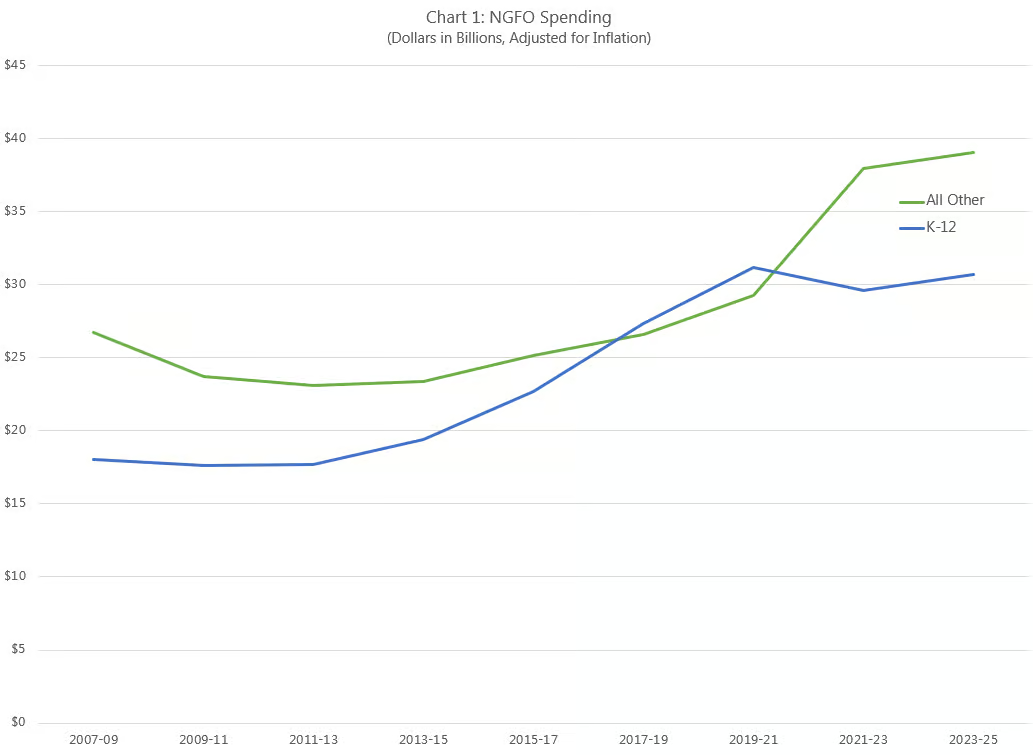
In the enacted 2022 supplemental, K–12 made up just 43.3% of total NGFO appropriations. In the 2023–25 budget, K–12 makes up 44.0% of the total. (K–12’s share of the budget reached 51.6% in 2019–21.) Chart 1 shows K–12 appropriations compared to appropriations in all other budget areas. (For more on the major non-K–12 provisions in the budget, see here.)
The Legislature made several notable policy and funding changes to public schools this session. Altogether, the NGFO cost of the new K–12 policies in 2023–25 ($345.6 million) is estimated to double in 2025–27 ($693.5 million).
Special Education
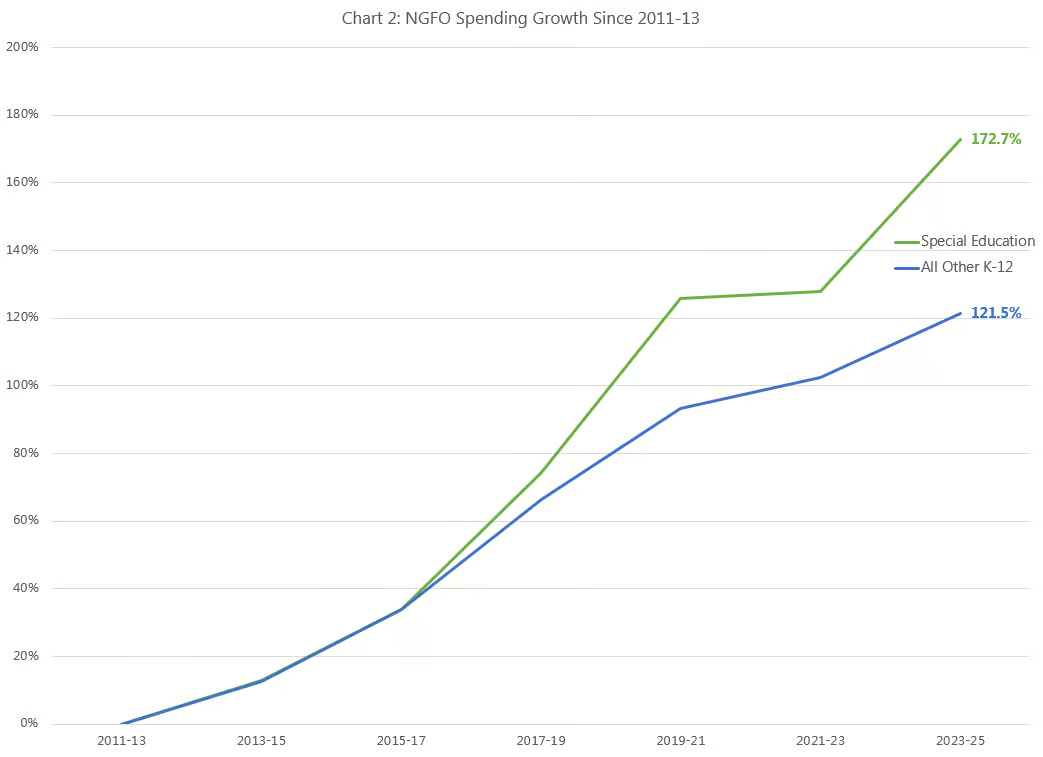
Compared to the 2022 supplemental, the 2023–25 budget increases NGFO spending on special education by $584.8 million (19.6%). This includes:
- $253.6 million to increase the special education multiplier (beginning in SY 2023–24) from 1.0075 to 1.12 for students in the general education setting for 80% of the day and from 0.995 to 1.06 for students in the general education setting for less than 80% of the day.
- $106.9 million to increase the special education cap from 13.5% to 15% beginning in SY 2023–24.
- $5.5 million to lower the safety net threshold.
These special education policy changes are funded entirely by the NGFO. (The House proposal had funded them partially with federal relief dollars.) They reflect the provisions of ESHB 1436, as passed by the Legislature (Gov. Inslee has not yet signed the bill). ESHB 1436 also requires a performance audit of the state’s special education system, including a review of the funding formula.
K–12 Salary Inflation
The maintenance level includes $734.2 million for K–12 salary inflation. On top of that, the budget appropriates $261.4 million to increase school salaries by 3.7% in SY 2023–24 and 3.9% in SY 2024–25. (This policy is estimated to cost $627.0 million in 2025–27.) Consequently, minimum state salary allocations for certificated instructional staff will increase from the current $72,728 to $75,419 in SY 2023–24 and $78,360 in SY 2024–25. (Actual salaries are bargained locally.) This change reflects ESB 5650, which also specifies that going forward, the inflationary measure will be based on the previous calendar year rather than the current fiscal year. (See this post for background.)
School Food Programs
The budget adds $30.5 million (NGFO) and $28.5 million (federal funds) to reimburse more schools that participate in the Community Eligibility Provision (a federal program that provides school meals at no cost). (The outlook assumes that this provision will increase NGFO spending by $61.0 million in 2025–27.)
Additionally, the budget appropriates $18.5 million (NGFO) and $7.4 million (federal funds) to reimburse schools that are required to offer free meals under E2SHB 1238. (The outlook assumes this will increase NGFO spending by $34.5 million in 2025–27.)
Federal Funding
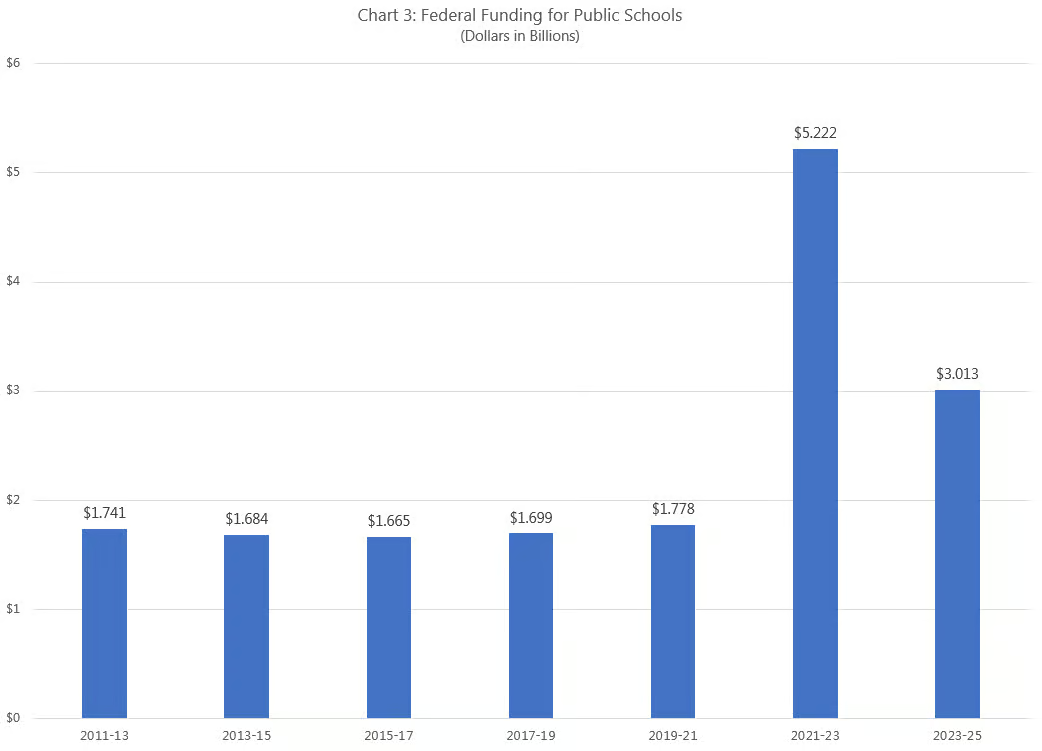
The 2023–25 budget appropriates $3.013 billion in federal funds for K–12 (including both COVID relief and other federal funds). That is considerably higher than normal, but a decrease of 42.3% compared to 2021–23 (as revised in the 2022 supplemental).
The federal funding for 2023–25 includes reappropriations of $199.5 million for learning loss that were originally appropriated in 2021–23. This funding comes from the third tranche of COVID relief for schools (Elementary and Secondary School Emergency Relief, or ESSER III), which must be obligated by Sept. 2024. The total amount of ESSER III dollars that are appropriated or reappropriated in the 2023–25 budget is $903.2 million.
Tags: 2023-25