
10:28 am
January 2, 2020
One of the major new taxes enacted in 2019 was the workforce education investment surcharge (E2SHB 2158). Under the bill, businesses in certain sectors in the “other business or service activities” category must pay a 20 percent business and occupation (B&O) tax surcharge. Advanced computing businesses must pay higher surcharges. (See our policy brief for more details.) Revenues are to be deposited in the new workforce education investment account (WEIA).
Further, “Expenditures from the workforce education investment account must be used to supplement, not supplant, other federal, state, and local funding for higher education” (RCW 43.79.195).
As part of the legislation, the state need grant was renamed the “Washington College Grant” and it becomes an entitlement in FY 2021. The governor’s 2020 supplemental budget proposal includes a maintenance level (the cost of continuing current services) increase of $28.1 million due to caseload changes in the grant program. The chart below is from the Caseload Forecast Council and shows the November forecast of the number of students eligible for the Washington College Grant program.
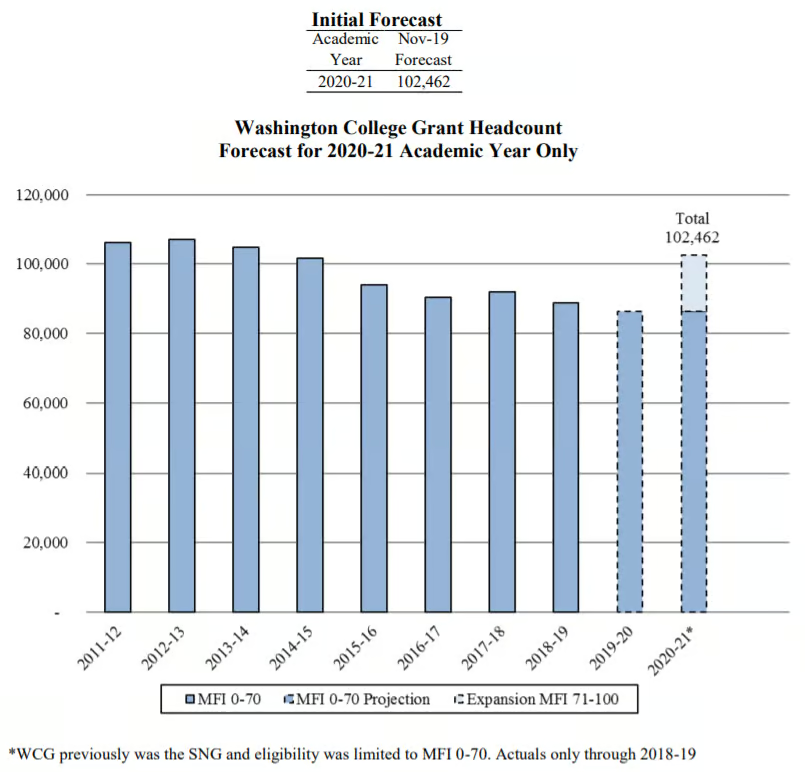
Under the governor’s budget proposal, those caseload increases would be charged entirely to the WEIA, even though the grant program is mostly funded from funds subject to the outlook (NGFO). As I wrote in November, this decision leaves a shortfall in the WEIA.
To address the shortfall, the governor’s proposal would appropriate $27.8 million from the general fund–state for expenditure into the WEIA. Sec. 711 of his proposed budget bill states that the Office of Financial Management, the Legislature, and the workforce education investment accountability and oversight board “shall collaborate on a solution to ensure the account remains solvent in future biennia.”
Additionally, under sec. 917 of the proposed budget bill, the WEIA would be allowed to be used during 2019–21 “to supplant state funding for higher education.” (And that policy would be continued in the future.)
There is nothing in statute that requires Washington College Grant caseload increases to be funded solely by the WEIA, so the Legislature may choose to fund those increases from other resources.
Meanwhile, bills have been pre-filed in the Legislature that would exempt health care services; veterinary services; and architectural, engineering, and related services from the B&O surcharge (SB 6055, SB 6059, and SB 6107).
Categories: Budget , Categories.Tags: 2019-21