
9:24 am
September 14, 2026
As I wrote on Friday, the taxpayer migration and Statistics of Income data sets from the Internal Revenue Service (IRS) now incorporate the first few years of Washington’s capital gains tax. Although there is not yet much history, the data suggest that Washington residents may have moved or otherwise altered their behavior in response to the tax. Such responses could help us think about how the new income tax might affect taxpayer behavior.
Generally, capital gains are highly volatile. Taxpayers can often choose when to realize capital gains, and the value of those gains depends on market conditions. A bad year for capital gains doesn’t necessarily mean people moved; it could just mean that it was a bad year for the market.
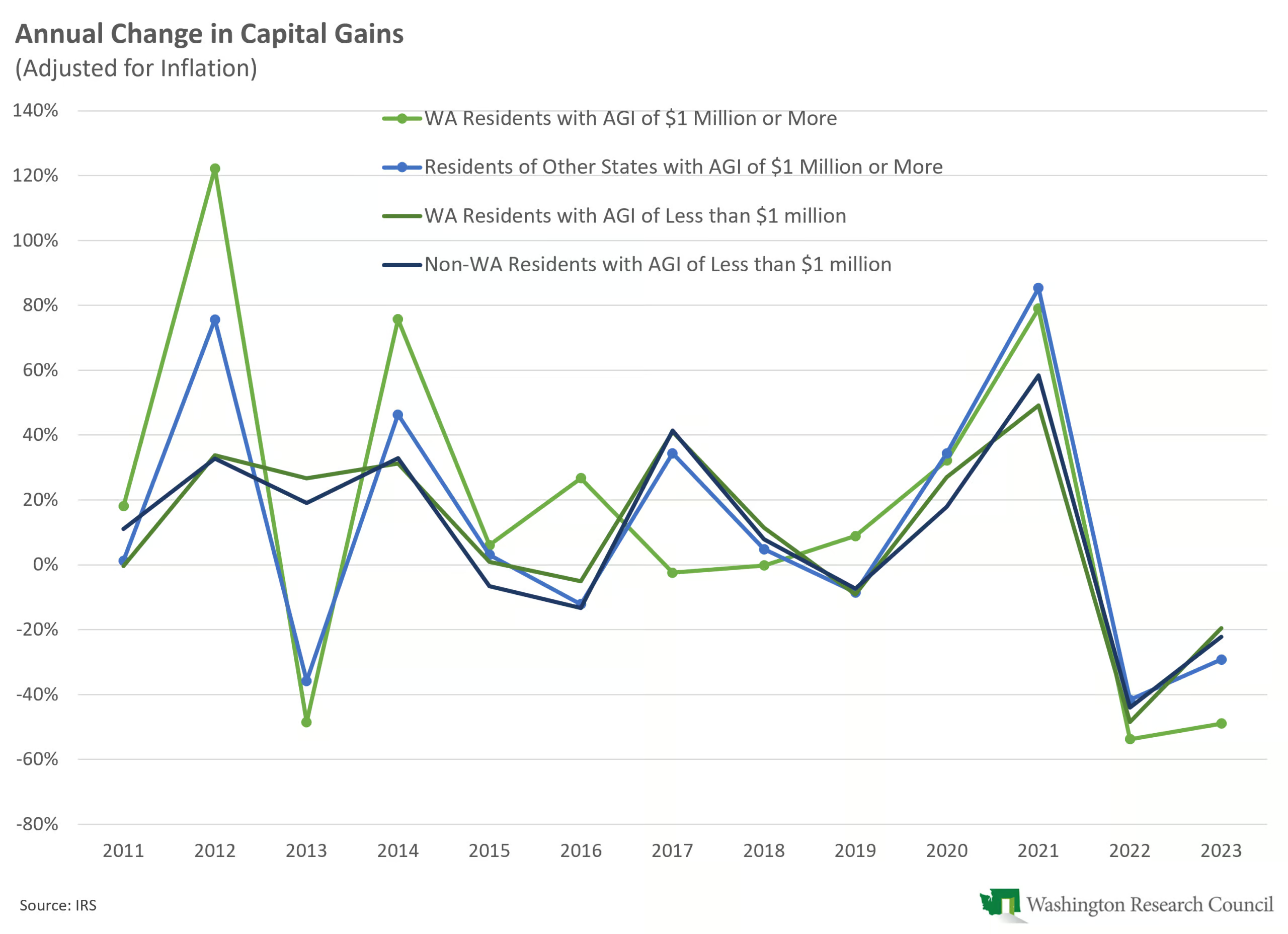
Thus, it’s helpful to compare capital gains in Washington to capital gains in other states. The IRS Statistics of Income data breaks out the amount of adjusted gross income (AGI) that is attributable to capital gains. Annual changes to capital gains for the group of filers with AGI of $1 million or more declined in Washington by much more than in other states in 2022 and 2023.
Further, the amount of capital gains for Washington residents with AGI of $1 million or more also declined by much more than those for other AGI brackets in Washington or other states. This could be a blip, but it could also indicate behavioral responses by high earners to Washington’s capital gains tax.
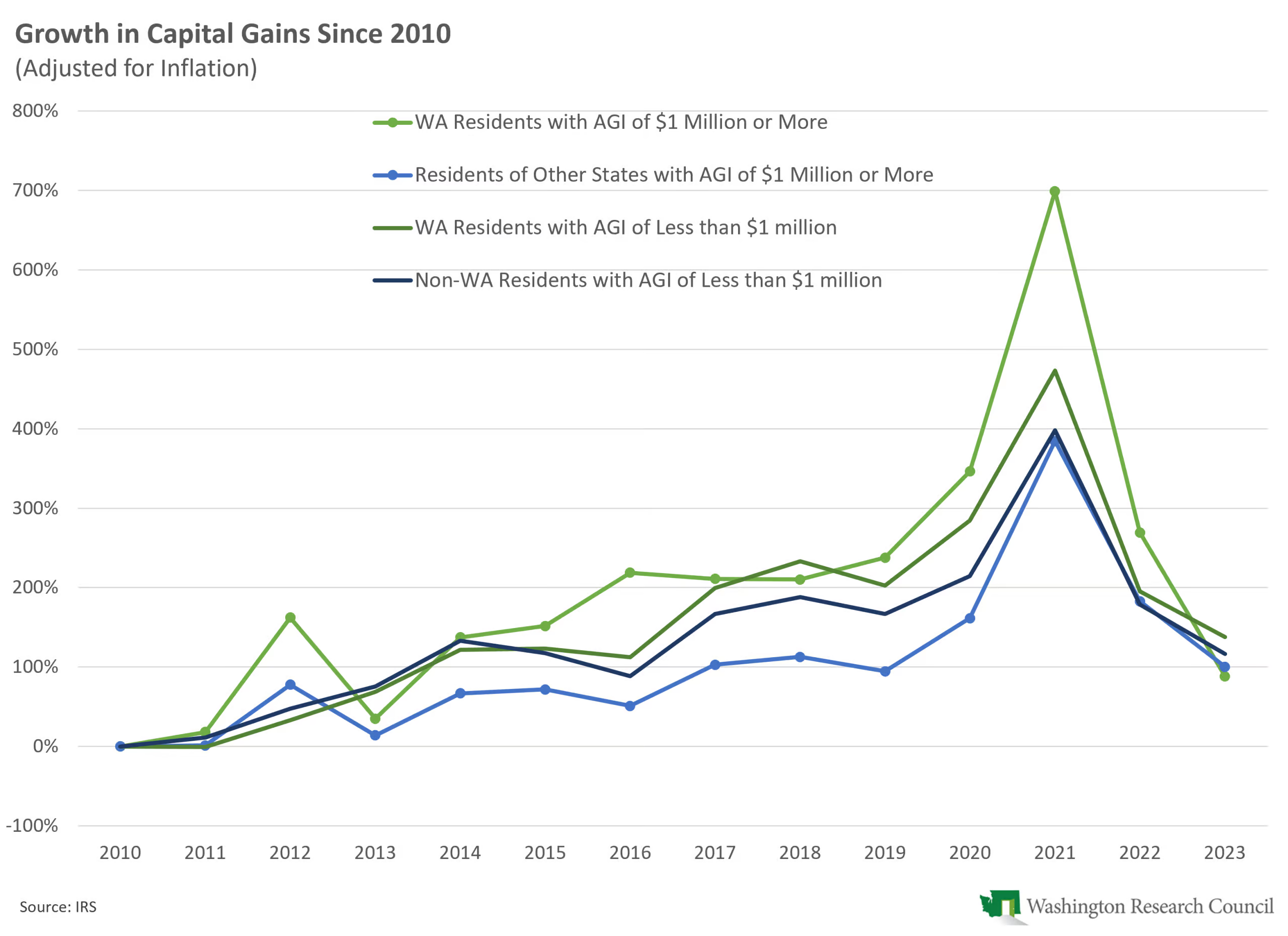
Another way to look at this is in terms of the growth since 2010 of capital gains by AGI category for Washington and other states. Washington’s growth in capital gains had outpaced capital gains growth in other states, but capital gains realized by Washington residents with $1 million or more in AGI dropped by significantly more in 2023, erasing the gap. The growth of capital gains for Washington residents with less than $1 million in AGI in 2023 still exceeded growth of capital gains by non-Washington residents.
Have the big declines in capital gains realizations continued since 2023? We know that actual collections of Washington’s capital gains tax increased in tax year 2024 and 2025. (Note that the 2025 figure includes a rate increase.)
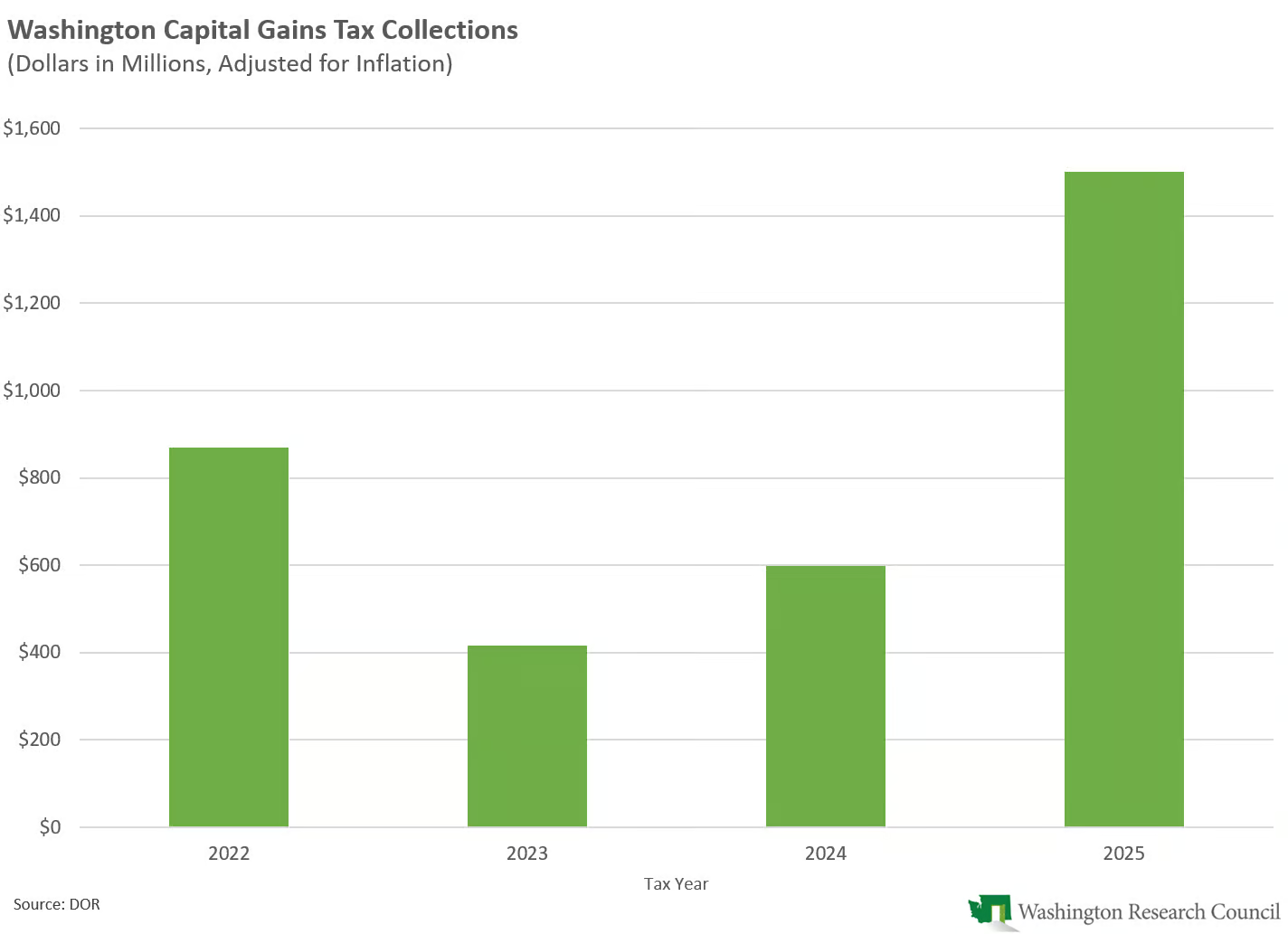
However, that doesn’t prove that the tax did not lead to migration of high earners. As noted above, capital gains are linked to the stock market. The relevant measure isn’t whether capital gains increased from one year to the next, but what they would have been in the absence of the tax. Comparing capital gains in Washington to the rest of the U.S. shows how Washington might be deviating from the general pattern in ways that might be related to tax-induced behavioral responses.
In the State Tax and Economic Review for the first quarter of 2026 (from the Urban Institute and the Tax Policy Center), Lucy Dadayan notes that stock market equity values declined 4.1% in 2022, gained 4.5% in 2023, gained 26.7% in 2024, and gained 14.5% in 2025. The paper shows how those changes impact income tax collections for states. The strong gains in 2024 and 2025 could explain the increased Washington capital gains tax revenues for those years. Perhaps underlying capital gains realized by Washington residents would have been even higher in the absence of behavioral responses to the capital gains tax.
As future years of the IRS data are released, we’ll learn more about how the incomes of high earners in Washington are changing during this period of increased, targeted taxes. For now, the economics literature and IRS data on migration, AGI, and capital gains suggest that some taxpayers may indeed be rearranging their affairs.
[Updated 9/25/26 to adjust for inflation using the calendar year (instead of fiscal year) implicit price deflator.]
Categories: Tax Policy.