12:38 pm
October 3, 2019
Pew asks if states are ready for the next recession:
Typically, a state’s recession readiness can be measured by the amount of cash it has in reserve, and with good reason. Reserves are one of the primary tools available to offset a budget gap, along with spending reductions or tax increases. Of the three, reserves are the least painful to deploy.
The story notes that nationally, state “rainy day fund balances have never been higher.” That’s certainly true in Washington.
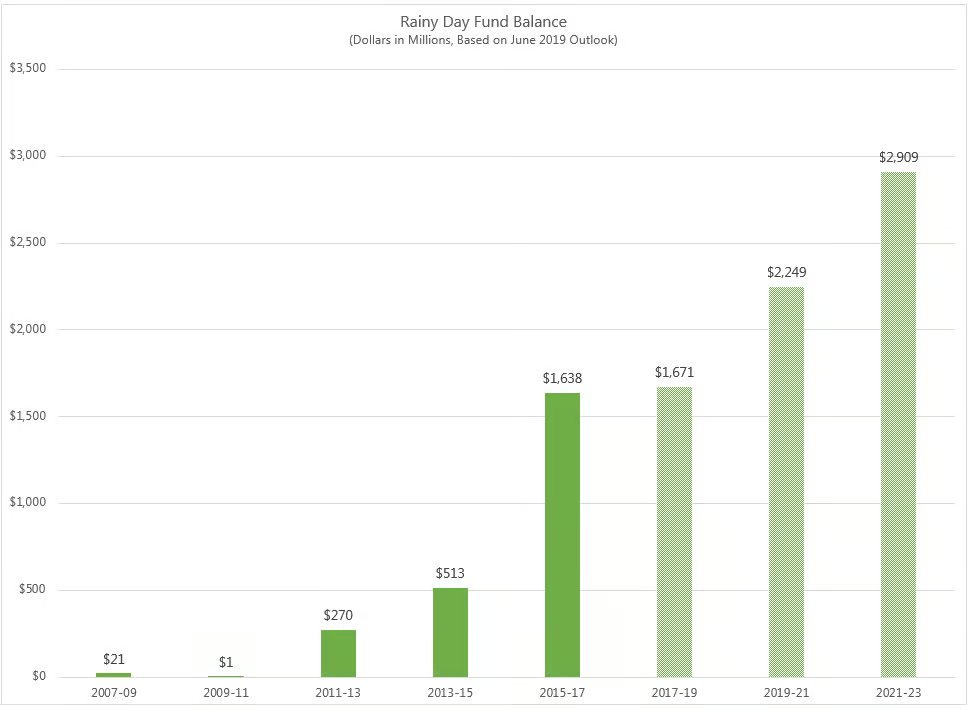
However, according to Pew, “Despite these positive developments, states may not be as prepared for the next recession as they think. Reserves are an excellent tool to build budget flexibility, but three important trends mean states could need more on hand to weather a downturn.”
These trends are:
- Growth of fixed costs, which reduces budget flexibility.
- Spending cuts may be more difficult if spending is not back to pre-Great Recession levels.
- Recent revenue increases have been volatile.
For the first trend, Pew uses Medicaid as an example, because it “far and away represents the biggest share of such fixed costs.” Washington is in better shape than the national average here: Medicaid spending accounted for 14.9 percent of Washington state revenue in 2016, compared to 17.1 percent nationally. (Still, roughly two-thirds of our state budget is protected from cuts.)
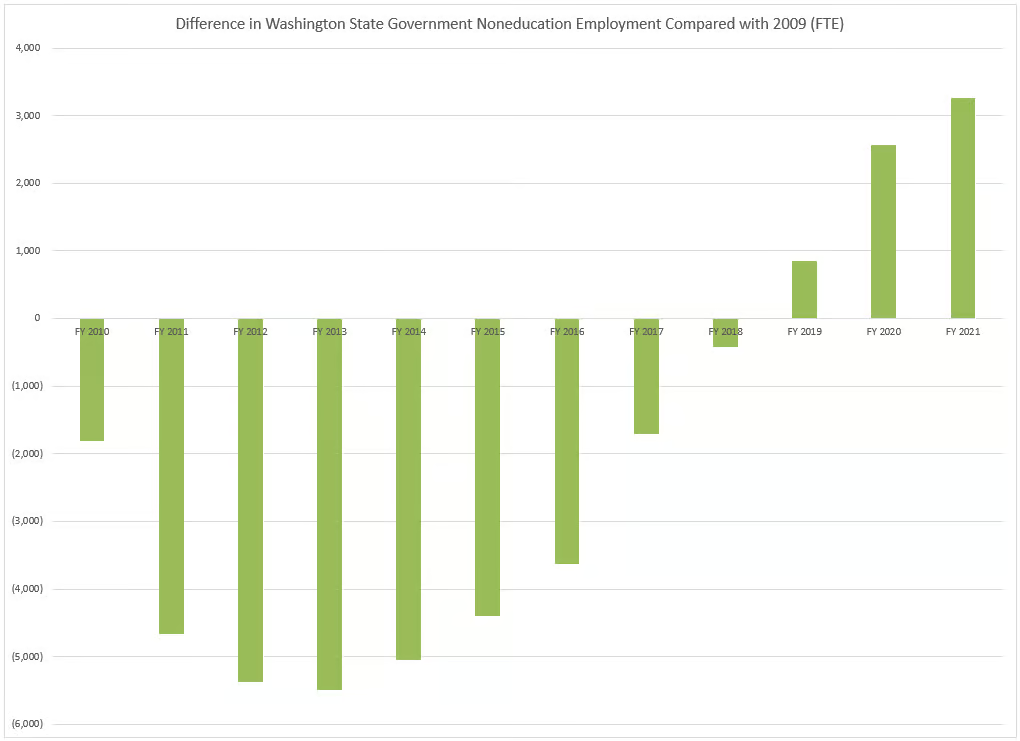
Pew illustrates the second point by showing that states reduced noneducation government employment during the recession, and that those numbers haven’t recovered nationally. Nationally, in 2018, state government employment was 4.7 percent lower than it was in 2008. Thus, “With state governments leaner in this respect, further cuts during the next recession could hamper their operations significantly.” This is not the case in Washington. 2009 was the highpoint for state government jobs here. From 2009 to 2018, state government employment was down 0.7 percent, but it was up 1.4 percent in 2019, and it is expected to be up 5.2 percent in 2021.
Lastly, Pew notes that recent state revenue increases have largely been due to income taxes. This means increased volatility as “personal income collections tend to experience more fluctuations than other major sources, such as sales taxes.” Further,
a large portion of revenue increases in personal income come from the most unpredictable area, the non-withholding component, which includes income from interest, dividends, partnerships, self-employment taxes, and—critically—capital gains. These sources are notably subject to big swings in the stock market, which can often occur during periods of economic distress.
So long as Washington avoids adopting a capital gains tax, our tax structure is relatively stable. This means that we don’t need as high a level of reserves as many other states need to combat volatility.
Categories: Budget , Categories.