
9:17 am
March 19, 2025
The March 2025 forecast of transportation revenues is up compared to the November 2024 forecast. However, the new forecast is still significantly lower than the February 2024 forecast (on which the enacted budget is based).
Compared to November, the new forecast for the current 2023–25 biennium increased by $49.2 million, to $6.855 billion. The forecast for 2025–27 increased by $113.7 million, to $7.101 billion. The forecast for 2027–29 increased by $121.4 million, to $7.243 billion. The increases compared to November are largely due to gas consumption declining at a slower rate than previously expected.
Compared to February 2024, the new forecast is $135.5 million lower in 2023–25, $239.7 million lower in 2025–27, and $334.6 million lower in 2027–29. Over this six-year period, the Legislature will have $709.8 million less to work with than they expected when the current transportation budget was adopted.

The Economic and Revenue Forecast Council (ERFC) began coordinating the transportation revenue forecast in September, and the September 2024 transportation revenue forecast was the first meaningful update to the motor vehicle fuel tax forecast in over a year. This partially explains why the forecast is so much lower than in February 2024. (That said, regardless of the forecasting methodology, transportation revenues are facing a long-term decline.)
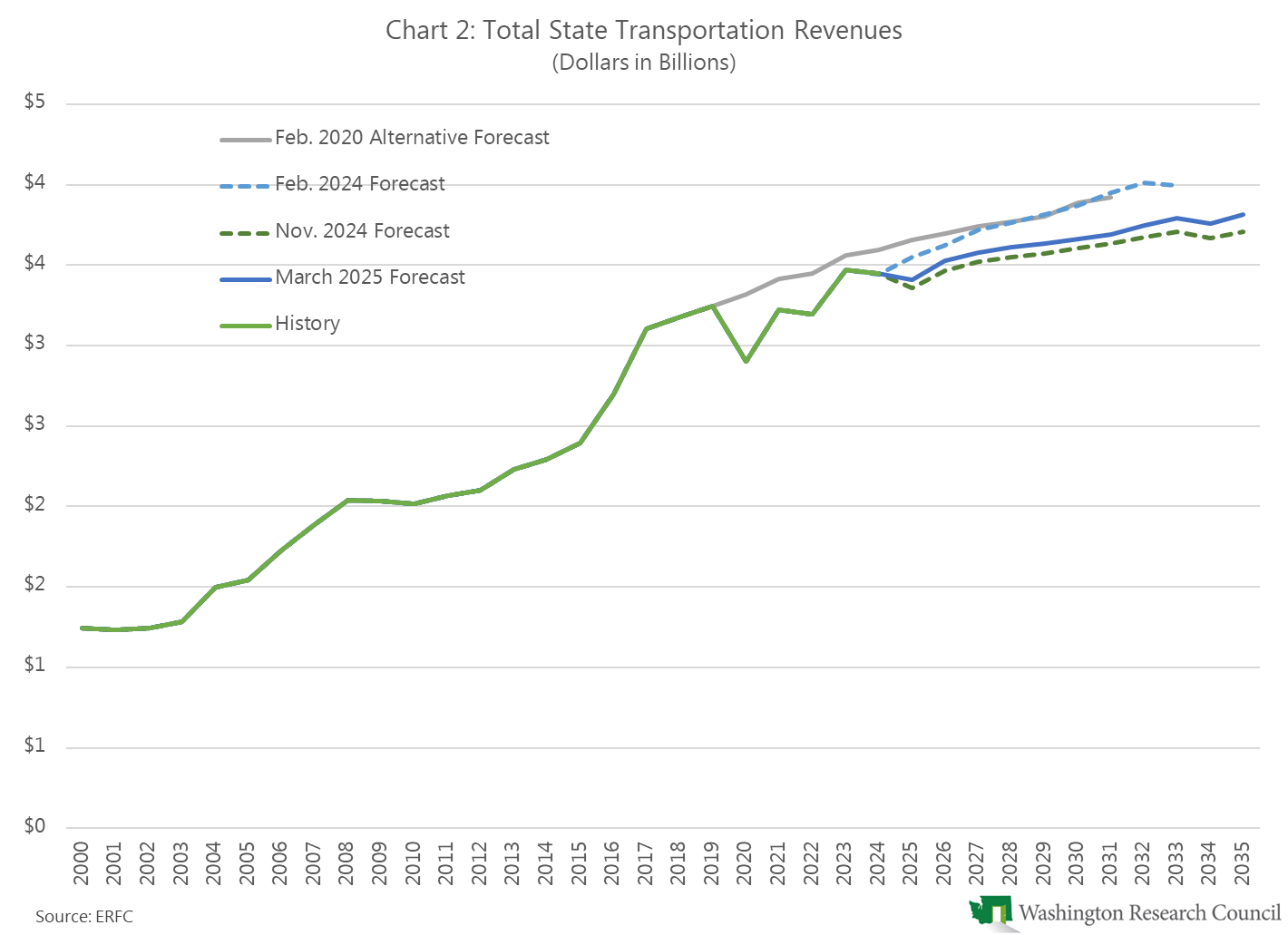
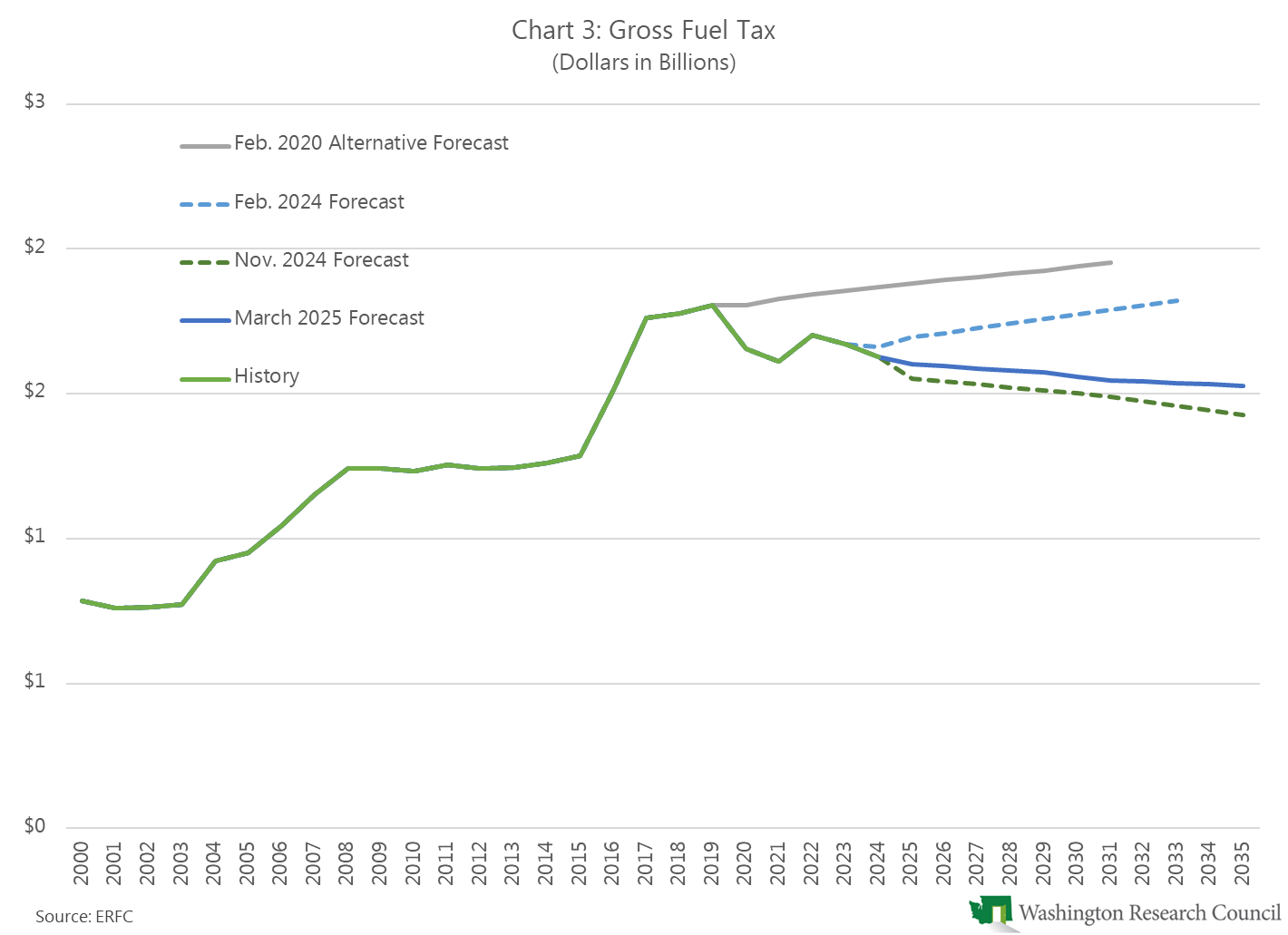
The transportation revenue forecast includes revenues from motor vehicle fuel taxes (the largest source of transportation revenues); vehicle and driver fees; ferries; tolls; the 0.3% vehicle sales and use tax; the rental car tax; and various other transportation-related sources. It does not include revenues from the carbon emission allowance auctions.
At the Transportation Economic and Revenue Forecast Council meeting yesterday, there was another question about whether the ERFC should take over allowance auction revenue forecasting from the Department of Ecology. If the Legislature decides to make that change, it would have no bearing on the transportation revenue forecast until 2038. As I wrote in my post about Ecology’s most recent forecast, statute specifies the dollar amount of the auction revenues that go to the transportation budget. (Beginning in 2038, the statute directs 50% of auction revenues to transportation.)
Categories: Budget , Transportation.