12:21 pm
September 16, 2022
On Wednesday, Crosscut ran a piece from the Center for Public Integrity on the regressivity of state taxes. The story relies on the 2018 state and local tax structure study from the Institute on Taxation and Economic Policy (ITEP). We wrote in depth about our concerns with the ITEP study here. In short:
- It overstates consumption spending by lower-income taxpayers relative to income and thus overstates the amount of taxes they pay.
- The way it treats our B&O tax means that ITEP overestimates the degree to which the B&O tax is shifted onto lower-income taxpayers.
More broadly, looking at just the state and local tax structure ignores the substantial impact of the highly progressive federal income tax. The overall federal-state-local tax burden is progressive in every state, including Washington.
Additionally, focusing on the tax burden ignores the spending side of the fiscal system. The Center for Public Integrity piece notes,
How a state chooses to collect money impacts not only who pays more but also how much revenue it generates to fund public services. Poor people handing over a higher percentage of their income in taxes and fees to fund state and local services often end up with less in return. That’s often the case with school funding.
The story does not show that lower-income people in Washington get less in return. Indeed, the school funding data source they link to shows that Washington has the 11th most progressive school funding in the country. (This appears to be based on data from 2015, so the full impact of the increased state spending related to the McCleary decision on school funding is not reflected.)
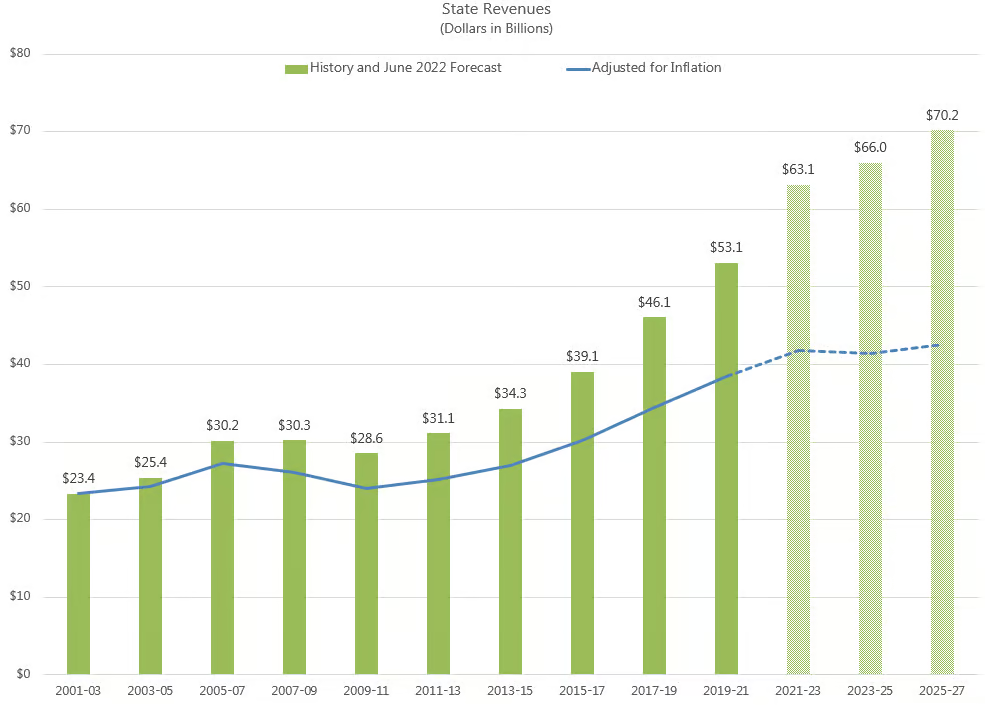
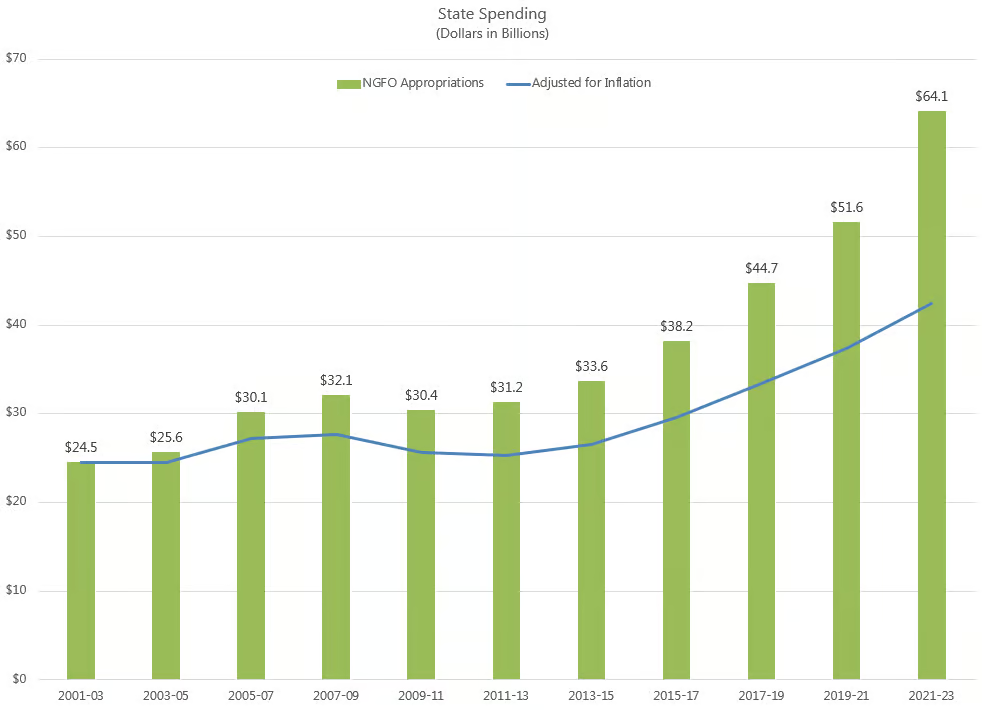
The state of Washington has experienced substantial revenue growth coming out of the Great Recession, and those revenues have allowed for historically high levels of spending. According to data from the U.S. Census Bureau, in 2020 (the most recent year available), Washington ranked 13th among the states in state and local taxes per capita and 11th in state and local spending per capita.