9:55 am
December 15, 2021
Revenues to funds subject to the outlook (NGFO), which fund the operating budget, were essentially back to pre-pandemic levels by March 2021. With the Nov. 2021 forecast, NGFO revenues are up $8.566 billion (5.1%) through 2023–25 (compared to the pre-pandemic Feb. 2020 forecast).
State transportation revenues are a different story. According to the Nov. 2021 transportation revenue forecast, state transportation revenues are still below their pre-pandemic forecast. Through 2023–25, the Nov. 2021 transportation forecast is $1.037 billion (4.9%) below the Feb. 2020 alternative forecast. (The Feb. 2020 alternative forecast excluded the impacts of I-976, which the state Supreme Court ruled was unconstitutional in Oct. 2020.)
The transportation revenue forecast covers a 10-year period. Based on data from the Department of Transportation, from FY 2020 through FY 2031, the Nov. 2021 forecast is $1.211 billion (2.8%) lower than the Feb. 2020 alternative forecast.
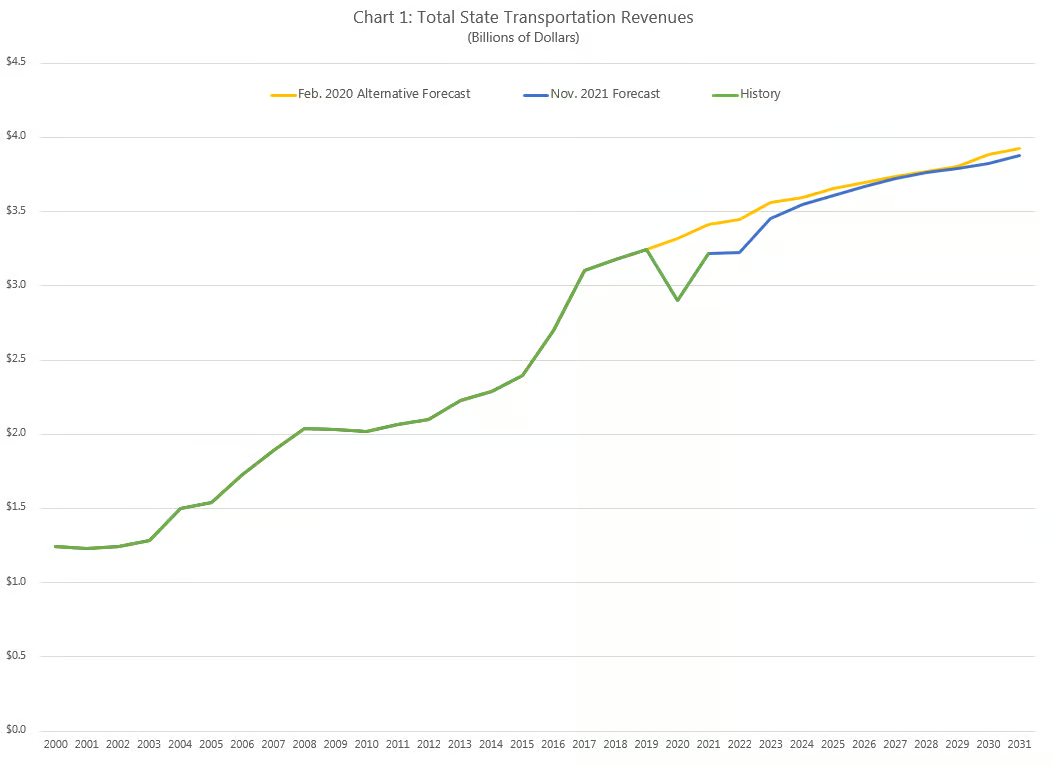
Further, although NGFO revenues did not decline from FY 2019 to FY 2020 (they increased by 4.1%), state transportation revenues dropped by 10.6%. Chart 1 shows the history of state transportation revenues and compares the Nov. 2021 forecast to the Feb. 2020 alternative forecast. In 2019–21, revenues came in $611.3 million below the Feb. 2020 forecast. For 2021–23, revenues are now expected to be $330.9 million below the Feb. 2020 forecast. (In the 2021–23 transportation budget, the state appropriated $600.0 million from the state’s share of the federal coronavirus state fiscal recovery fund to backfill lost transportation revenues.)
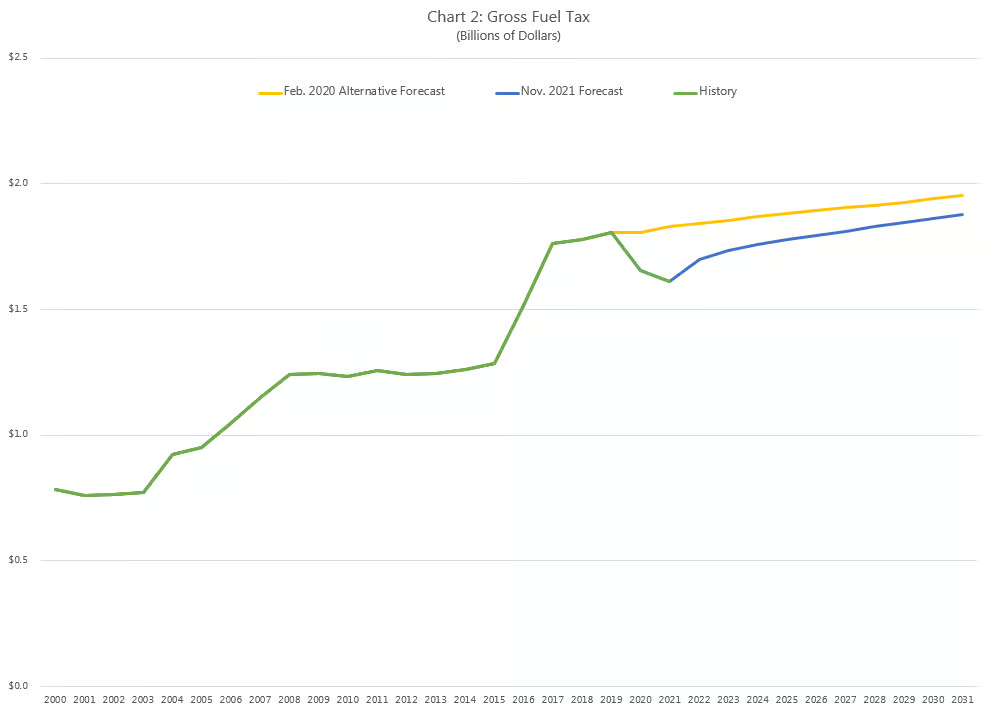
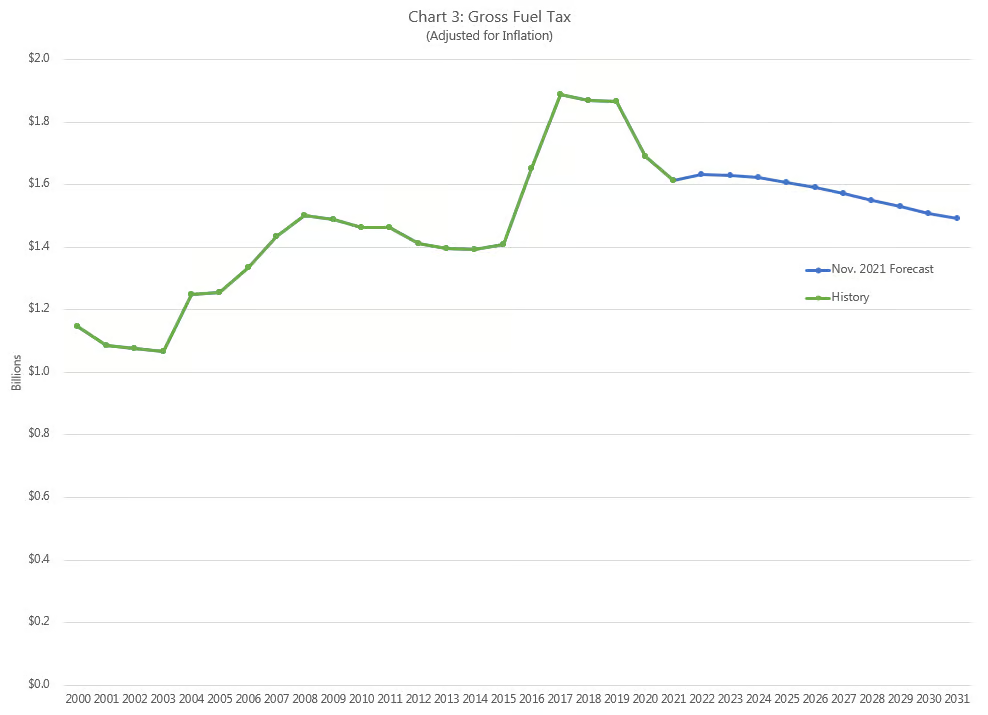
In FY 2022, gross fuel tax is estimated to account for 52.7% of total state transportation revenues. Chart 2 shows the gross fuel tax by forecast. Note that the increases in 2004, 2006–2009, 2016, and 2017 correspond to increases to the gas tax rate. Chart 3 shows gross fuel tax revenues adjusted for inflation.
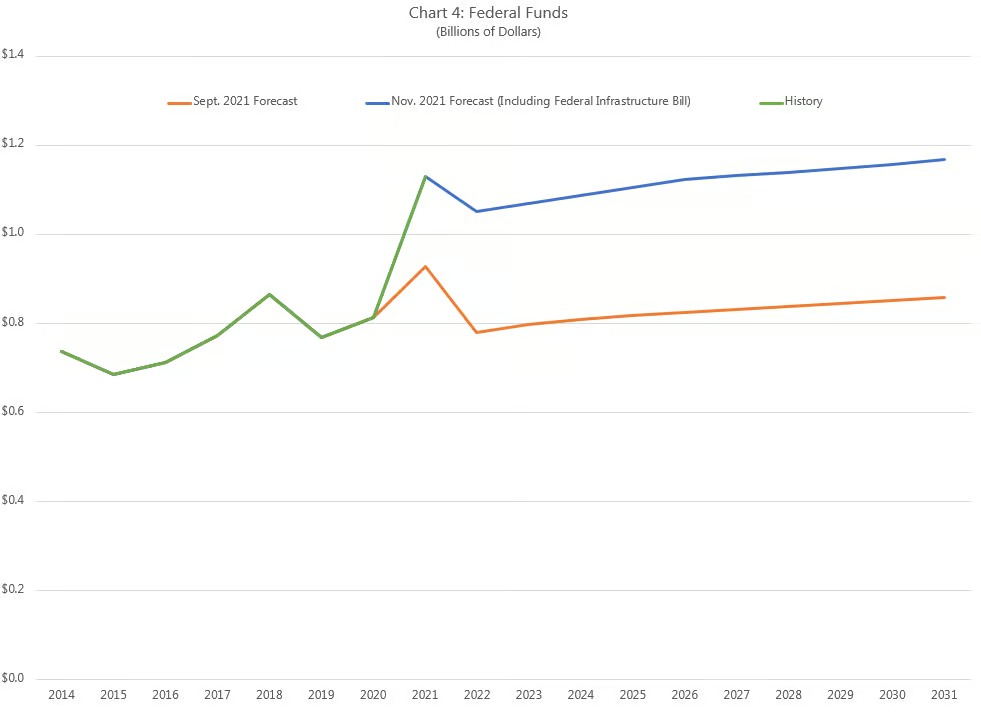
Meanwhile, Chart 4 shows the federal funds forecast. The Nov. 2021 forecast includes the estimated impacts of the federal Infrastructure Investment and Jobs Act, which was enacted in November.
Given the huge surplus in the operating budget and the fact that revenues in the transportation budget are still below pre-pandemic expectations, several bills have been pre-filed that would effectively shift funding from operating to transportation purposes:
- HB 1602/SB 5488 would transfer $772.0 million from the general fund–state (GFS) to various transportation accounts in order to pay off the Tacoma Narrows Bridge.
- HB 1603 would (beginning in 2025–27) shift funding responsibility to the GFS for fish passage barrier removal, ADA upgrades to transportation facilities, new buildings where state transportation employees work, mobility and public transit grants and programs, clean fuel programs, electric car tax incentives, safe routes to schools, bicycle and pedestrian pathways, intercity passenger rail service, freight rail assistance, and stormwater facility upgrades and maintenance.
- HB 1604 would shift the revenue from sales taxes collected on the sale of motor vehicles from the GFS to a new transportation preservation and maintenance account beginning July 1, 2022. (The fiscal note for a similar bill in 2020 estimated that the sales tax collections on vehicle sales would be about $1.175 billion in FY 2021.)
- HB 1607 would fund the safe routes to school program from the GFS beginning July 1, 2025. (The transportation budget includes $36.7 million for the program in 2021–23 and $19.2 million is expected in each biennium thereafter.)
- HB 1249, which was introduced last year but not acted on, would transfer sales taxes paid by the Department of Transportation from the GFS to the motor vehicle fund and the multimodal transportation account. The fiscal note estimated this would reduce GFS revenues by $1.1 million in 2021–23.