2:17 pm
May 21, 2026
Andrew Villeneuve of the Northwest Progressive Institute argues that Washington’s budget “has been shrinking.” His analysis is premised on the opinion that state government should grow as fast as the economy.
Additionally, the subtitle to Villeneuve’s post claims, “In relative terms — the only terms worth using for comparisons — the state budget has gotten smaller, even with recent tax and fee increases adopted by the people’s elected representatives.” Every state data point in his post ends by fiscal year 2025. The historically large tax increases adopted last year and this year were not implemented by FY 2025. (Some have still not been implemented to date.)
Comparing tax and spending data over time
Villeneuve is right that comparisons over time should be adjusted to account for various differences. The two main methods are to present the data per capita or as a share of personal income. (These adjustments are also useful in comparing fiscal data across states.)
Villeneuve writes,
Economists and budget analysts often compare expenditures to measures like personal income because they provide a clearer picture of government relative to the economic capacity of the state. It’s not surprising, then, that the metrics OFM itself features on its website are revenue and expenditures per $1,000 in personal income.
Note that OFM also features on its website revenue and spending data per capita, because both measures are valid.
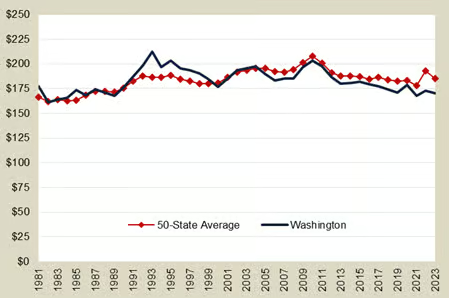
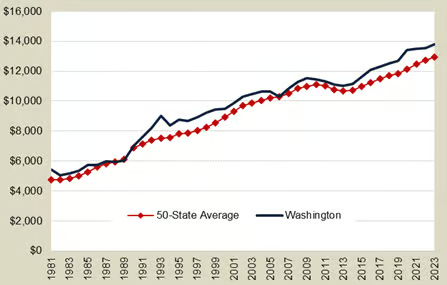
The OFM charts above (like my charts here) include all state and local spending—not just spending from state funds subject to the outlook. Per capita state and local spending is increasing, but spending as a share of personal income is down slightly because Washington is an increasingly wealthy state. (Note that there is a data lag, so these charts end in 2023.) Effectively, Washington can spend more per person today than we could previously at the same tax rate.
Measuring state taxes as a share of personal income is a way to indicate the revenue capacity of a state. But in my opinion, the most appropriate way to measure state spending is per capita. The per capita measure tells you more about adequacy. There is not an objective link between the capacity to spend more and the actual need for services.
Villeneuve writes, “When the economy grows, so do revenue collections and the demand for the essential public services the state provides.” Certainly, revenues increase when the economy is growing. But it does not follow that demand for state services increases linearly. For example, K–12 enrollment is declining. And, as people earn more, they no longer qualify for safety net services (except insofar as the state continues to provide eligibility enhancements).
Spending in Washington
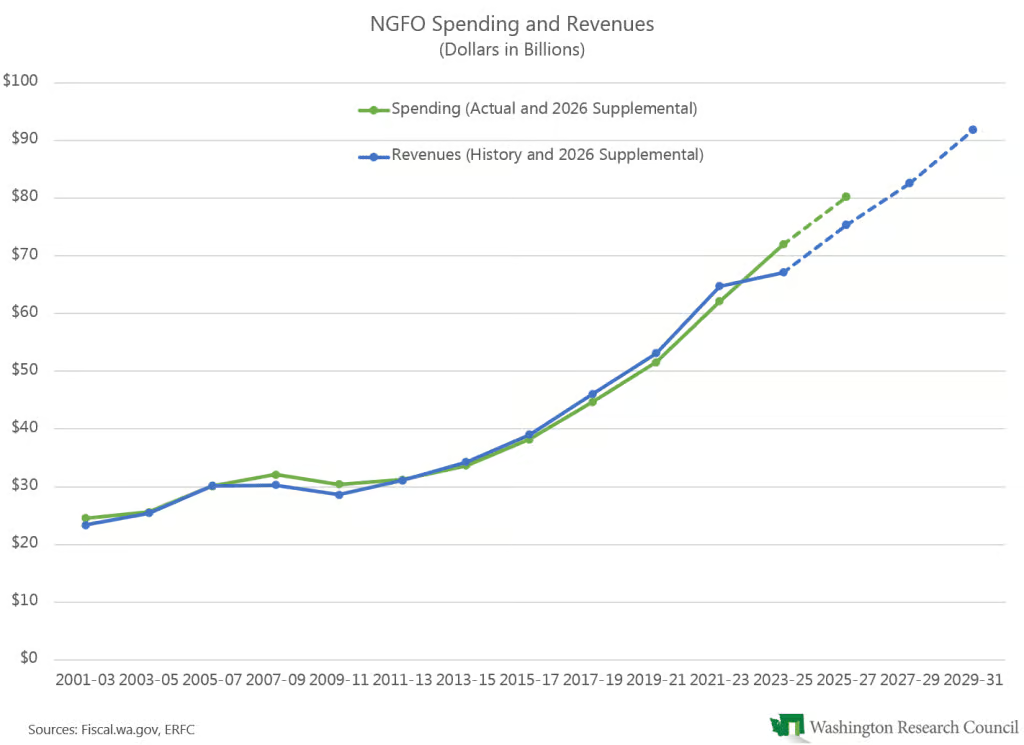
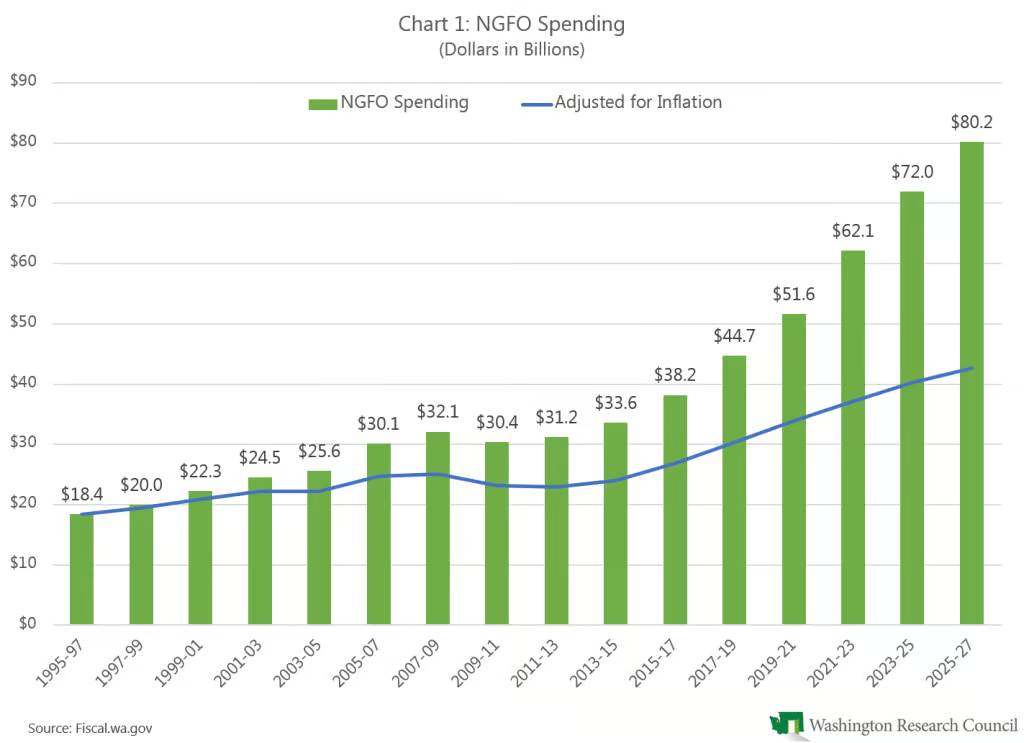
Chart 1 shows spending from funds subject to the outlook (NGFO). It is actual spending through 2023–25 and appropriations for 2025–27 (as revised in 2026). Adjusted for inflation, revised 2025–27 appropriations are 77.2% higher than 2013–15 spending.
Villeneuve writes,
It is indisputable that a dollar today doesn’t buy what it did twenty or thirty years ago, and Washington State serves millions more people than it once did, yet people who have decades of media and government experience often choose not to account for economic growth when commenting on the state’s fiscal trajectory.
Note that he first describes the need to adjust for population and inflation, then switches to talking about economic growth. Chart 2 shows state NGFO spending, adjusted for population and inflation. It is indisputable that inflation-adjusted NGFO spending per person has risen dramatically coming out of the Great Recession. Before the Great Recession, real per capita spending increased by an average of 2.8% a biennium. Since then, real per capita spending has increased by an average of 6.9% a biennium.
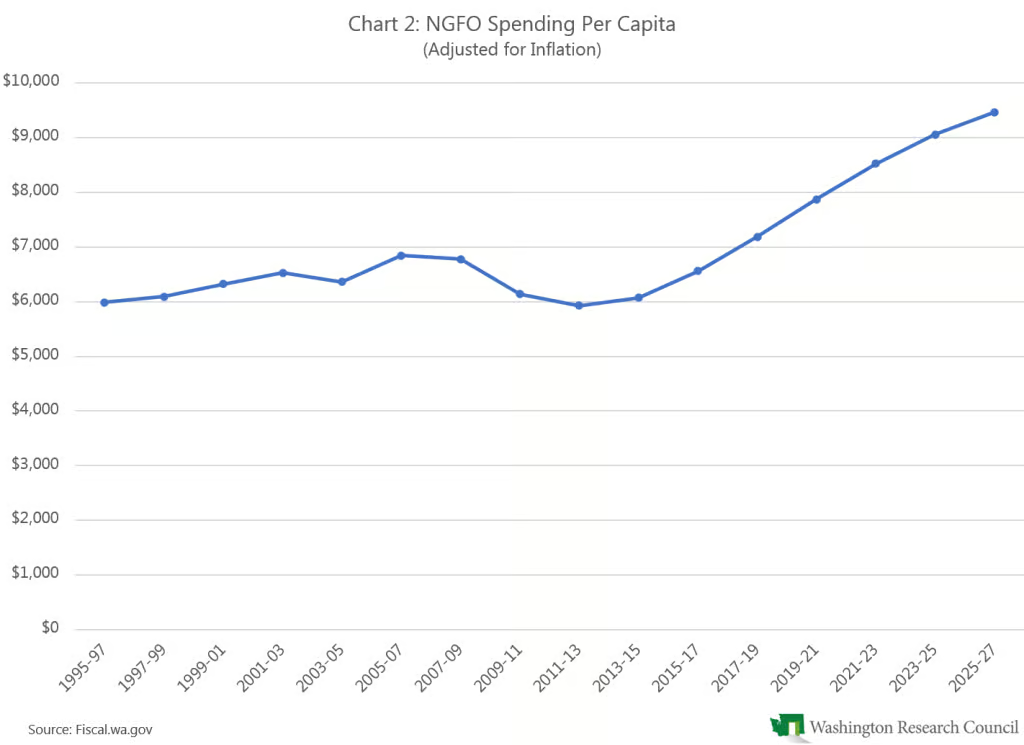
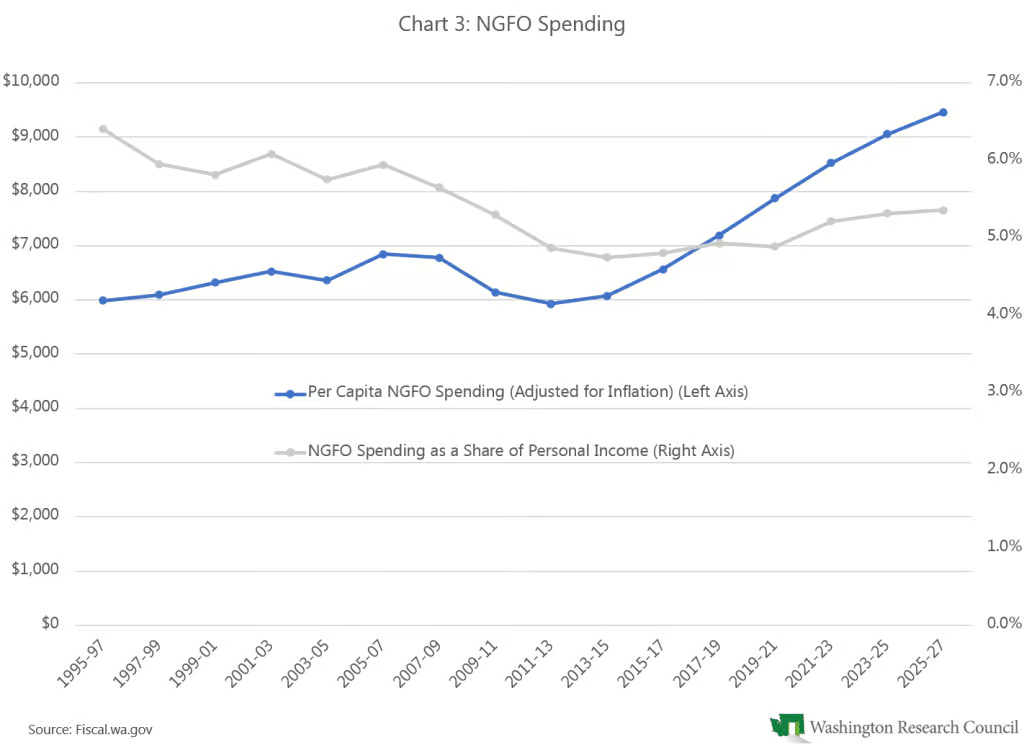
Chart 3 compares NGFO spending as a share of personal income to inflation-adjusted NGFO spending per capita. NGFO spending as a share of personal income is lower than it was before the Great Recession, but it has been increasing since then.
Suggesting that only the personal income measurement is valid is strange, because it ignores the real benefits to Washingtonians of new spending. Reasonable people can disagree about the ideal amount of state spending per person. But if you think higher state spending is a good thing, then the higher per capita spending we are experiencing should be a positive indicator, regardless of our potential capacity to spend.
Missing the point
For my part, arguments about how much spending has grown are almost beside the point. Significant spending increases should generally be avoided, because they can make it harder to adjust if there’s a revenue downturn. But that is not the direct cause of Washington’s current budget problem. The problem is that the Legislature increased spending well above expected revenues in 2023–25, creating a gap that they have still not acted to close (despite two years of major tax increases).