10:54 am
August 11, 2023
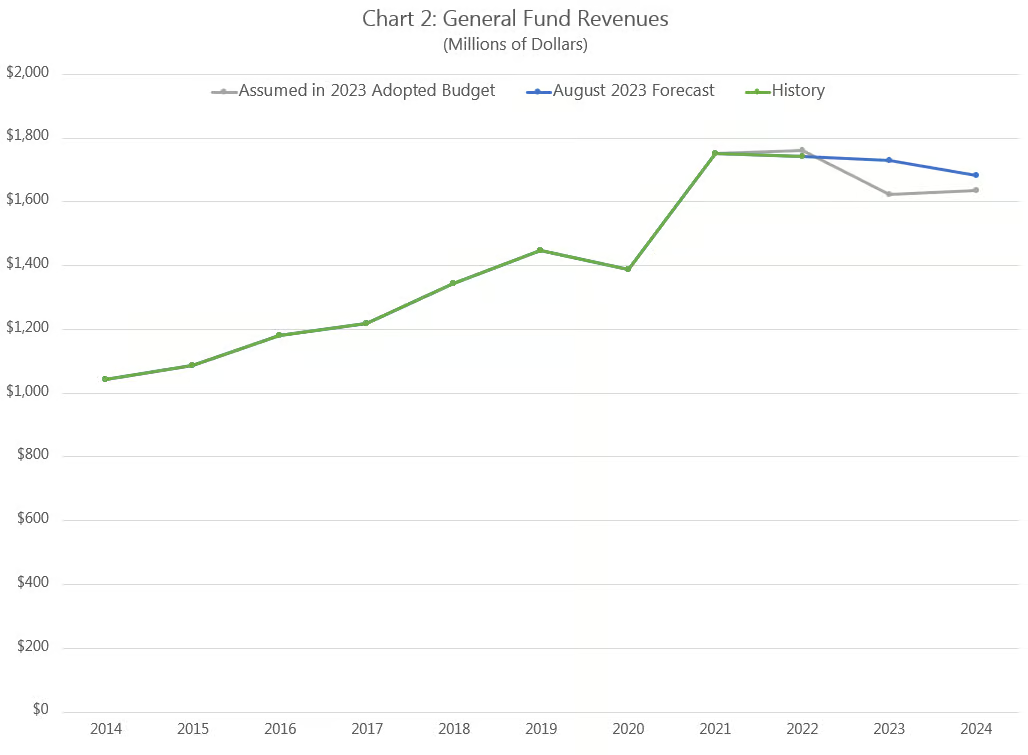
Yesterday Seattle’s Office of Economic and Revenue Forecasts presented the city’s August revenue forecast. It includes updated estimates of general fund revenues and “general fund adjacent” taxes (e.g., the payroll expense tax and the real estate excise tax) for 2023 and 2024. The forecast notes that, compared to the April forecast, general fund revenues are now expected to be higher in 2023 and 2024 but lower thereafter.
Under the forecast, general fund revenues are estimated to decrease by 0.7% in 2023 (compared to 2022) and by 2.8% in 2024 (compared to 2023). However, it’s important to understand that these estimates include both taxes and charges that are deposited in the general fund and revenues from grants (which must be used for specific purposes) and transfers from other funds (which are legislatively directed). Although it may be useful for councilmembers to see the total amount expected to be in the general fund, the inclusion of grants and transfers muddies comparisons between years because they aren’t driven by economic growth.
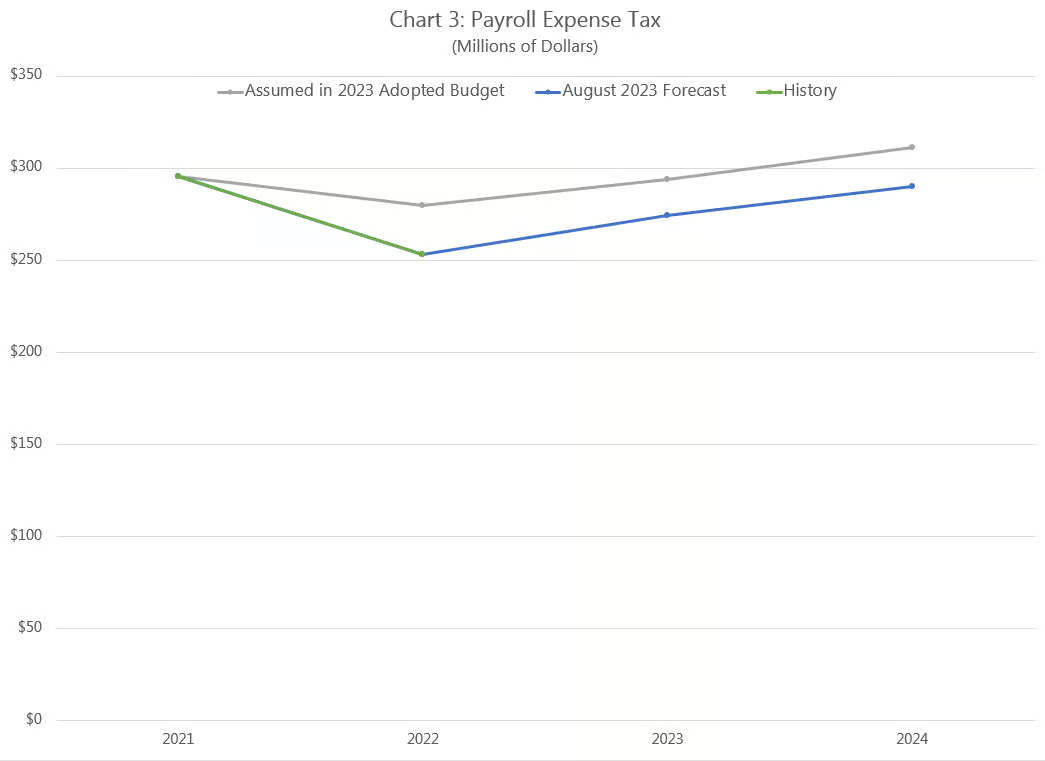
The payroll expense tax (PET) also complicates year-over-year comparisons. All collections from the tax that were due for 2021 activity were deposited in the general fund, but PET collections thereafter are deposited in a separate account. When you remove grants, transfers, and PET in each year, general fund revenues are expected to increase by 1.9% in 2023 (compared to 2022) and by 1.2% in 2024 (compared to 2023). (That said, inflation is a contributing factor. Adjusted for inflation, these revenues are expected to decrease by 3.8% in 2023 and by 1.5% in 2024. A similar pattern is estimated in the state’s June revenue forecast.)
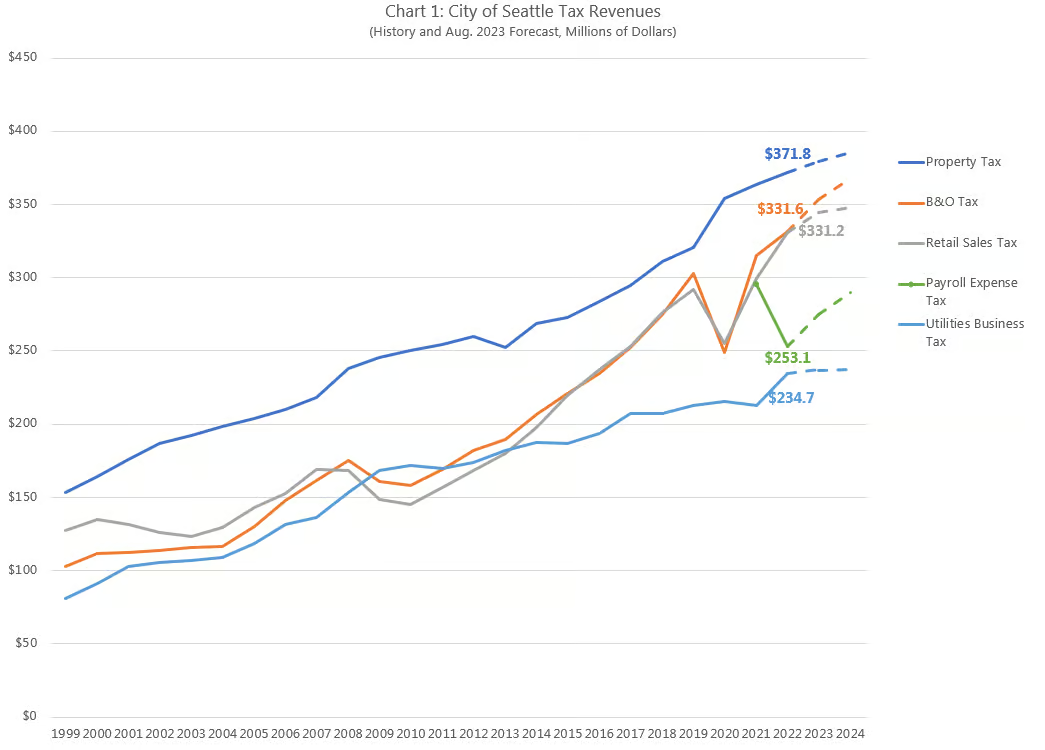
The city’s top four taxes are expected to grow over the next few years, as Chart 1 shows.
Estimated general fund revenues (including grants, transfers, and 2021 PET revenues) are expected to come in higher than assumed in the adopted 2023 budget (see Chart 2). However, payroll expense tax revenues are expected to come in below the levels assumed in the adopted 2023 budget (see Chart 3).
As I wrote yesterday, the city estimates that it has a structural budget deficit and a workgroup has developed a list of options for new taxes. Typically the city council’s Finance and Housing Committee discusses the revenue forecast and hears from the City Budget Office soon after the revenue forecast is presented. That meeting, which could be next Wednesday, will likely provide an updated estimate of the possible shortfall.