
12:49 pm
October 18, 2023
Yesterday Seattle’s Office of Economic and Revenue Forecasts (OERF) presented the city’s October revenue forecast for the general fund and several other revenue streams that go to dedicated accounts (including the payroll expense tax).
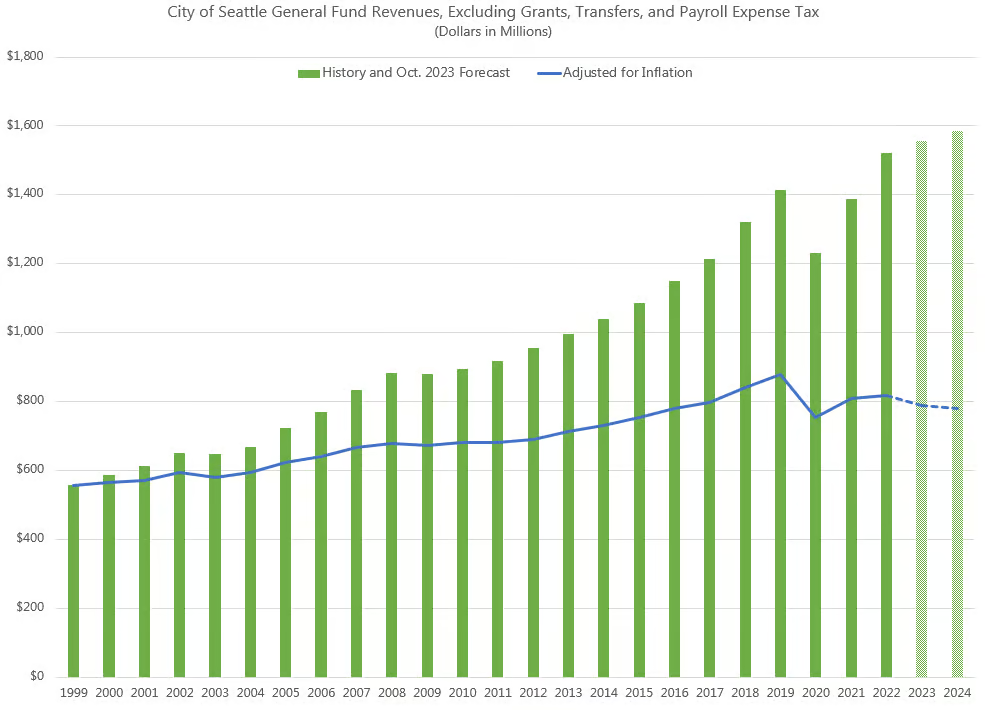
For the city’s general fund, the forecast estimates that revenues will decline in 2023 and 2024 (year over year). However, that includes expected money from grants and transfers. These items are resources in the general fund, but they would not normally be considered revenues. (For example, the state Economic and Revenue Forecast Council doesn’t include in its forecasts estimates of how much the state will transfer from other accounts into funds subject to the outlook.) Instead of appearing in the revenue forecasts, transfers and grants would more appropriately be included in a balance sheet for the general fund (separate from revenues). Grants and transfers are often one-time or must be used for specific purposes. Thus, including them in the revenue forecast may give a false impression about how much the city has to spend on ongoing programs.
If you subtract grants and transfers from the revenue forecast, general fund revenues are expected to grow in each year. (Regardless of whether grants or transfers are included, the general fund forecast is now expected to be $9.8 million higher through 2024 than previously estimated.)
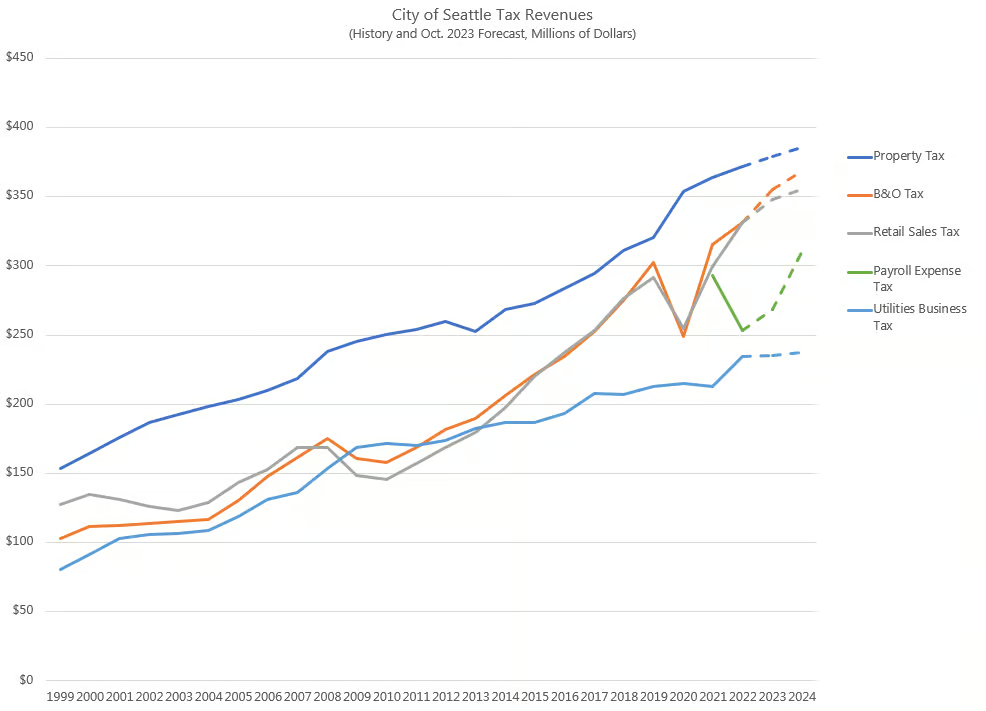
The largest change from the August forecast is in the payroll expense tax (PET), which has already proven to be a volatile revenue source. (For more on the PET, see our policy brief from earlier this year.) PET revenues for 2021 totaled $292.8 million (including a refund that will be paid this year). Then, PET revenues dropped 13.6% to $253.1 million in 2022 (even as other tax sources increased). The current forecast estimates that PET revenues will increase by 6.2% in 2023 and by 15.3% in 2024. The estimated 2024 increase in PET revenues is the largest among the city’s top tax sources.
However, the OERF emphasized that the PET forecast is much less certain than its forecasts of other revenue sources. For example, it is a new tax source, it is highly concentrated, and it is driven by stock prices. The OERF provides a range to indicate the uncertainty of the revenues, based only on the stock market uncertainty piece. The baseline estimate for PET revenues in 2024 is $309.8 million, the optimistic estimate is $357.2 million, and the pessimistic estimate is $254.7 million.
Finally, the PET ordinance allows a deduction for non-profit healthcare entities. This deduction is scheduled to expire at the end of 2023. It appears that the current forecast assumes that this deduction does indeed expire at the end of this year, which accounts for about $4.5 million of the PET forecast for 2024.
Note, though, that a Seattle City Council Central Staff memo from last week suggests that previous forecasts did not assume an increase in revenues due to the expiration of the deduction. The mayor’s proposed budget would extend the deduction for three years.
Categories: Economy , Tax Policy.