1:29 pm
April 4, 2025
Yesterday I wrote about the new policy increases included in the Senate- and House-passed operating budgets. The increases for 2025–27 ($4.680 billion in the Senate and $4.124 billion in the House) would be offset partially by policy reductions ($3.045 billion in the Senate and $3.210 billion in the House). (The numbers in this post are in terms of funds subject to the outlook, or NGFO, unless otherwise noted.)
Former Gov. Inslee’s Book 1 budget proposal (which balanced within current resources) included $6.224 billion in savings. Inslee’s Book 2 budget proposal (which would have added new taxes) included $1.002 billion in savings. Gov. Ferguson endorsed the $1.002 billion in savings in Inslee’s Book 2 and suggested another $1.169 billion in savings. The Senate Ways & Means Committee Ranking Member proposed $2.753 billion in savings.
There is considerable overlap among the savings items included in the proposals. The chart shows how the savings are distributed across budget areas in each of the proposals. Clearly, there are many ways the budget could be cut (try your hand at it here).
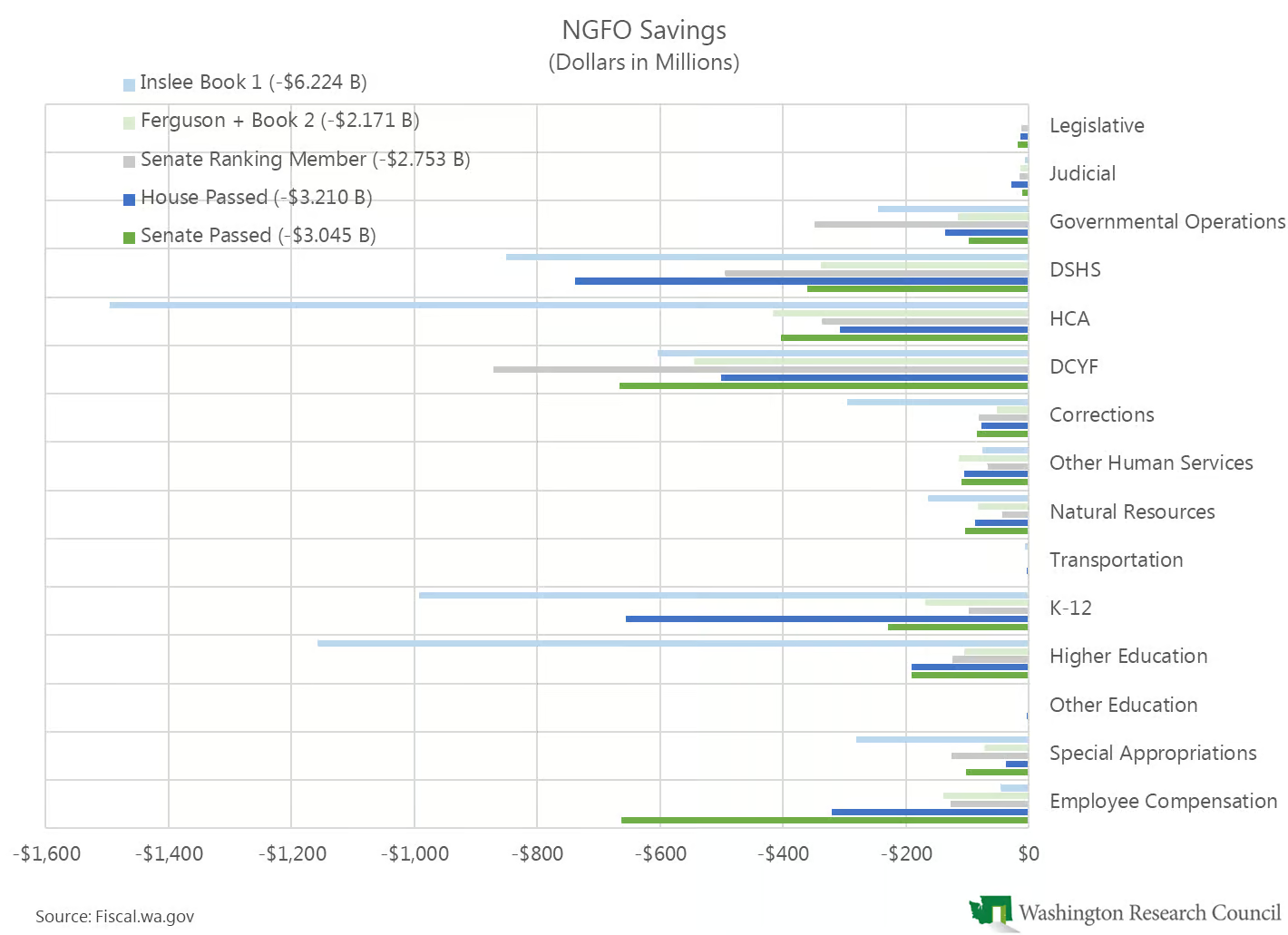
Note that current appropriations for 2023–25 are $71.945 billion and the maintenance level (the cost of continuing current services, adjusted for inflation and enrollment) for 2025–27 is $76.840 billion. The Senate and House reductions represent just 4% of the maintenance level.
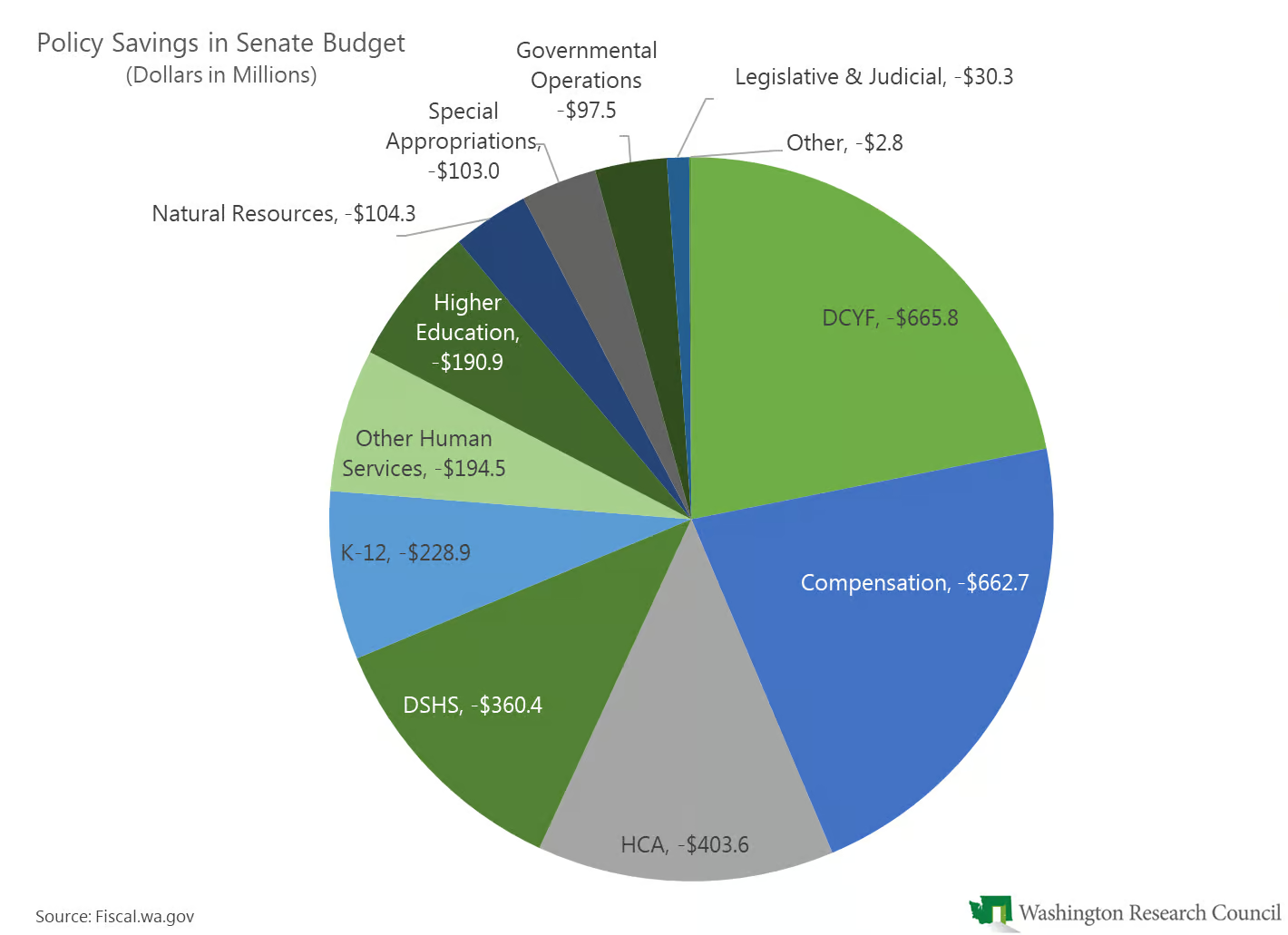
Some of the major savings items in the Senate-passed budget include:
- $345.3 million from delaying the entitlement in the Early Childhood Education & Assistance Program (ECEAP) and delaying expansion of Working Connections Child Care (WCCC) income eligibility
- $127.6 million from delaying the planned WCCC center rate increase
- $182.1 million from 13 furlough days for state employees
- $324.6 million from merging legacy retirement plans
- $134.4 million from moving certain Medicaid services to fee-for-service
- $49.0 million from eliminating the recovery navigator program
- $41.4 million from increasing annual license renewal fees for nursing and other facilities
- $74.6 million from limiting transition to kindergarten enrollment
- $48.9 million from reducing K–12 grant funding
- $49.9 million by assuming a 5% higher education tuition increase
- $40.4 million from across-the-board reductions to higher education institutions
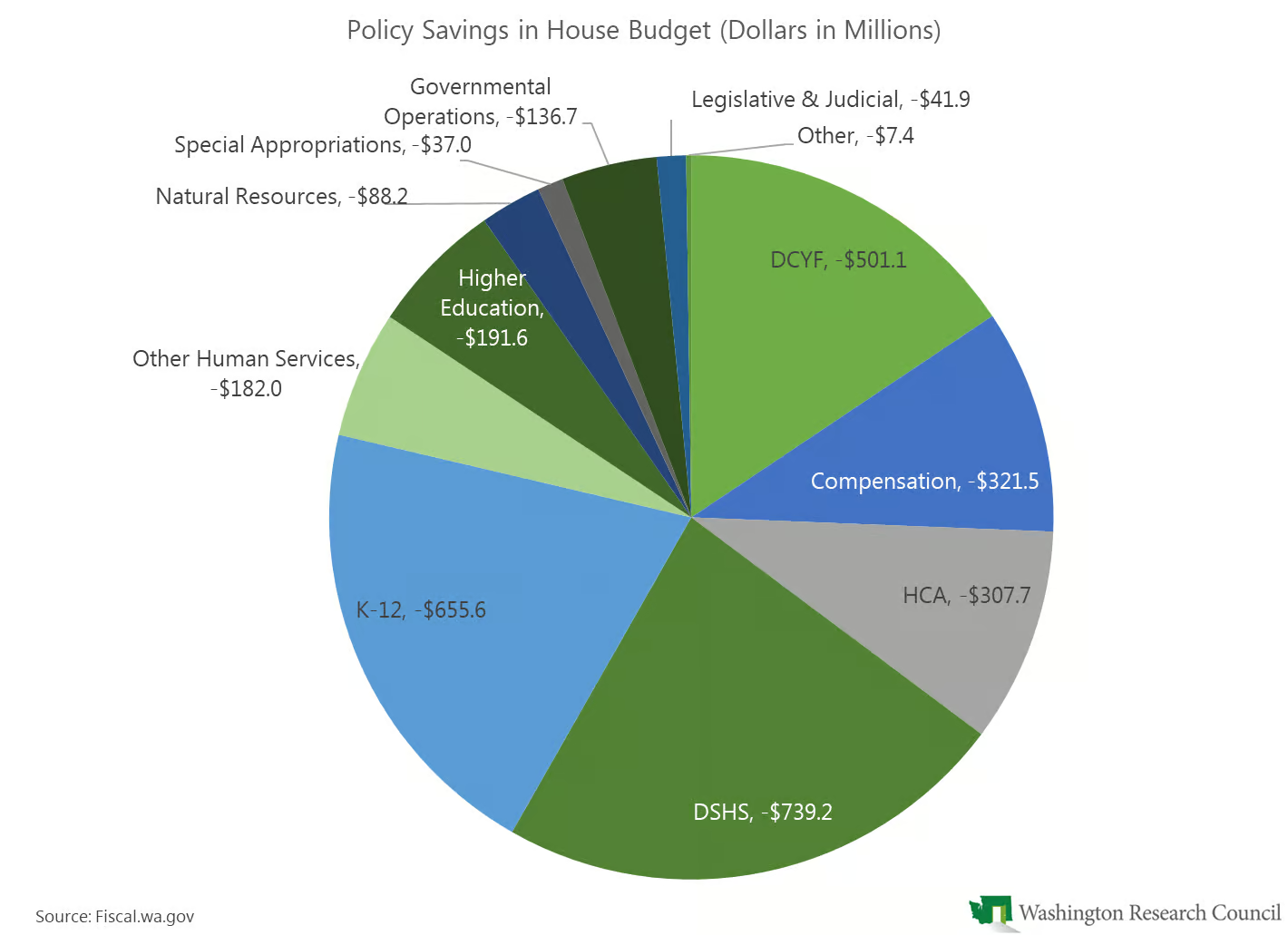
Some of the major savings items in the House-passed budget include:
- $161.7 million from delaying expansion of WCCC income eligibility
- $127.6 million from delaying the planned WCCC center rate increase
- $70.1 million from delaying the ECEAP entitlement
- $321.5 million from a pension rate adjustment
- $66.8 million from delaying the elimination of Aged, Blind, and Disabled program recoveries
- $44.5 million from consolidating DSHS management staff and reducing administrative positions
- $396.7 million by shifting some apportionment payments to school districts into 2027–29
- $119.8 million from reducing K–12 grant funding
- $74.6 million from limiting transition to kindergarten enrollment
- $55.3 million from eliminating the Washington College Grant bridge grant
- $59.8 million from across-the-board reductions to higher education institutions
Overall, the savings items include across-the-board reductions, efficiencies (e.g., from not filling vacancies and reducing travel), specific program eliminations or delays, and shifts from the NGFO to other funding sources. Additionally, the House-passed budget would eliminate the Washington State Leadership Board (saving $1.9 million from non-NGFO funds) and the Columbia River Gorge Commission (saving $1.8 million NGFO and $1.8 million from other funds).
Tags: 2025-27