
9:51 am
December 30, 2020
Last week the Everett Herald editorialized in favor of Gov. Inslee’s proposed taxes for 2021–23. A few points, for context:
First, the editorial states, “Much of the Legislature’s focus when its session begins next month will be on filling an estimated $3.3 billion hole in revenue that the covid-19 pandemic and its economic downturn bore into the state budget this year.”
The $3.3 billion is over three years. In November, the Economic and Revenue Forecast Council estimated that 2019–21 revenues will be $1.694 billion lower than expected in February and that 2021–23 revenues will be $1.651 billion lower than expected in February. Although those reductions in expected revenues are significant, it’s important to remember that the 2019–21 budget still balances without any additional action from the Legislature. (It also easily balances over four years if the rainy day fund is used.)
The trouble for the Legislature will not be filling the revenue hole, it will be determining how to fit new policy items into the budget. Without enacting any new taxes, 2019–21 revenues are currently estimated to increase by 10.7% over 2017–19 and 2021–23 revenues are estimated to increase by 7.2% over 2019–21.
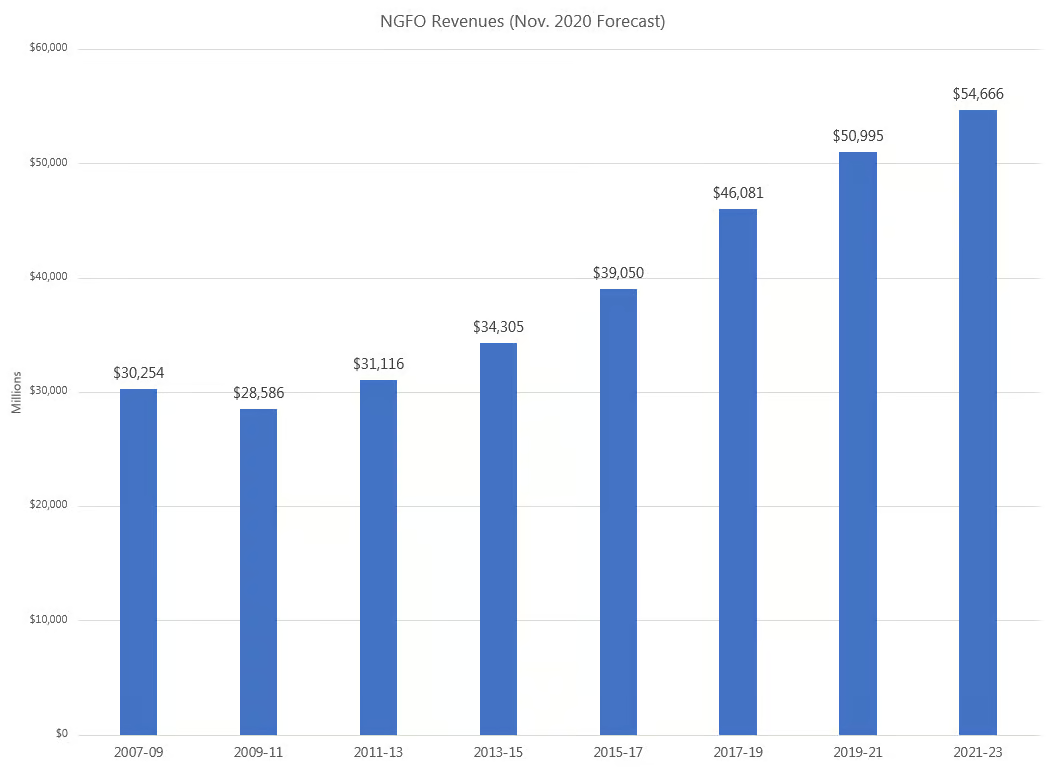
Second, the editorial adds,
Importantly, Inslee’s plan would provide funding for the Working Families Tax Credit, similar to the federal Earned Income Tax Credit, a program created by the Legislature in 2008 but so far left unfunded by state lawmakers. The tax credit would provide a tax rebate to lower-income families, again helping to better balance the state’s regressive tax system.
When Gov. Inslee announced his package of climate proposals earlier this month, he said that the sale of emission allowances would fund “part” of the working families tax credit. However, if that happens, it would be at some future time—the governor’s 2021–23 budget proposal does not actually include any funding for the working families tax credit.
(Also, regarding the regressivity of our tax structure: such estimates overstate the tax burden on low-income households in Washington and fail to take the highly progressive federal tax system into account. When it is considered, Washington’s overall tax burden is progressive.)
Categories: Budget , Tax Policy.Tags: 2021-23