10:19 am
March 12, 2026
As I wrote yesterday, the operating budget conference report would increase appropriations from funds subject to the outlook (NGFO) by $2.348 billion compared to enacted appropriations for 2025–27. That includes $1.727 billion at the maintenance level (the cost of continuing current services, adjusted for enrollment and inflation) and $621.3 million in net new policy.
The new policy is comprised of $1.592 billion in increased spending and $970.4 million in reductions. Of the reductions, shifts of program funding from the NGFO to other funds account for $432.1 million.
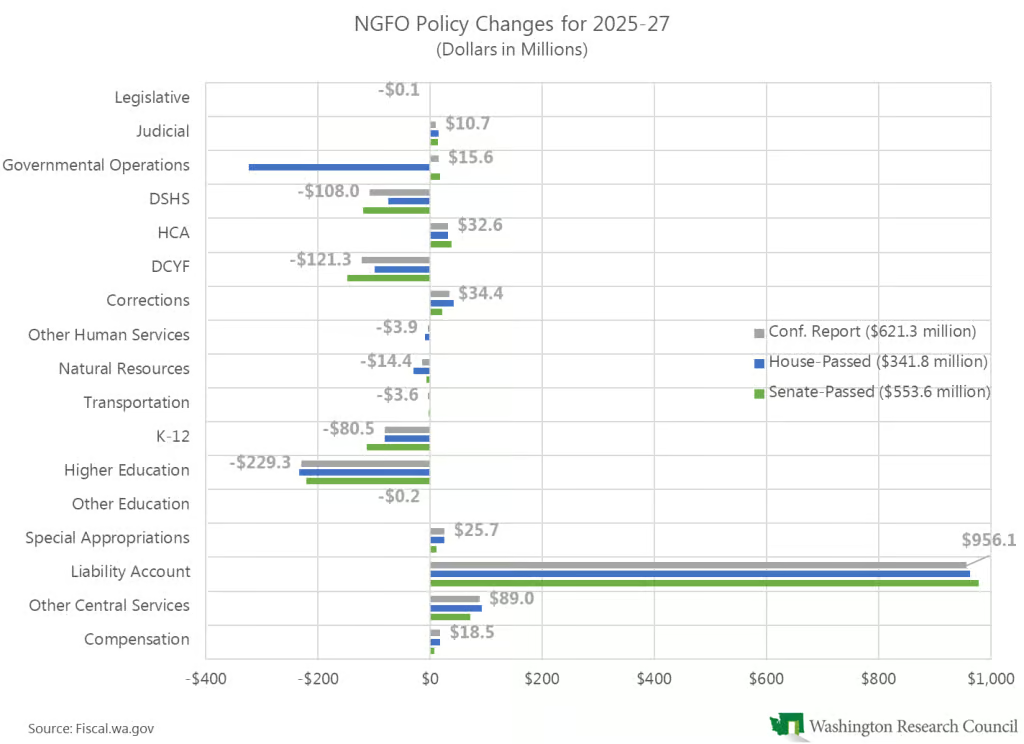
Overall, the policy changes are very similar to those included in the House- and Senate-passed budgets, as the chart below shows. All three focus most of the spending increases on funding the state liability account, and all three would shift $239.9 million in funding for higher education from the NGFO to the institutions’ building accounts. The conference report would not shift funding for the Working Families Tax Credit from the NGFO to the climate commitment account.
Major NGFO policy increases for 2025–27 in the conference report include:
- $956.1 million for the state liability account.
- $71.0 million to restore assumed Medicaid program integrity savings that will not be realized.
- $64.4 million in funding from cannabis revenue distributions.
- $50.0 million for various changes in response to federal H.R. 1.
- $25.0 million for the Office of Refugee and Immigrant Assistance.
- $25.0 million for the state health care affordability account.
- $19.4 million for crime victim services.
- $15.0 million for permanent supportive housing.
- $15.0 million for UW’s Center for Behavioral Health and Learning.
Major NGFO policy reductions for 2025–27 in the conference report include:
- -$239.9 million by shifting funding for the higher education institutions from the NGFO to the institutions of higher education operating fees account. (The operating fees account would then be backfilled using the institutions’ capital budget building accounts.)
- -$143.3 million from various changes to Working Connections Child Care enrollment and rate policies in SHB 2689.
- -$70.0 million for the disproportionate share hospital program, assuming that federal reductions will be delayed.
- -$38.0 million from shifting WorkFirst funding from the NGFO to other accounts.
- -$28.0 million from moving the Apple Health expansion population from managed care to fee-for-service. (Savings from this change would be offset by adding 5,000 slots to the caseload as of Jan. 1, 2027.)
- -$27.3 million by reducing the Transition to Kindergarten program.
- -$25.1 million by reducing local effort assistance enhancements by $100 per pupil.
- -$24.0 million from shifting funding for emergency housing from the NGFO to the Washington housing trust account.
- -$22.7 million in general, across-the-board administrative reductions.
- -$21.2 million from a one-year delay in the assisted living facility rate rebase.
- -$21.1 million by reducing school bus depreciation payments.
- -$20.4 million by aligning funding with expected expenditures for long-term civil commitment beds.
- -$7.0 million from lowering the maximum Running Start enrollment.
Tags: 2026 supplemental