
1:16 pm
November 3, 2021
According to the Employment Security Department (ESD), premiums for paid family and medical leave will increase to 0.6% beginning Jan. 1, 2022.
The premium for this program is paid on gross wages up to the Social Security cap ($147,000 in 2022). The rate can range from 0.1% to 0.6%; if the balance ratio is sufficiently low, a solvency surcharge may be added. We wrote about the program and payroll tax here.
By statute (RCW 50A.10.030), the premium rate was 0.4% for calendar years 2019 and 2020. Beginning with 2021, the rate is based on the family and medical leave insurance account balance ratio (calculated by dividing the account balance by total covered wages). The 2021 premium rate remained at 0.4%, but the 2022 rate will increase to 0.6%.
The increase from 0.4% to 0.6% may or may not be reflected in employee paychecks. For 2019 to 2021, the premium rate is split so that one-third is for family leave benefits and two-thirds is for medical leave benefits. Under the statute, the employee pays the full amount of the family leave premium and 45% of the medical leave premium. The employer statutorily pays 55% of the medical leave premium.
However, the employer may choose to pay the full premium and not deduct anything from an employee’s paycheck (as is the case with workers’ compensation). (Employers with fewer than 50 employees in Washington don’t have to pay the employer portion of the paid family and medical leave premium.) Statutorily, in 2021, employees are paying 63.33% of the total premium and employers are paying 36.67%.
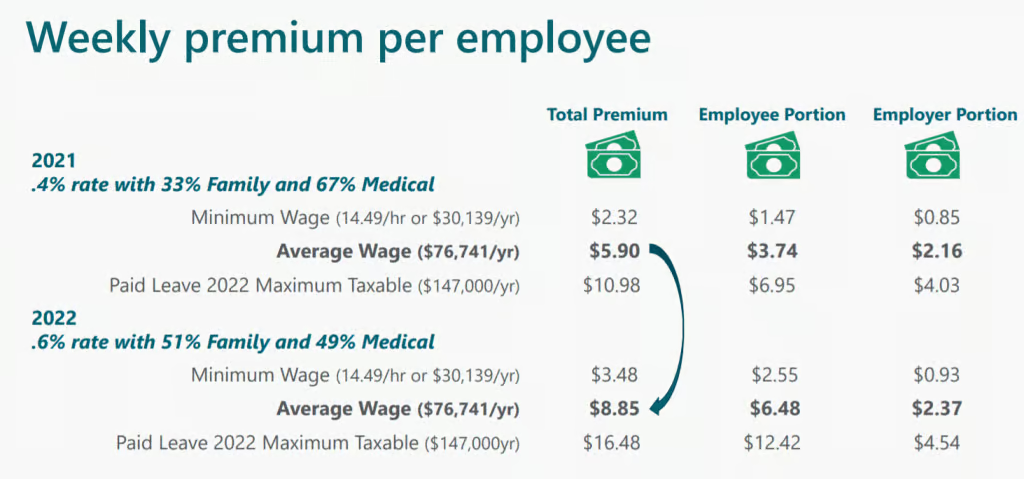
Beginning in 2022, the portion statutorily paid by employees is based on the actual proportion of family to medical claims. The split in FY 2021 was 51% for family leave and 49% for medical leave. Thus, the employee will pay 73.22% of the total premium and the employer will pay 26.78%. The following table from ESD gives some examples of the changes. Although the share paid statutorily by employers will drop, they will still pay more than they did last year, given the rate increase.
Regardless of who pays the premium, this increase is one of several payroll tax increases expected for next year:
- Workers’ compensation rates could go up 3.1% on average.
- The unemployment insurance average tax rate is forecast to increase from 1.22% in 2021 to 1.45% in 2022. (We wrote about unemployment insurance and the pandemic in a policy brief earlier this year.)
- Unemployment insurance taxes will be paid on a larger taxable wage base. It is increasing from $56,500 in 2021 to $62,500 in 2022.
- The new 0.58% long-term care payroll tax begins in January.