2:27 pm
September 25, 2025
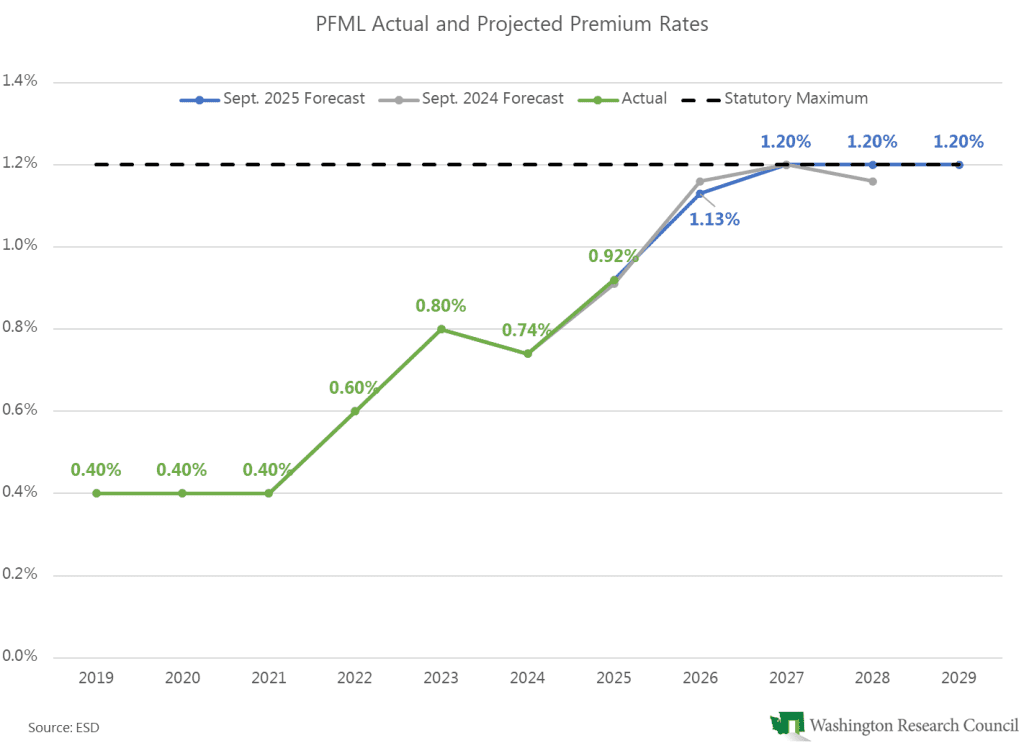
The paid family and medical leave (PFML) premium rate is projected to increase to 1.13% in 2026. (The actual rate will be based on the account balance on Sept. 30, so this is not yet final.) Further, a presentation by the PFML actuary to the PFML advisory committee yesterday shows that the financial outlook for the program has worsened since last year.
First, the premium rate is now projected to reach the statutory maximum of 1.2% in 2027 and remain there indefinitely. According to the presentation, beginning in 2028, the 1.2% rate will not be adequate to cover expenditures.
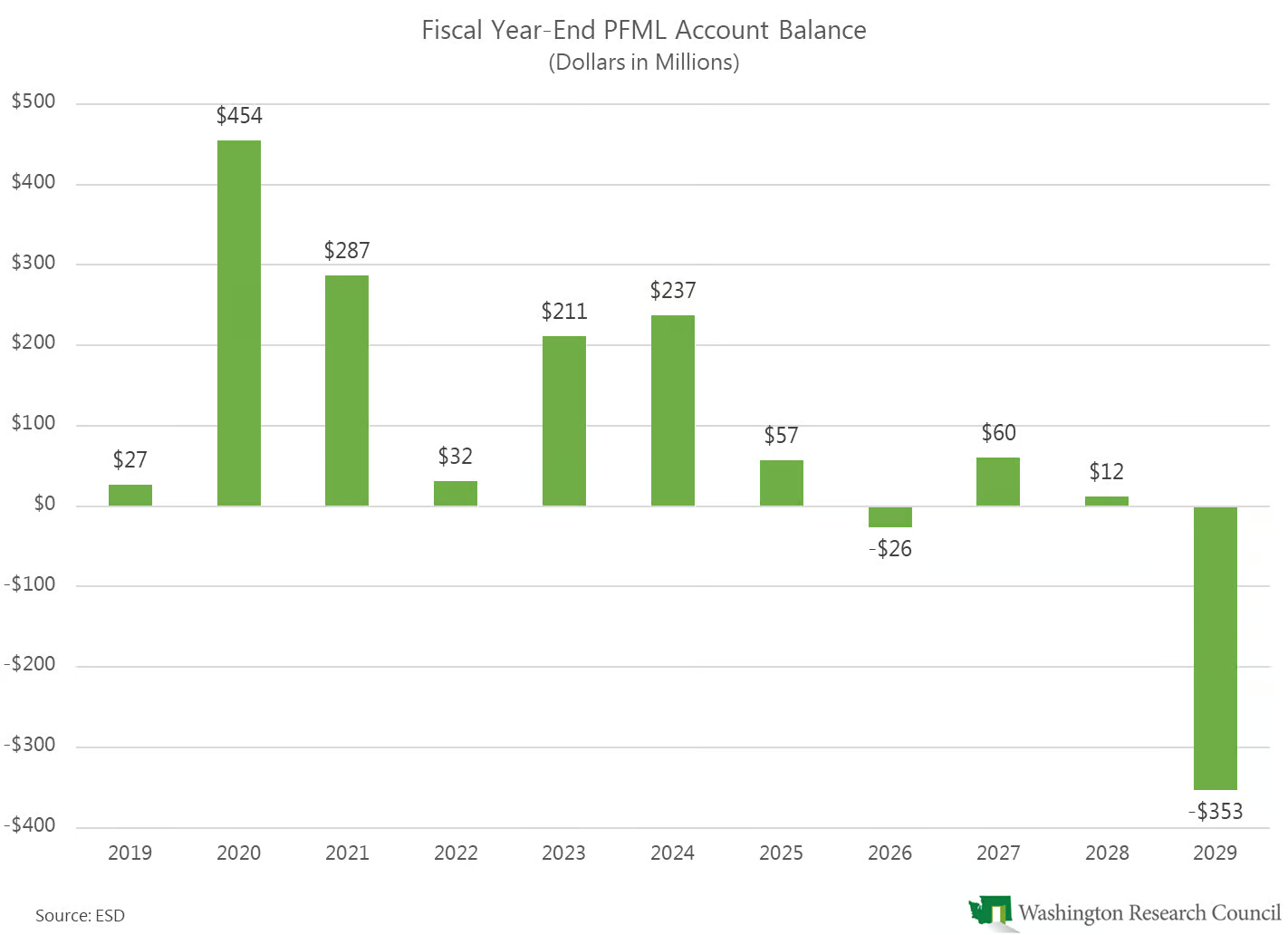
Second, the actuary estimates that the periodic deficits in the account will “become sustained in 2029.” Under current projections, the account is expected to finish FY 2026 with a $26 million deficit. It is expected to have a $353 million deficit at the end of FY 2029 (which is also the end of the 2027–29 biennium).
Given the ongoing financial problems in the program, the Legislature changed its rate structure in 2023 and appropriated $200 million from the general fund–state to the account. Last November, the Employment Security Department and the Joint Legislative Audit and Review Committee (JLARC) recommended that the structure be changed again to a more forward-looking actuarial approach. JLARC found, “The premium rate formula in statute does not produce enough revenue to cover program expenses.” A bill that would have set premiums using an actuarial approach was passed by the Senate this year but not by the House.
Yesterday’s presentation includes several policy options that could be taken to address the solvency problem. These ideas include, for example: reducing the number of benefit weeks or the maximum weekly benefit amount, removing or increasing the statutory premium rate cap, increasing the taxable wage base, or changing the qualifying events.
Categories: Employment Policy , Tax Policy.