
1:16 pm
November 6, 2024
In 2022, Washington’s paid family and medical leave (PFML) program experienced cash deficits. Solvency concerns resulted in several program changes that year, including actuarial reporting requirements. (We discussed the program and its solvency problems in a 2022 policy brief.)
In 2023, the Legislature appropriated $200 million from the general fund-state to the family and medical leave insurance (FMLI) account to keep the program from being in deficit at the end of the 2021–23 biennium and to seed a reserve for the program. Additionally, the Legislature changed the PFML premium rate formula in 2023.
The 2025 rate will be 0.92%. The November 2024 annual PFML actuarial report from the Employment Security Department (ESD) estimates that, under the current rate structure, premiums could reach 1.2% in 2027 (this happens to be the statutory maximum rate). However, the report recommends changing the rate calculation again so that it uses an actuarial approach that would be forward-looking, rather than a formula that is based on the fund balance on Sept. 30 of the prior year. (ESD made the same recommendation in 2023.) Additionally, ESD recommends removing the 1.2% rate cap.
According to ESD, an “actuarial model would provide greater account stability and better match premiums with program expenditures, while potentially leading to a lower tax burden for employers and employees.” Under current law, the FMLI account “is projected to experience ongoing, periodic deficits through 2026 due to the lower 2024 premium rate, and a continued increase in program benefit costs.” The following charts from the ESD report show that the expected deficits would not be as extensive if the state were using an actuarial formula.
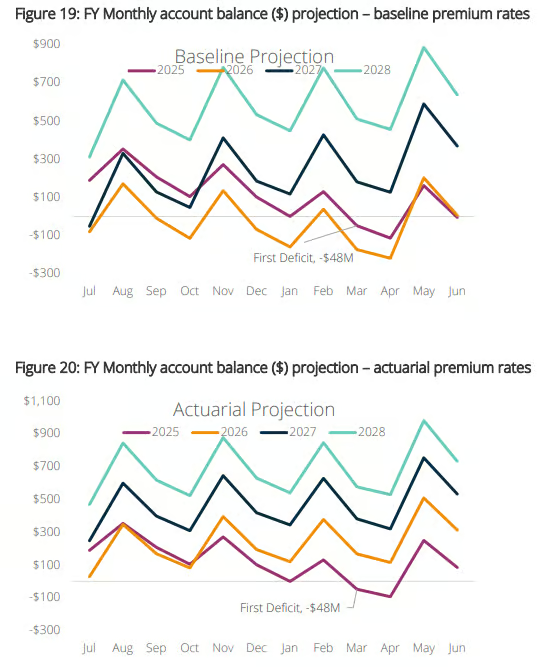
One of the reports required by the 2022 legislation was a performance audit of the program by the Joint Legislative Audit and Review Committee (JLARC). JLARC’s preliminary report has now been released. It concludes, “Paid Family and Medical Leave program expenses are likely to continue exceeding revenues in future years. Changes to the rate formula could make the program more stable and promote financial sustainability.”
Indeed, like ESD, JLARC recommends moving to “a forward-looking rate-setting approach and maintaining a financial reserve.” According to the audit, “The premium rate formula in statute does not produce enough revenue to cover program expenses.”
The 2024 ESD report includes estimates of the premium rate under the current rate formula and an actuarial rate formula.

The following chart shows estimated account balances using the different rate formulas (as reported by ESD to the PFML advisory committee in September).
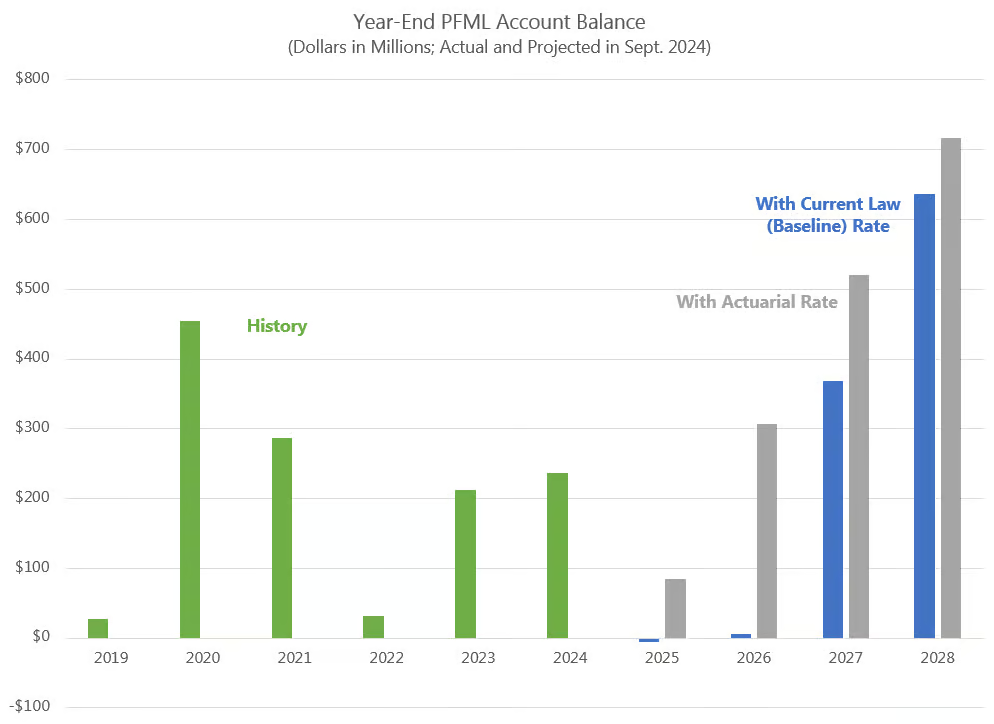
Note that the financial projection (from JLARC’s consultant) included in Appendix A of the JLARC report is quite different from the baseline numbers estimated by ESD in September. The JLARC report estimates that benefits will total $2.329 billion in calendar year 2028; ESD estimates they will total $3.220 billion that year. It’s not clear what accounts for that discrepancy.
In addition to the rate formula recommendation, the JLARC audit recommends that ESD “adopt criteria for its compliance audit program,” “adopt quantifiable customer-oriented performance measures for claims processing and call center management,” and “develop a documented and transparent process for prioritizing projects.”
Categories: Employment Policy , Tax Policy.