12:55 pm
April 29, 2025
The 2025–27 operating budget, as passed by the Legislature, would increase appropriations from funds subject to the outlook (NGFO) by $5.927 billion (8.2%) over enacted 2023–25 appropriations. Of that, $4.409 billion is the maintenance level change (the cost of continuing current services, adjusted for inflation and enrollment). The remaining $1.039 billion is net new policy spending.
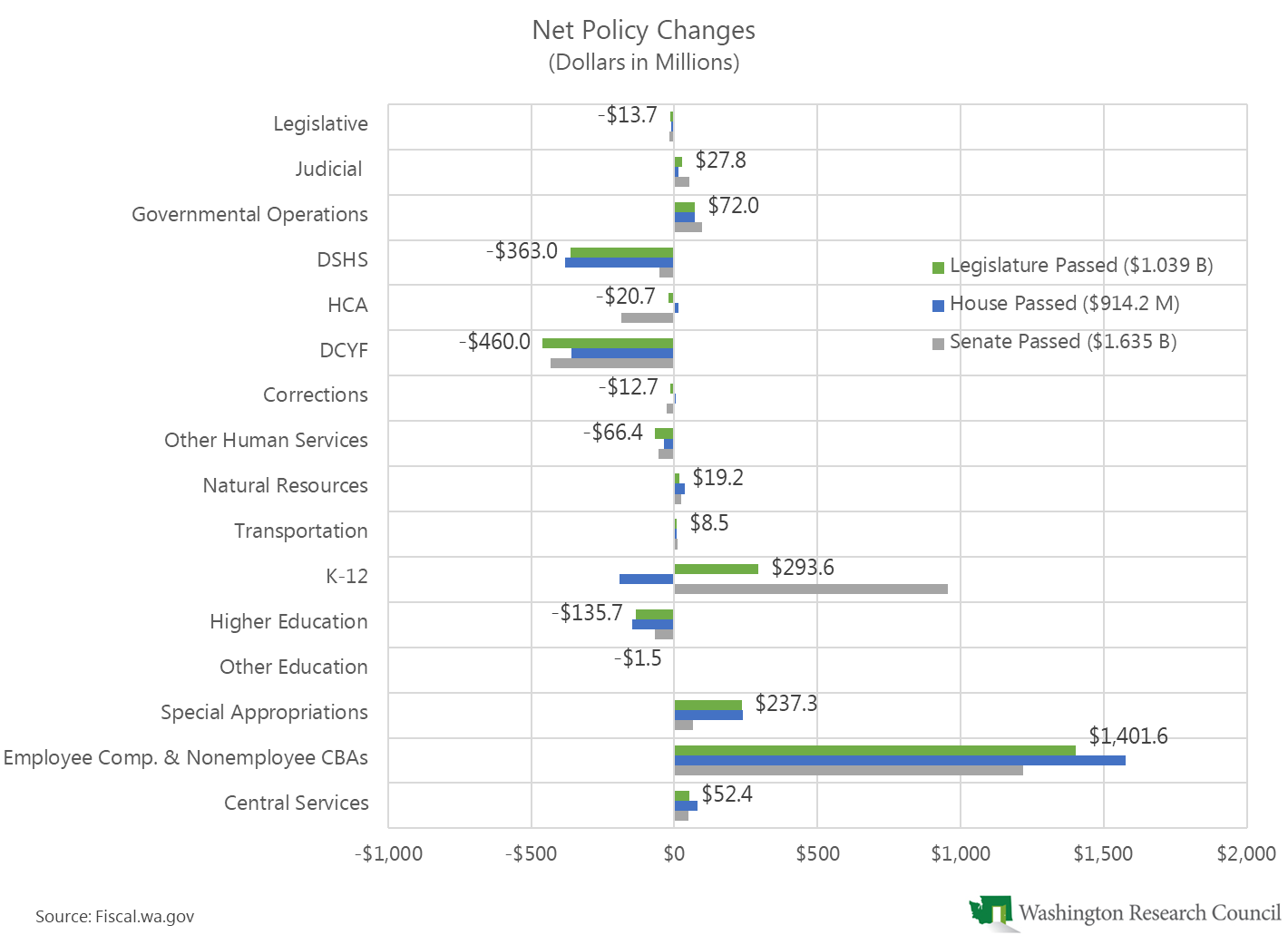
The $1.039 billion in net policy spending includes both increased spending and reductions. The chart below shows the net policy changes in the budget as passed by the Legislature compared to the earlier versions passed by the Senate and House.
In the budget, the Legislature prioritized funding the collective bargaining agreements (CBAs) for state and non-state employees. The net increase for compensation is $1.402 billion. The cost of the CBAs (and extending them to non-represented employees) and increased health benefits is $1.898 billion. That is offset by $489.1 million in reductions from adjusting pension contribution rates pursuant to ESSB 5357. (This reflects a change to the investment return assumption, which reduces pension contributions in the short run but could negatively affect future plan solvency.)
As the chart shows, to help fund compensation increases, the budget reduces net funding for human services and higher education. (I’ll write more about the reductions in a future post.)
In addition to compensation, other major NGFO increases include:
- $192.9 million in 2025–27 and $229.8 million in 2027–29 to increase the special education multiplier.
- $81.7 million in 2025–27 and $96.8 million in 2027–29 to remove the cap on special education funding.
- $35.0 million in 2025–27 and $70.0 million in 2027–29 to lower the special education safety net threshold.
- $78.9 million in 2025–27 and $134.9 million in 2027–29 for K–12 materials, supplies, and operating costs.
- $137.0 million in 2025–27 and $65.1 million in 2027–29 for K–12 local effort assistance.
- $117.6 million in 2025–27 for local housing programs.
- $100.0 million in 2025–27 for local law enforcement grants.
- $93.3 million in 2025–27 for emergency food assistance.
- $72.5 million in 2025–27 and $75.8 million in 2027–29 for Medicaid community behavioral health support services.
- $55.0 million in 2025–27 for the state health care affordability account, which funds Cascade Care premiums.
- $50.0 million in 2025–27 and $50.8 million in 2027–29 for the community reinvestment account.
- $21.6 million in 2025–27 and $23.5 million in 2027–29 to fund the maximum Washington College Grant for students with up to 60% of median family income.
(The Legislature approved a budget for 2025–27, but it must balance over four years. The figures above for 2027–29 are the estimated costs of the adopted policies in 2027–29.)
Tags: 2025-27