9:41 am
October 27, 2022
Last week, David Schumacher, the director of the Office of Financial Management (OFM), gave the Washington State Senior Citizens Foundation a preview of the upcoming budget cycle. He attempted to tamp down expectations of another big-spending year.
This welcome reminder comes after agencies have submitted substantial operating budget requests for 2023–25 (my overview is here; posts about specific agencies are here). Those requests don’t include the high cost of the collective bargaining agreements negotiated with employees.
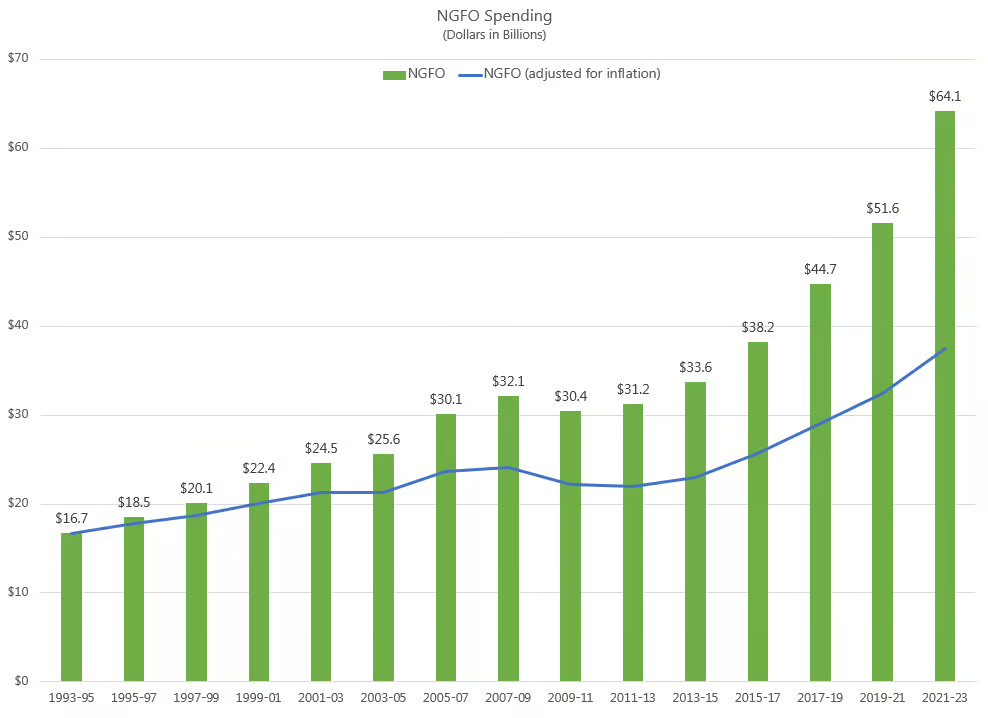
As Schumacher noted last week, the Legislature had a huge surplus to work with in developing the 2022 supplemental budget. It was the result of savings the state had instituted to address a projected (but not realized) revenue shortfall, lower caseloads, increased revenue forecasts, and billions of dollars of federal relief. Schumacher said that because of this state of affairs, “We were able to have pretty robust budgets.” That’s quite the understatement: the 2022 supplemental operating budget was historically large. Appropriations from funds subject to the outlook (NGFO) for 2021–23 are 24.3% higher than in 2019–21, which is the largest biennial increase going back to at least the early 1990s.
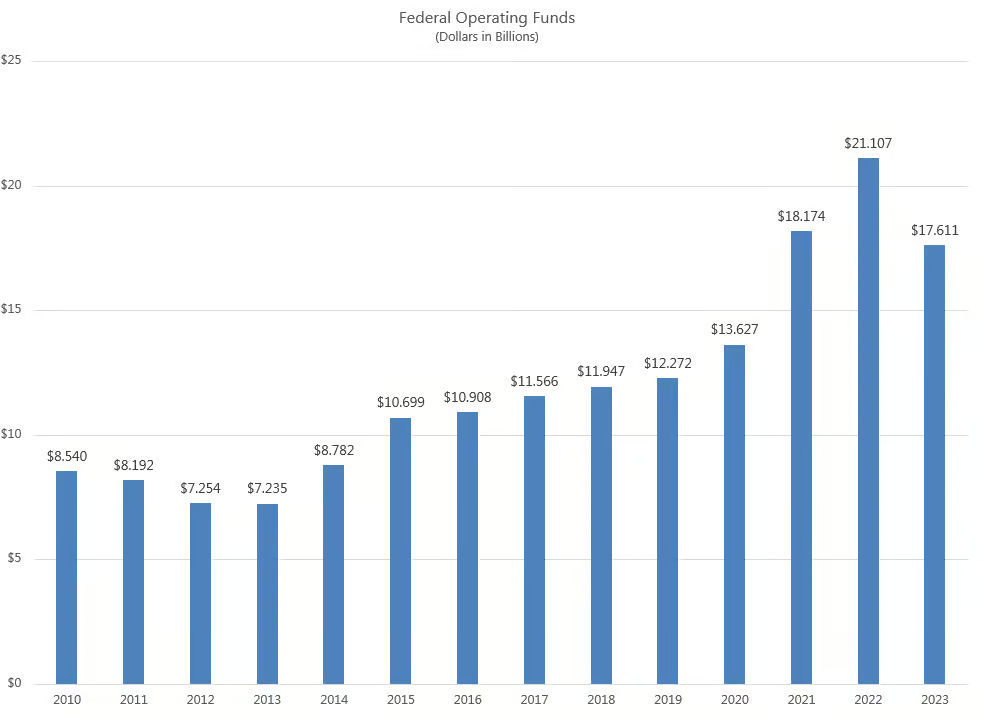
On top of NGFO spending increases, the state has also had billions of dollars in extraordinary federal funding over the past few years. The chart shows all federal operating funding for Washington (not just the federal relief related to the pandemic). The huge increases in fiscal years 2021 and 2022 are already ramping down in 2023 (the current fiscal year).
As we wrote in 2021, the federal relief was “not needed to maintain existing programs. Thus, there is a danger of using the onetime federal relief to begin new programs, or to create expectations that the programs funded with federal relief will be continued with state funds in the future.” Nevertheless, such expectations seem to have been created for some agencies (see, for example, the 2023–25 request from the Department of Health).
Schumacher threw some cold water on those expectations at the conference last week. He said,
One of the things we have to do in this budget going forward is start getting used to not having all of that federal money. And for the most part, I think a lot of those investments that we were able to do with that money were much appreciated, but the money doesn’t exist going forward, or it won’t exist for very long. These are not things that are sustainable within the current revenues. They were affordable because of the federal money. . . . We do have money in reserve, but we will spend it all if we try to maintain things at this level. So, one thing the governor will have to do and then the Legislature will have to wrestle with, is how to prioritize what things that were funded with federal funds we can continue, which things with federal funds we’ll have to ramp off. You know, maybe we can afford them for another year but not four years. And some of the things we’re just not going to be able to continue at all.
But that’s not to say that the 2023 budgets will be like the budgets in the years following the Great Recession, when substantial amounts of spending were cut. Schumacher said, “This is not a bad budget in that sense at all. But it’s also certainly not like the last couple years, where with all the federal money we had sufficient money to do an awful lot of things and an awful lot of extra things.” Instead, “we’re going to have to manage . . . what we can afford and figure out how to ramp down the things that probably won’t be able to be afforded without . . . new revenue.” On that point, Schumacher said he doesn’t think “anybody’s really considering . . . a general tax increase to maintain the federal money that we got there for a while. That seems extremely unlikely to me.”
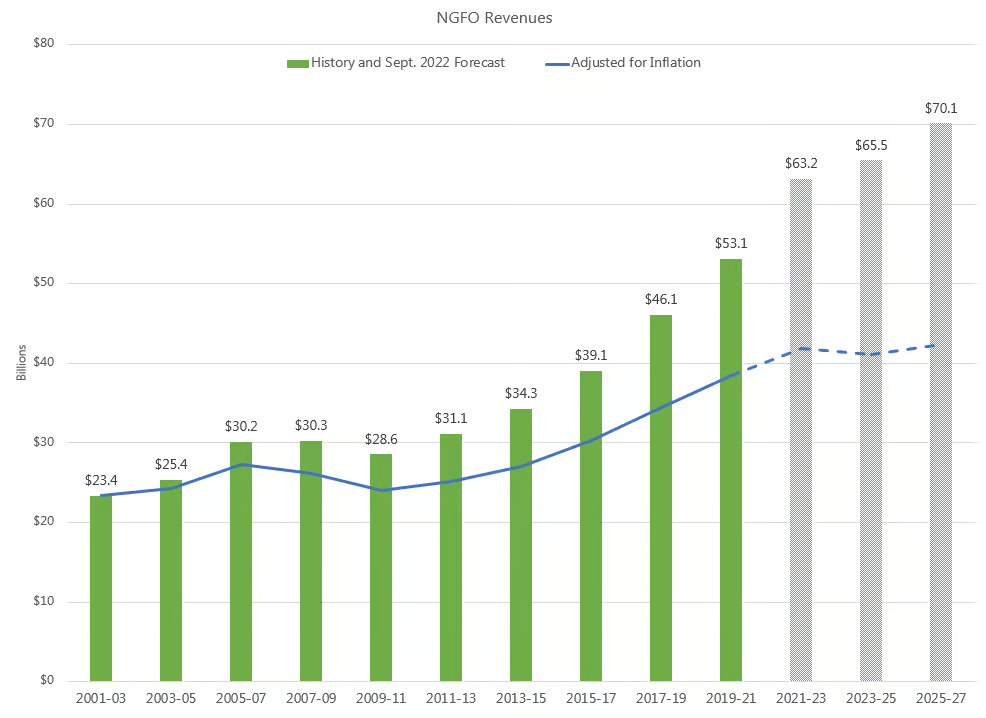
The chart below shows NGFO revenues over time and the September forecast. Revenues are expected to increase by 18.9% in 2021–23, but revenues for 2023–25 are forecast to increase by just 3.7% (adjusted for inflation, they will decrease by 1.8%). Compared to the February 2022 revenue forecast (on which the current budget is based), revenues over 2021–23, 2023–25, and 2025–27 are up $1.747 billion.
Schumacher also talked a bit about the money the Legislature has in reserves. He specifically mentioned the $2.1 billion in the Washington rescue plan transition account (WRPTA) in 2021–23. This unrestricted reserve account was established in 2021 with seed money from the constitutional rainy day fund. The WRPTA funds may be used, per statute, to respond “to the impacts of the COVID-19 pandemic including those related to education, human services, health care, and the economy. In addition, the legislature may appropriate from the account to continue activities begun with, or augmented with, COVID-19 related federal funding.” In 2022, although the Legislature made the minimum required transfers to the rainy day fund, it continued to use the WRPTA as its main savings vehicle, rather than beefing up the constitutionally-restricted rainy day fund.
Schumacher suggested that the WRPTA money could be used in the upcoming budget to help ramp down the spending that had been funded with federal dollars: “So that $2 billion . . . will not occur again, but we’re going to be awfully thankful that they saved it and we will be able to use it in this budget that’s coming out.”
Although the WRPTA can be used to maintain spending begun with federal dollars, the Legislature should carefully consider whether it should be used for that purpose. As we wrote earlier this year, “Going forward, legislators must be judicious in their use of the unrestricted reserves to ensure that enough remains in the account to help maintain this new, high level of spending in the event of an economic downturn.” WRPTA funds represent 71.6% of the state’s total reserves in 2021–23. If it is drained to continue programs started with federal dollars, the state may not have enough in reserves to maintain regular programs and services should state revenues falter.
Categories: Budget.Tags: 2023-25