
1:06 pm
April 24, 2020
As I noted in part 2 of this series, state spending increased substantially immediately prior to the Great Recession. Spending in 2005–07 was $30.103 billion, an increase of 17.6 percent over 2003–05. The initial 2007–09 budget appropriated $33.364 billion (an increase of 10.8 percent over 2005–07) and the 2008 supplemental increased that to $33.655 billion (11.8 percent over 2005–07).
The Legislature began cutting spending in an early action 2007–09 supplemental budget bill in Feb. 2009. Although appropriations from the near general fund–state (now called funds subject to the outlook, or NGFO) were cut by $1.540 billion from their 2008 peak, actual NGFO spending for 2007-09 still increased by 6.7 percent over 2005–07 to $32.115 billion.
Meanwhile, federal stimulus funds from the American Recovery and Reinvestment Act of 2009 (ARRA) were available for the state beginning in FY 2009. These ARRA funds, which were used in lieu of state funds, helped shift overall spending reductions from 2009–11 to 2011–13, as the chart shows. With ARRA funds, the spending increase in 2007–09 was 9.8 percent (but still below the 2008 peak). ARRA funds then kept spending virtually steady in 2009–11 before spending dropped 5.4 percent in 2011–13.
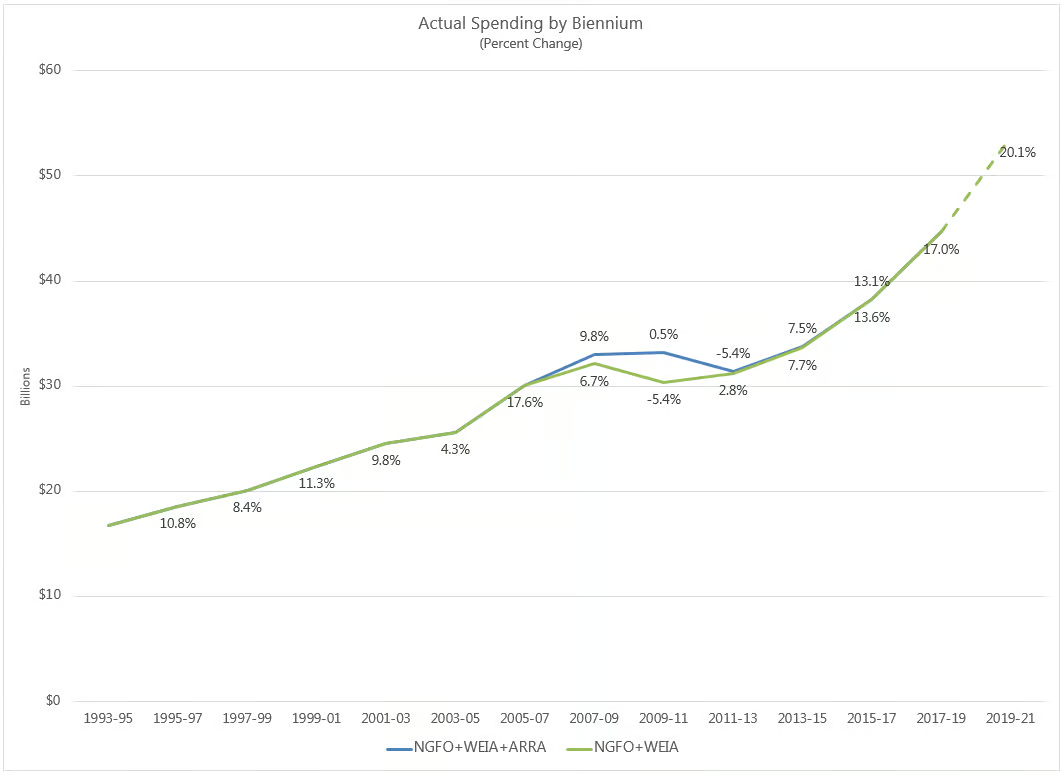
In terms of the NGFO, from the high point in the 2008 supplemental to the low point in 2009–11, spending dropped by $3.271 billion (9.7 percent). Of those reductions, 58.5 percent came in human services, 19.2 percent came in K–12, and 17.2 percent came in higher education. Over the period, human services spending declined by 15.0 percent, K–12 spending declined by 4.6 percent, and higher education spending declined by 15.4 percent.
However, those numbers are net of policy and maintenance level changes. As the maintenance level (the cost of continuing current services) increased, the necessary policy level reductions also increased. (For example, the maintenance level in the 2009–11 budget increased by $3.345 billion and policy level reductions were $5.611 billion, for an overall reduction to appropriations of $2.267 billion.) Over the period from 2009 through 2011, policy reductions were $8.619 billion.
Although actual NGFO spending increased modestly in 2011–13, the maintenance level for the biennium increased by an exceptionally large 19.3 percent. In addition to caseload increases, this included $861 million for Initiative 728 (class sizes) and $318 million for Initiative 732 (teacher cost-of-living adjustments). Both initiatives had been suspended in 2009–11. The maintenance level also included $566 million for projected increases in pension rates.
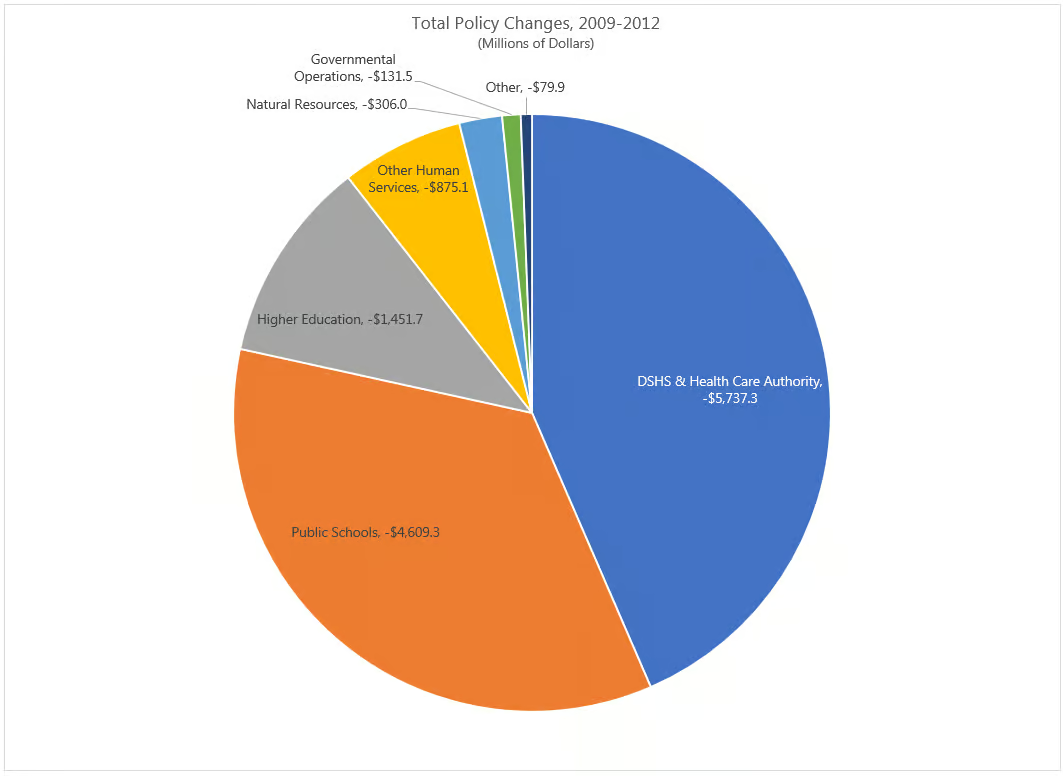
With that high maintenance level and the loss of ARRA funds, the state had to continue to make policy level reductions through 2012. All told, the Legislature made policy level spending reductions of $13.194 billion from 2009 through 2012 (across the 2007–09, 2009–11, and 2011–13 budgets). Of the total policy changes, 43.5 percent occurred in the Department of Social and Health Services (DSHS) and the Health Care Authority (HCA), 34.9 percent occurred in public schools, and 11.0 percent occurred in higher education. (DSHS and HCA are combined because the Legislature transferred Medicaid spending from DSHS to HCA in 2011. If they are accounted for separately, the transfer skews the policy change numbers.)
The next post in this series will take a closer look at specific policy cuts made in each budget area and the timing of those cuts.
Previous posts in this series:
- Looking back at state budgeting in the Great Recession, part 1: Revenue losses
- Looking back at state budgeting in the Great Recession, part 2: How the governor and Legislature responded
- Looking back at state budgeting in the Great Recession, part 3: New Resources