2:25 pm
May 1, 2025
The operating budget for 2025–27 increases appropriations from funds subject to the outlook (NGFO) by 8.2%, compared to enacted 2023–25 appropriations. Net new policy increases of $1.039 billion in 2025–27 include $3.065 billion in reductions and $4.104 billion in new spending. This represents a shift in legislative priorities, as the reductions are entirely offset by new spending on other items.
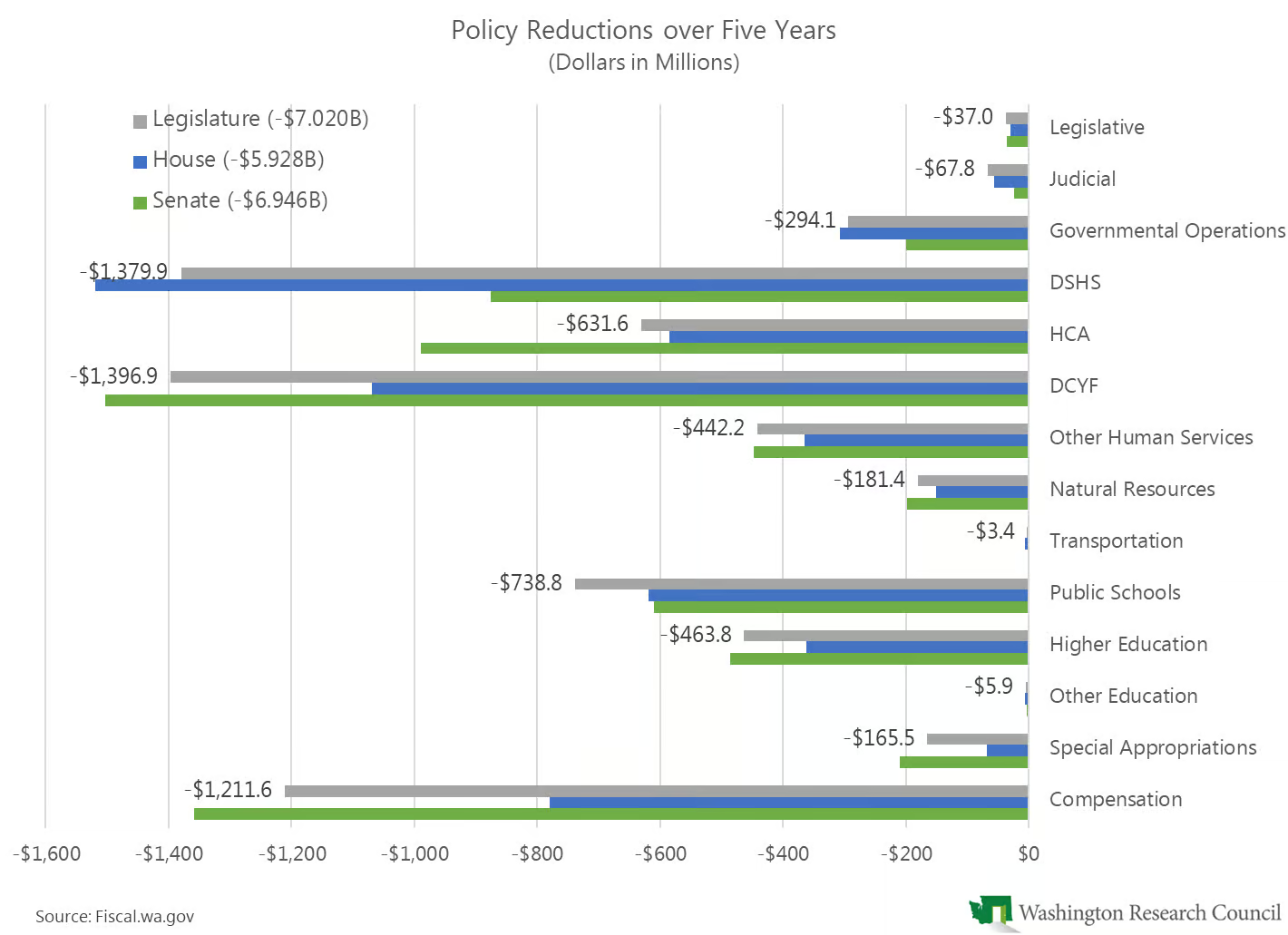
For the outlook period (fiscal year 2025, 2025–27, and 2027–29), the NGFO spending reductions total $7.020 billion. The Senate budget proposal had included five-year savings of $6.946 billion, and the House budget proposal had included five-year savings of $5.928 billion. The chart shows how those savings are distributed among budget areas under each proposal.
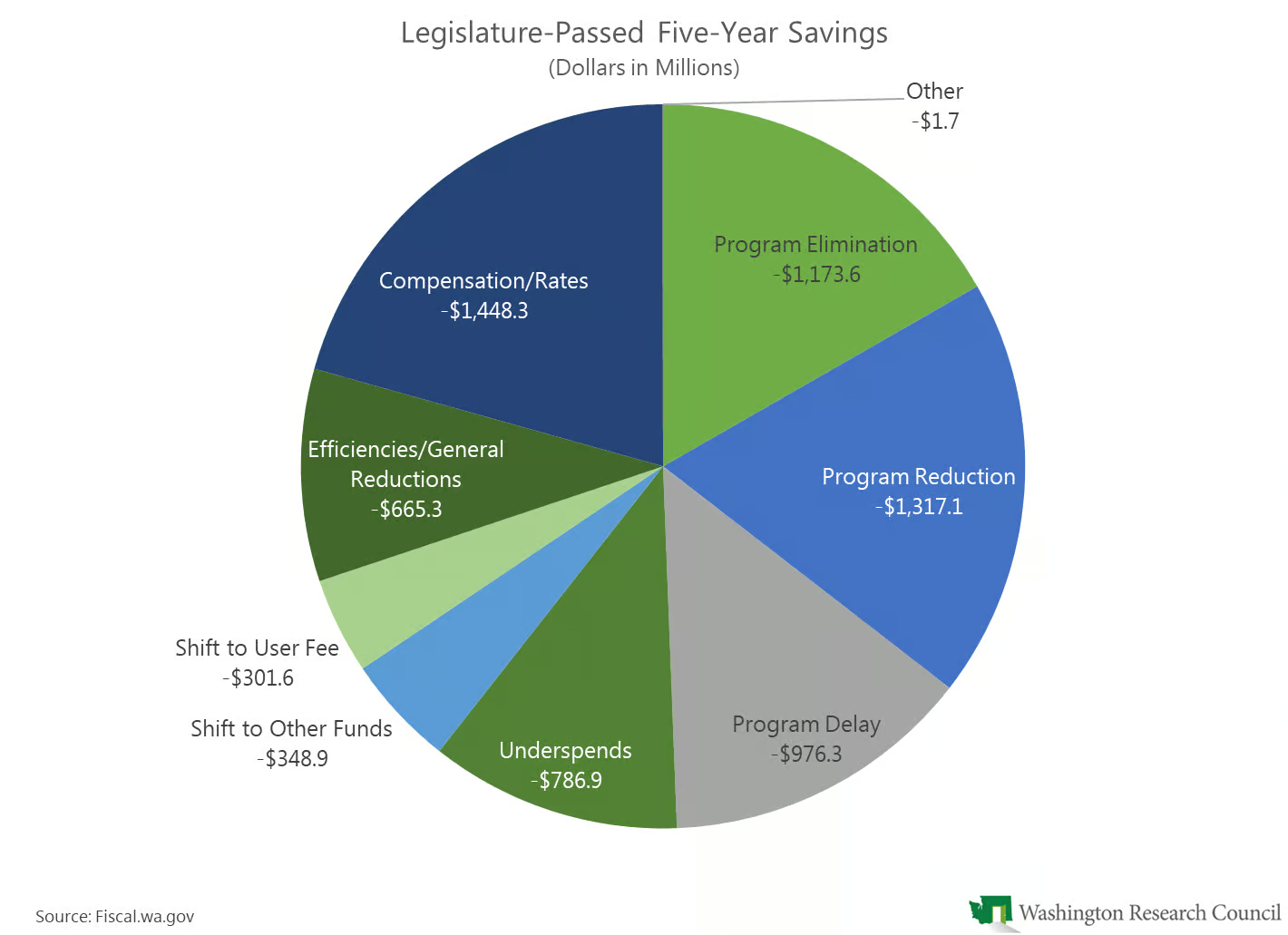
The following chart shows my categorization of the five-year savings. Actual cuts to programs (or cuts to staff and resources dedicated to those programs) account for about 35% of the total reductions. Other savings categories include program delays, compensation and rates, general efficiencies, shifts out of the NGFO, and underspends (programs that didn’t require the level of appropriations they received).
Again, because the state is increasing overall spending, the programs that are cut are no longer Legislative priorities. Major reductions (over five years) include:
- -$394.2 million to delay Working Connections Child Care (WCCC) income expansion to 75% of state median income until FY 2030 (beyond the outlook window) (ESSB 5752).
- -$212.4 million to delay the Early Childhood Education and Assistance Program (ECEAP) entitlement until SY 2030–31 (beyond the outlook window) (ESSB 5752).
- -$127.6 million to delay the rate increase for child care centers until FY 2027.
- -$121.9 million to reduce ECEAP part-day slots.
- -$111.1 million by making the 12-month authorization for WCCC eligibility begin when the eligibility determination is made, instead of when child care begins (ESSB 5752).
- -$48.7 million from delaying the policy to allow 100 percent child support pass-through until FY 2030 (beyond the outlook window).
- -$120.0 million from delaying the elimination of recoveries in the Aged, Blind, or Disabled cash program until Oct. 2028.
- -$93.4 million from eliminating Department of Social and Health Services meaningful day services.
- -$98.6 million to reduce Medicaid managed care capitation rates by 1%.
- -$79.1 million from increasing assisted living and nursing facility fees.
- -$59.8 million to close Mission Creek Corrections Center for Women.
- -$276.2 million from removing funding for K–12 grant programs.
- -$193.9 million from capping enrollment in the Transition to Kindergarten program (ESB 5769).
- -$57.4 million from eliminating funding for persistently failing schools.
- -$111.5 million from eliminating the Washington College Grant bridge grant.
- -$84.5 million from reducing state financial aid for students at private institutions (SSB 5785).
- -$96.7 million from across-the-board reductions to higher education institutions.
- -$93.7 million for foundational public health (this partially reflects lower actual expenditures and partially represents a shift to using revenues from cigarette and other tobacco product taxes).
- -$175.0 million from capping the amount that may be reimbursed to hospitals under the public employee and school employee benefit systems (E2SSB 5083).
Tags: 2025-27