
1:52 pm
October 25, 2024
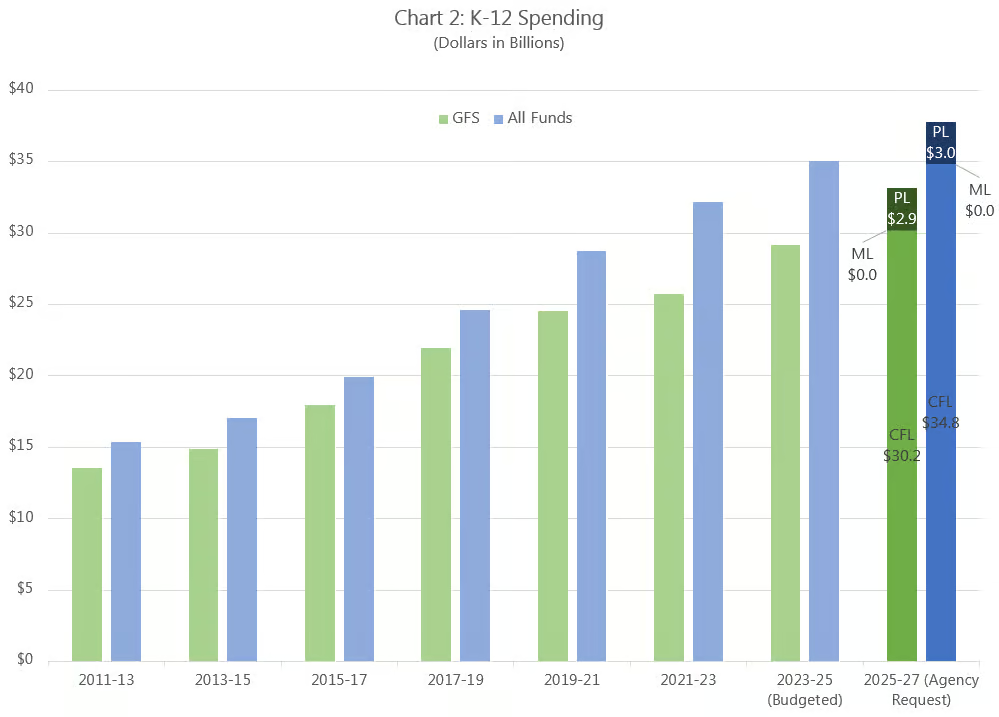
The Office of Superintendent of Public Instruction (OSPI) is requesting an increase of $3.972 billion to its general fund–state (GFS) budget for 2025–27. If the proposals are adopted by the Legislature, GFS appropriations for public schools would increase by 13.6%, to $33.139 billion. (See the box at the bottom of this post for budget and fund terminology.)
Of the requested increase for 2025–27, $1.007 billion is at the carry-forward level, $35.8 million is at the maintenance level, and $2.929 billion is new policy. If adopted, the new policy items would cost $4.904 billion in 2027–29.
Below are descriptions of some of the major new policy requests.
Special Education Funding
The largest request from OSPI is for $994.9 million in 2025–27 and $1.619 billion in 2027–29 to increase state funding for special education. The two main components of the request are:
- Increase the special education funding multipliers over two years. This would increase NGFO spending by $952.5 million in 2025–27 and by $1.576 billion in 2027–29 (the costs of the components are not available in terms of the GFS).
- Remove the special education enrollment cap (it is currently 16%). This would increase NGFO spending by $43.5 million in 2025–27 and by $51.1 million in 2027–29. According to the request, OSPI is also proposing “strengthening accountability measures by automatically flagging significant year-overyear growth in enrollment of students receiving special education services.”
Classified Staff Salaries
The second largest request from OSPI is for $690.9 million in 2025–27 and $1.627 billion in 2027–29 to increase and restructure state allocations for classified staff. Under current law, the state sets minimum salary allocations for certificated instructional staff, certificated administrative staff, and classified staff. (Actual salaries are negotiated locally.) Statute (RCW 28A.400.205) specifies that employees must receive annual inflationary increases, based on the implicit price deflator (IPD) for the prior calendar year. (The Legislature may appropriate more than that.)
OSPI’s proposal is in two parts. First, it would increase the minimum classified staff salary allocation by 20% in school year (SY) 2025-26 and by 9% in SY 2026–27. (The request claims that the growth in the second year is the value of inflation, but that’s not correct. The inflationary adjustment for SY 2026–27 under the current statute is estimated to be 2%.)
Second, the request would split classified staff into two groups: administrative and school-based. OSPI does not go into more detail about who would be included in each group. In SY 2027–28, the minimum salary allocation for classified administrative staff would increase by 35% but the minimum allocation for classified school-based staff would increase by 9%. Then, the allocations for both groups would increase by 9% in SY 2028–29. (Again, the request claims that the SY 2028–29 allocations would increase by inflation, even though the current inflationary estimate for that year is 2%.)
Chart 1 shows what this would mean compared to other school salaries. The dotted lines represent the current salary allocations grown by the statutory inflation adjustment, as forecasted by the Economic and Revenue Forecast Council. Under OSPI’s request, salary allocations for classified administrative staff would exceed estimated allocations for teachers in SY 2027–28 and allocations for classified school-based staff would exceed estimated allocations for teachers in SY 2028–29.
If this proposal is adopted by the Legislature, it seems likely that the state would need to increase teacher salary allocations above the new classified staff salary allocations. Thus, the substantial cost of this request is probably seriously understated.

Other
Other major new policy requests from OSPI include:
- $348.9 million in 2025–27 and $408.1 million in 2027–29 for school district operating costs. The OSPI request argues that the state allocation for materials, supplies, and operating costs (MSOC) “has not kept pace with the price of materials and services.” The request would increase the MSOC allocations by 9.47% in SY 2025–26, compared to the amount expected for the year under current law. Compared to SY 2024–25, the request would increase the MSOC allocations by 11.88%.
- $275.9 million in 2025–27 and $322.5 million in 2027–29 to increase learning assistance program (LAP) funding. Currently, the LAP program allocates funding for an additional 2.3975 hours of instructional time a week through the prototypical school funding model, based on the percentage of students in a school district who are eligible for free or reduced-price meals. The school district decides how to allocate these funds among its schools. On top of that base LAP rate, there is a high poverty allocation. This additional 1.1 hours a week is generated from specific schools where at least 50% of students qualify for free or reduced-price meals. This funding must stay with the school—it can’t be moved around the district. OSPI’s budget request would extend the high poverty LAP to all schools. Under the proposal, schools where at least 50% of students are low-income would get a high poverty LAP rate of 1.34 hours. Schools where less than 50% of students are low-income would get a high poverty LAP rate of 0.67 hours. (Again, these high poverty rates are on top of the base LAP rate.)
- $100.3 million in 2025–27 and $271.7 million in 2027–29 related to attendance, behavior, and credit attainment. The main cost driver here would be the creation of a “Dean of Students” position at elementary and middle schools. Additionally, the proposal would fund grants for school districts and community organizations related to attendance, behavior, and credit attainment programming.
- $151.8 million in 2025–27 and $203.5 million in 2027–29 to change the student transportation funding model for students receiving special education services, students experiencing homelessness, and students living in foster care.
- $110.2 million in 2025–27 and $149.3 million in 2027–29 for a professional learning day for teachers, paraeducators, librarians, and principals “to support the introduction and embedding of new or revised learning standards consistently and with fidelity across the state” and for an AI reading assessment tool.
- $84.9 million in 2025–27 and $93.8 million in 2027–29 in funding for community organizations that partner with schools to support academic foundations, postsecondary success, and youth development.
- $51.8 million in 2025–27 and $56.5 million in 2027–29 to increase the staffing allocation for social workers in the prototypical school funding model, fund the Student Assistance Program, and add OSPI staff to coordinate student mental and behavioral health strategies.
(An overview of the 2025–27 agency requests is here. Our reports on the projected 2025–27 budget shortfall are here and here.)

Tags: 2025-27 , 2025-27 agency requests