
9:59 am
June 16, 2026
On Thursday, the Caseload Forecast Council presented the June caseload forecast. The caseload forecast feeds into the estimated maintenance level (the cost of continuing current and planned services, adjusted for enrollment and inflation). There will be another caseload forecast in November, which will inform the governor’s proposed 2027–29 budget, and another in February 2027, which will inform the Legislature’s budget proposals. The June forecast is the first to include fiscal years 2028 and 2029.
The forecast shows that the state’s budget problem is not the result of increasing numbers of people entitled to state services. For the 2025–27 biennium, total caseloads are down 75,009 (0.9%) compared to the February forecast. (The Caseload Forecast Council does not provide any estimates of how its forecasts will affect state costs. The different caseloads do not all have the same fiscal impact.)
Chart 1 shows total caseloads by forecast. (This does not reflect the total number of individuals using services, it is the number of services used. One person may be eligible for multiple programs.) Overall, caseloads increased from 2020 to 2023, then flattened, and are expected to increase in 2029.
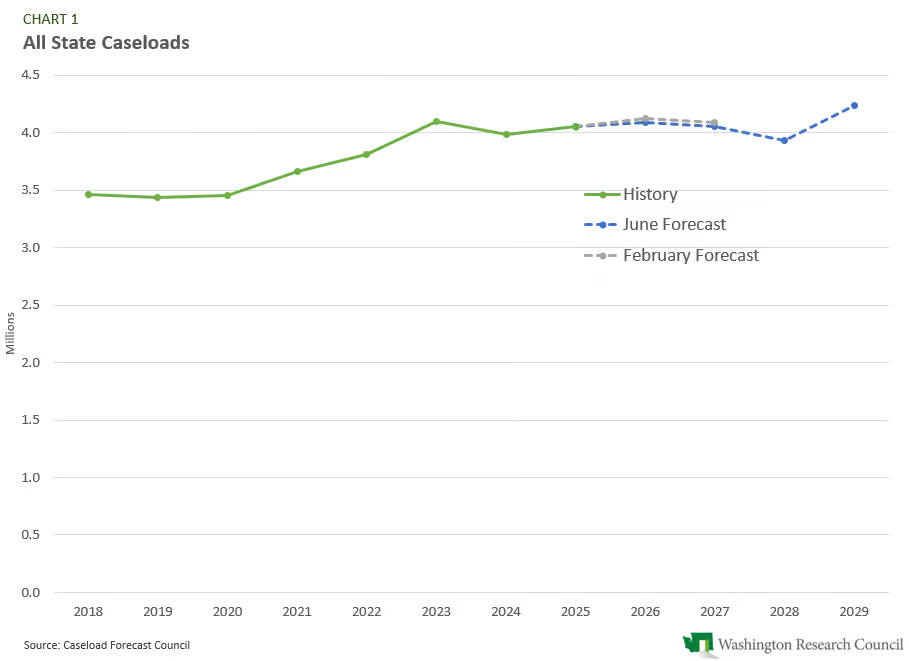
Chart 2 explains these patterns. The 2020–2023 increase was due to federal continuous coverage requirements for Medicaid during the pandemic. (In exchange for maintaining Medicaid enrollment, the state received an enhanced federal Medicaid match.) Since then, Medicaid caseloads have dropped. Despite those declines, total caseloads stayed roughly flat from 2023 to 2028 because of the implementation of the Working Families Tax Credit (WFTC). The caseload jump in 2029 is due to the expansion of the WFTC that was adopted in ESSB 6346, the income tax bill. (If the Supreme Court rules that the income tax is unconstitutional, the WFTC expansion will not take effect. In that case, total caseloads would decrease from 2028 to 2029.)
From 2018 to 2029, total caseloads are expected to increase by 22.2%. Excluding the WFTC, caseloads would increase by just 3.5% over that period.
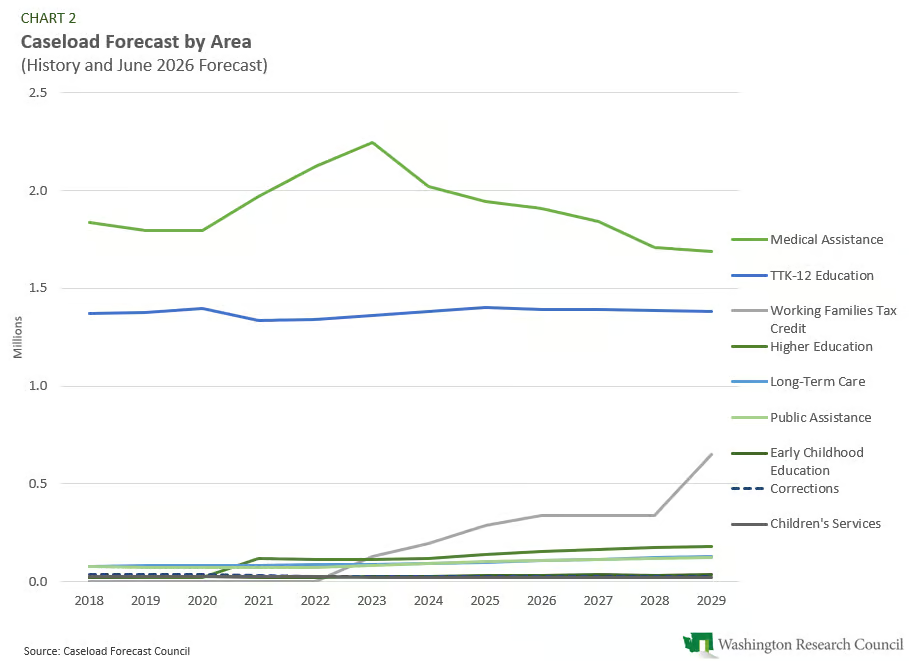
Under the June forecast, the two largest caseloads—Medicaid and common schools—are expected to continue to decline going forward. That said, the caseload for Medicaid low-income adults (the caseload most impacted by the new federal work requirements) for 2025–27 is now expected to be 1.9% higher than estimated in February. That is due to a step adjustment for 5,000 planned new clients for the state Apple Health Expansion program (for non-citizens) and “lower‑than‑anticipated post‑eligibility‑review terminations.” Year-over-year, though, the Medicaid low-income adult caseload is still expected to decrease.
Although the WFTC caseload is expected to increase in 2029 due to an eligibility expansion, the caseload is now expected to be 10.7% lower in 2025–27 than estimated in February. This incorporates actual data through April of this year and “a ceiling on the total caseload based on confidential Federal Tax Information (FTI) filings and a projection from the Department of Revenue.”
Additionally, the Early Childhood Education and Assistance Program (ECEAP) caseload is expected to increase (compared to February and year-over-year) due to “the expansion of the program using private philanthropic funds in the PreK Promise Account.” However, “it is not clear how quickly the program can be expanded using the PKPA funding. It is possible that shortages of staff, classroom spaces, or demand for enrollment will result in growth that is slower than forecasted.” The forecast also provides a reminder that the ECEAP entitlement, which has been delayed many times (most recently in 2025), is currently scheduled to take effect for school year 2030–31, which will be part of the outlook biennium when the Legislature adopts the 2027–29 budget next year.
Categories: Budget.