2:17 pm
February 18, 2019
A couple of economic outlooks released last month show the impact of trade policy on the U.S. and our state. The U.S. imposed new tariffs last year; in response, other countries imposed retaliatory tariffs on U.S. goods.
First, the Congressional Budget Office’s Budget and Economic Outlook: 2019 to 2029 estimates that the new tariffs will lead to a reduction of U.S. inflation-adjusted GDP by an average of about 0.1 percent through 2029. Further, CBO expects a reduction in inflation-adjusted U.S. exports of 0.5 percent by 2022.
Second, Washington State University’s Washington Agribusiness Status and Outlook for 2019 includes a study of the economic impacts of the new Chinese tariffs on the wheat, apple, and cherry industries of the Pacific Northwest. The analysis is still preliminary, but it finds significant reductions of Pacific Northwest exports to China in 2018:
- Wheat: $135.6 million (46 percent)
- Apples: $21.2 million (83 percent)
- Cherries: $54.8 million (62 percent)
Trade is very important for Washington’s agricultural sector, as “almost half the value of Washington agriculture is exported.” For example,
Because the United States domestic fresh apple consumption has remained stagnant since the 1980s . . . and Washington apple production is expected to increase, maintaining a steady share in established export markets and an increasing share in emerging markets is crucial for the economic sustainability of the Washington apple industry.
So the new tariffs are taking a toll: “The outlook for Washington agricultural exports has weakened since last year as many of the political tensions with major trading partners have been realized.”
Interestingly, according to the outlook, beef hide and offal values are used by market analysts as an indicator of the health of the world economy:
This works because it demonstrates purchasing power and for processing leather for automobiles and fashion (shoes for example), both of which are correlated with economic conditions. As tariffs affect automobile and fashion production and international trade, the demand for hides have decreased. Hides are also facing increased competition from synthetic materials. Hide values are currently trading at $40 per hide, while a year ago they were trading at $61 per hide. Hides have not traded this low since the 2009 economic recession.
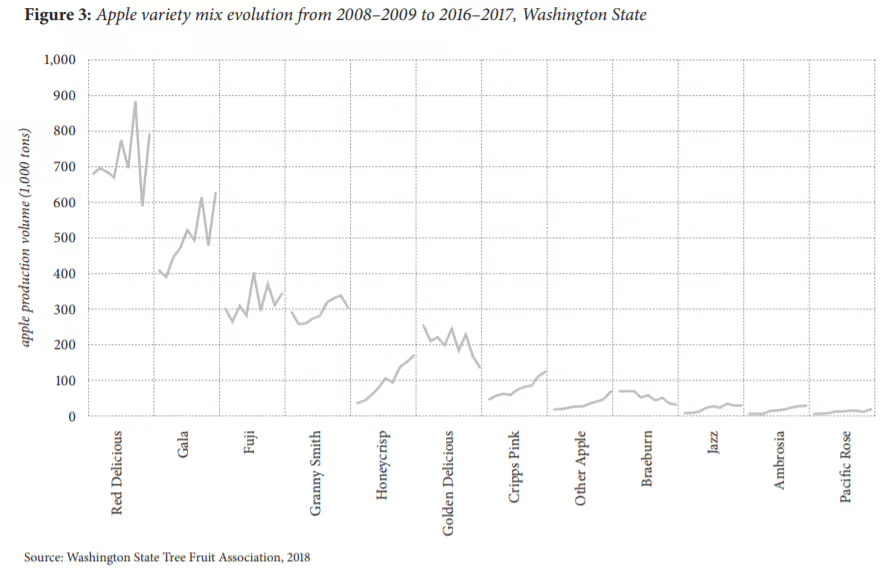
Finally, I liked this chart on changes in the apple variety mix: