1:17 pm
September 29, 2026
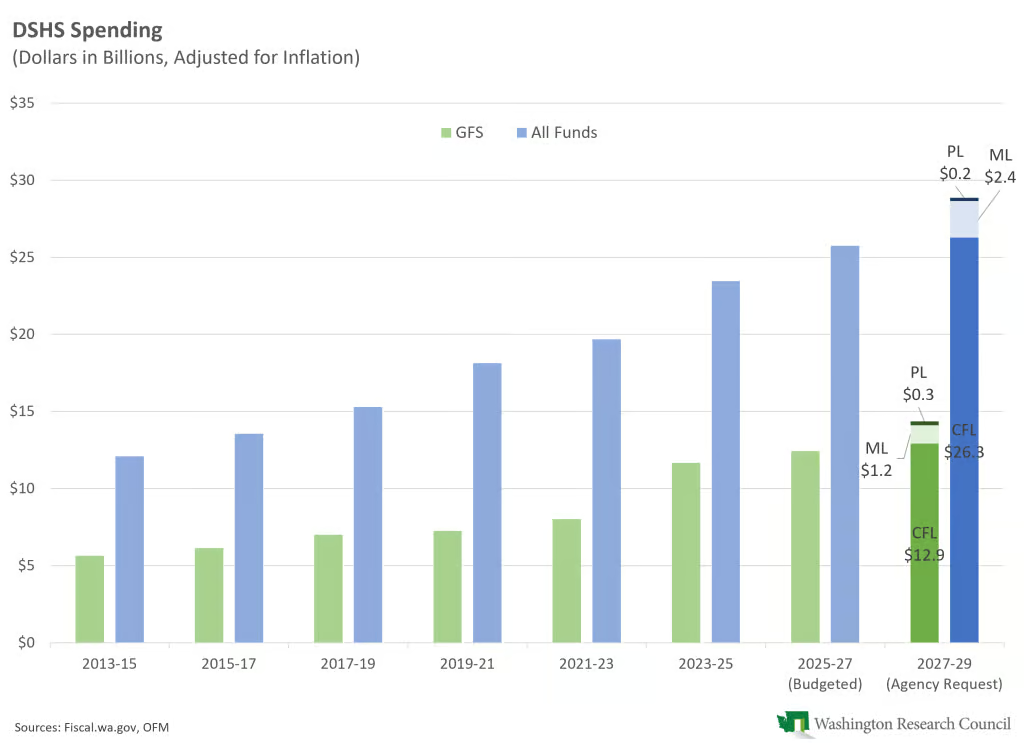
The Department of Social and Health Services (DSHS) is requesting general fund–state (GFS) appropriations of $14.354 billion for 2027–29. If funded, that would be an increase of $1.936 billion (15.6%) over enacted appropriations for 2025–27. (The requests are provided by program within DSHS: Mental Health, Developmental Disabilities, Long-Term Care, Economic Services Administration, Vocational Rehabilitation, Administration, Special Commitment Center, and Payments to Other Agencies.)
The increase includes $487.6 million at the carry-forward level, $1.188 billion at the maintenance level, and $259.9 million in new policy proposals. In 2029–31, the proposed maintenance level changes would cost $1.569 billion and the policy changes would reduce spending by $22.2 million.
The proposal does not include any funding for the collective bargaining agreements with individual providers and adult family homes, as those agreements have not yet been finalized. For context, the amount appropriated for these agreements (and to provide agency parity) in 2025–27 was $350 million.
At the maintenance level, the request estimates that caseload, utilization, and workload changes will increase spending by $958.6 million in 2027–29 and $1.324 billion in 2029–31. (This is based on the June caseload forecast.) Additionally, the maintenance level includes $162.8 million in 2027–29 and $185.6 million in 2029–31 for the state’s share of Supplemental Nutrition Assistance Program (SNAP) benefits under the federal H.R. 1. (The 2027–29 amount was assumed in the outlook for the 2026 supplemental budget.)
At the policy level, some of the major DSHS requests include:
- $52.0 million in 2027–29 and $66.5 million in 2029–31 to operate 82 additional inpatient psychiatric beds at the Behavioral Health and Treatment Center Maple Lane campus. (See also here and here.)
- $50.0 million in 2027–29 and $50.0 million in 2029–31 to continue Office of Refugee and Immigrant Assistance (ORIA) support services. The 2025–27 budget had appropriated $25.0 million for this purpose on a one-time basis, and the 2026 supplemental added an additional $25.0 million, again on a one-time basis.
- $32.4 million in 2027–29 and $30.5 million in 2029–31 to operationalize a new 350-bed forensic hospital. (Construction began in 2025 and it is expected to open in August 2028.) The funding would cover new facility orientation and training, custodial services, facility maintenance, furniture and equipment, and move-in expenses.
- $29.6 million in 2027–29 and $30.1 million in 2029–31 to fund 80 beds at the Transitional Care Center of Seattle. The 2025–27 budget had appropriated $29.0 million (one-time) to fund 80 beds. The 2026 supplemental reduced that by $5.9 million due to “a slower than anticipated phase-in of 80 Medicaid beds.”
- $25.8 million in 2027–29 and $25.7 million in 2029–31 for the state hospitals and the Child Study and Treatment Center to comply with hospital staffing standards adopted in E2SSB 5236 in 2023.
DSHS also proposes spending reductions. It categorizes administrative savings of $6.1 million in 2027–29 and $6.4 million in 2029–31 as maintenance level. Additionally, it proposes policy level reductions of $45.5 million in 2027–29 and $285.8 million in 2029–31. Those reductions are mainly due to proposed changes in functional eligibility criteria for developmental disabilities services and long-term care services. The changes would mean that, to qualify for services, a person with disabilities would need help with a greater number of activities of daily living. Similarly, the calculation for qualifying for long-term care services would be altered. (For example, under the proposal, “medication management would require a frequency of at least daily” to be included as a qualifying factor.) The long-term care proposal notes, “Current functional eligibility criteria admits individuals with relatively low functional needs for assistance with activities of daily living.”
(Previous posts on the 2027–29 budget requests are available here.)

Tags: 2027 agency requests