1:51 pm
October 28, 2024
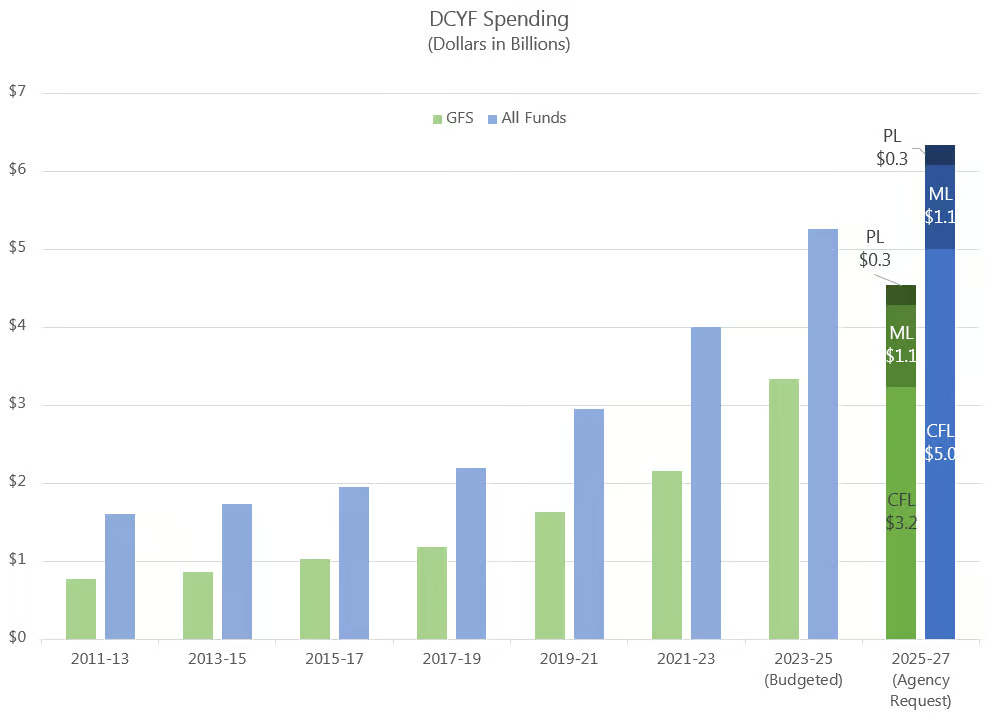
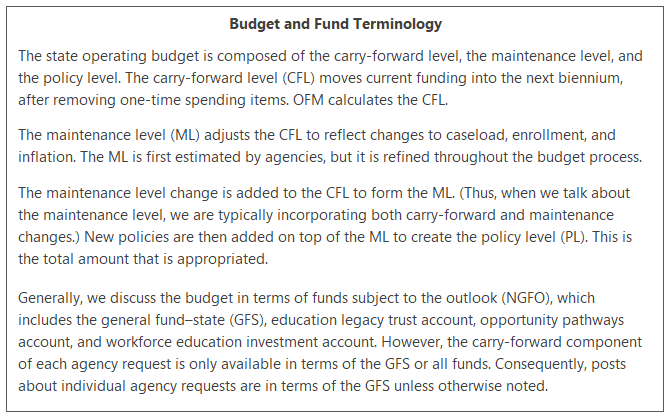
The Department of Children, Youth, and Families (DCYF) is requesting $4.537 billion from the general fund–state (GFS) for 2025–27. That would be an increase of $1.206 billion (36.2%) over enacted 2023–25 appropriations. The carry-forward level would decrease by $102.7 million, the maintenance level would increase by $1.057 billion, and the policy level would increase by $251.7 million. (See the box at the bottom of this post for budget and fund terminology.)
Although the maintenance level change accounts for most of the total requested increase, note that DCYF includes a placeholder request for mandatory caseload adjustments. The ML changes do not attempt to estimate the caseload impact on the maintenance level; instead, DCYF is waiting until the November 2024 caseload forecast to do so.
Most of the ML changes are related to the Fair Start for Kids Act (enacted in 2021):
- $451.1 million in 2025–27 and $531.7 million in 2027–29 for the Early Childhood Education Assistance Program (ECEAP) entitlement. The program is currently scheduled to become an entitlement in school year 2026–27. The funding request would increase slot rates, expand service availability, increase service hours, provide scholarships for early learning workers, and increase DCYF staff.
- $230.6 million in 2025–27 and $331.7 million in 2027–29 to increase Working Connections Child Care (WCCC) eligibility to 75% of the state median income (SMI), as scheduled in statute for fiscal year 2026. Families are currently eligible if their income is at or below 60% of SMI. (Note that the eligibility percentage is scheduled to increase to 85% in FY 2028, subject to appropriation.) For a family of four, annual SMI is currently $121,632. Thus, a family of four is currently eligible for WCCC if they have incomes up to $72,979. With the increase to 75%, they would be eligible with incomes up to $91,224.
- $275.1 million in 2025–27 and $285.5 million in 2027–29 to increase child care subsidy base rates so that they remain at the 85th percentile of the market. Rates would increase by an average of 27%.
Additionally, DCYF notes that some Fair Start for Kids Act funding was provided by federal pandemic relief in FY 2024. For FY 2025, the state used money from the education legacy trust account and the workforce education investment account (which are both funds subject to the outlook) instead of federal dollars. But, according to DCYF, the carry-forward level for 2025–27 “did not include the fund swap and there is no longer federal funding.” Consequently, DCYF’s maintenance level request would increase appropriations from the NGFO by $90.9 million in each biennium and reduce federal appropriations by the same amount.
The largest new policy request from DCYF is $94.7 million in 2025–27 and $197.7 million in 2027–29 to comply with new federal requirements for the Child Care and Development Fund. This would include providing a full 12 months of WCCC benefits and paying providers prospectively (not retrospectively) and by enrollment (not attendance).
Another federal issue is that Washington’s child welfare case management system is not in compliance with federal rules. Consequently, Washington cannot claim federal Family First Prevention Services Act (FFPSA) reimbursement for state prevention services. DCYF is requesting $22.9 million in both biennia at the maintenance level to backfill the lost federal money. The state will be able to claim the federal money when it has implemented a Comprehensive Child Welfare Information System (CCWIS). According to the request, “DCYF is currently in the process of developing a CCWIS, which is projected to be completed by June 30, 2029. Once the CCWIS is implemented, DCYF will then be able to claim FFPSA.”
Meanwhile, DCYF has a placeholder at the policy level for implementation of the CCWIS. The request estimates that this will cost about $60–$70 million, for which they may get some federal funding. However, this amount is not included in the total request.
Additionally, there are several other placeholders at the policy level in DCYF’s request. It’s not clear how much they would add to the total amount requested:
- A placeholder to overhaul the juvenile rehabilitation funding model. Currently, DCYF receives a marginal rate (established in 2010) of $37,000 per person. Under the proposal, the state would instead use “a per capita methodology in order to capture the fluctuating and increased cost of housing and serving a young person in JR based on more recent actual expenditures.” The proposal does not indicate what that per capita rate might be or how it would impact state spending.
- A placeholder for a juvenile rehabilitation housing unit focused on high acuity mental health needs. The request estimates that this could cost about $4.8–$9 million in 2025–27, but that estimate is not included in the total request.
- A placeholder to implement rates for home visiting services; there is no cost estimate.
- A placeholder to replace the current social service payment system; there is no cost estimate.
(Previous posts on 2025–27 agency requests are here. Our reports on the projected 2025–27 budget shortfall are here and here.)
Tags: 2025-27 , 2025-27 agency requests