8:58 am
May 28, 2026
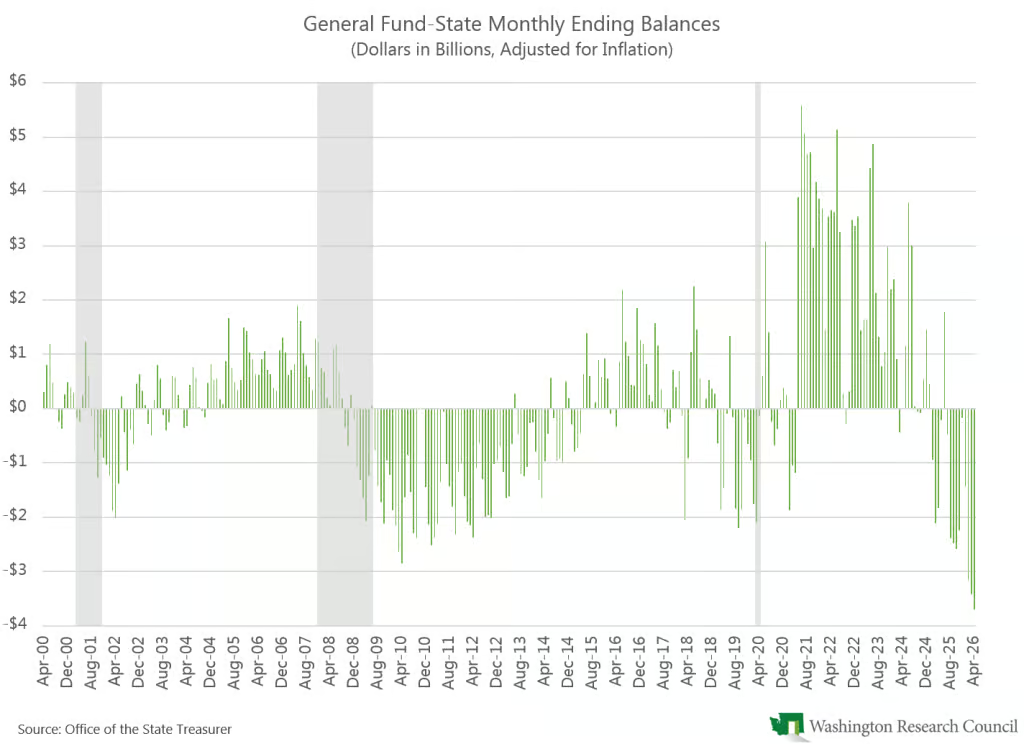
According to a monthly report released last week by the Office of the State Treasurer, the ending balance in the general fund–state (GFS) was -$3.419 billion at the end of March. Although ebbs and flows in the ending balance over the course of a year are normal, this is an unusually large shortfall.
Typically, GFS ending balances increase in December and June (the last month of the fiscal year) and decline in the months in between. The GFS balance has been positive at the end of each fiscal year going back to 2000, except in FY 2010, 2011, and 2012. (Historical reports are available here and here.)
In FY 2026, the GFS balance has been negative each month so far. According to the Office of Financial Management (OFM), the April 2026 ending balance declined further, to -$3.7 billion. However, as of May 26, the balance was -$1.9 billion. Given that improvement, OFM is not expecting a GFS shortfall at the end of FY 2026.
Based on publicly available information and past patterns, that’s plausible but not assured. It certainly looks like it could be tight. The chart below compares monthly ending balances in 2026 (so far) to FY 2025 and FY 2010. In both 2010 and 2026, balances have been negative every month of the year. 2010 ended with a negative balance. But, if 2026 follows the 2025 pattern, then the ending balance could be just positive in June.

Regardless of the final ending balance, the persistent, deep shortfalls in the GFS this year are indicative of the ongoing operating budget problem. The chart below shows each monthly ending balance going back to April 2000. (The gray shading indicates recessions.) The shortfalls in February, March, and April of this year are deeper than in any other year.