
10:23 am
March 29, 2021
The 2021 supplemental operating budget proposals from the House Appropriations chair and the Senate Ways & Means Committee chair agree that the maintenance level for funds subject to the outlook (NGFO) for 2019–21 is down $926.0 million1.365 billion, to $52.774335 billion. (The maintenance level is the cost of continuing current services, adjusted for inflation and enrollment.)
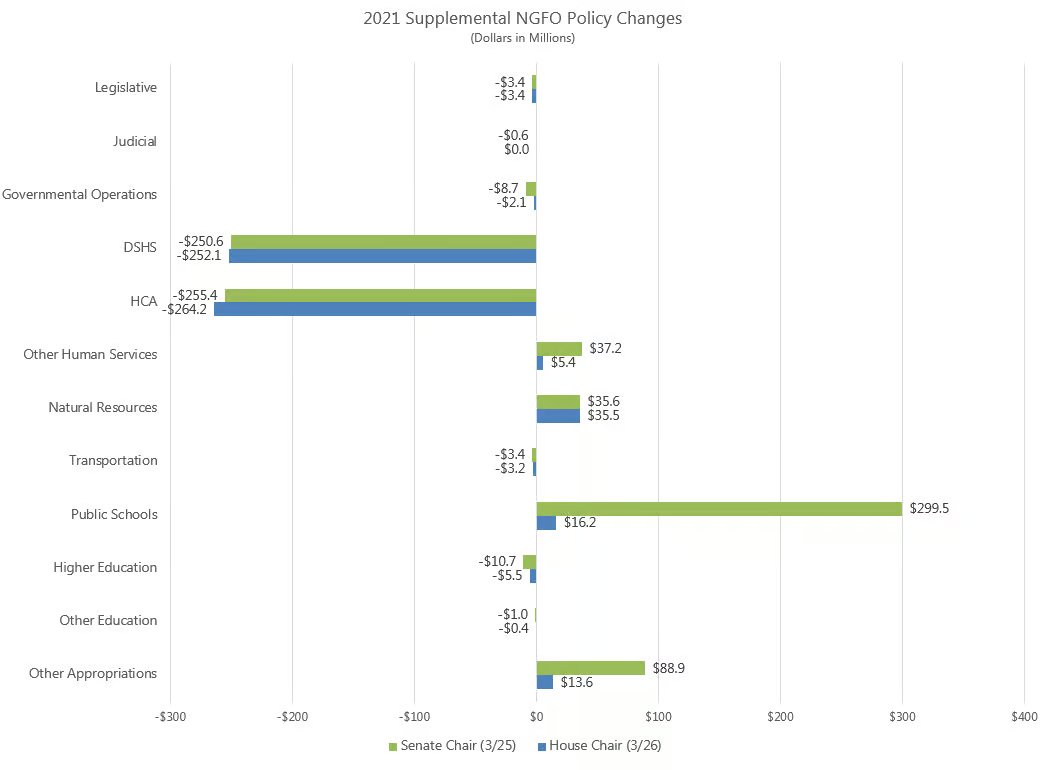
In addition to the maintenance level reductions, the Senate chair’s proposal would reduce 2019–21 NGFO policy level spending by $72.6 million and the House chair’s proposal would reduce NGFO policy spending by $460.2 million. The first chart shows the policy changes in the proposals by budget area. The large reductions in the Department of Social and Health Services (DSHS) and the Health Care Authority (HCA) reflect the enhanced federal Medicaid match, which supplants state funding.
Major NGFO differences include:
- In public schools, the Senate chair would appropriate $299.0 million to provide emergency transportation funding pursuant to 2SSB 5128.
- In other appropriations, the Senate chair would appropriate $82.0 million to the unemployment compensation fund (RCW 50.16.010).
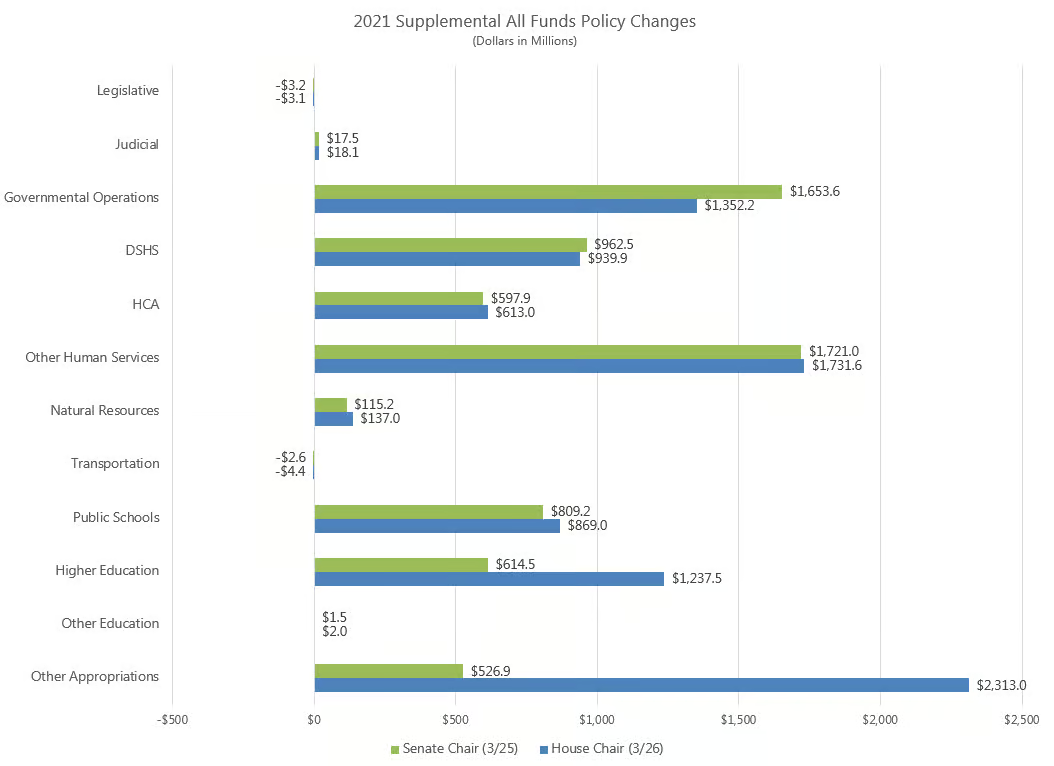
Although the House chair would appropriate $387.6 million less than the Senate chair from the NGFO, the House chair would appropriate $2.192 billion more than the Senate chair from all funds. The main reason for this lies in how the two proposals account for the funds they would withdraw from the rainy day fund (the budget stabilization account, or BSA). The Senate chair would simply transfer the balance to the general fund–state (GFS, part of the NGFO). (It effectively augments the unrestricted ending balance for 2019–21.) The House chair, however, would appropriate the balance from the BSA to the new “Washington rescue plan transition account.” This appropriation shows up as policy level spending in the other appropriations budget area for 2019–21.
Other major differences between the proposals come in their use of federal relief funding:
- Both proposals account for the first and second rounds of federal relief funding for higher education institutions. The House chair’s proposal also incorporates funding from the third round of relief from the American Rescue Plan (ARP) Act. By doing so, the House chair assumes $580.4 million more in federal funding for the institutions than the Senate chair does.
- In public schools, the House chair would appropriate $333.5 million from the third round of elementary and secondary school emergency relief (ESSER) funding (ARP Act) “for subgrants to local education agencies for learning loss.”
- In the Department of Commerce, the House chair would reduce appropriations of federal funding for rental assistance by $230.0 million “to reflect anticipated expenditures in FY 2021” from amounts previously appropriated in the early action supplemental.
Finally, the House chair would fund enrollment and transportation stabilization funding for school districts. Sec. 1419 of the budget bill draws from the original version of HB 1476 to specify the formula for providing funding to districts based on their SY 2019–20 enrollment (if SY 2020–21 enrollment dropped). ESSER funding (from rounds I, II, and III) for districts would be used to offset the losses. The budget bill adds a transportation allocation. The House chair would appropriate $34.3 million for these stabilization allocations, from the ESSER II funding for the state.
Tags: 2019-21