
1:10 pm
September 19, 2023
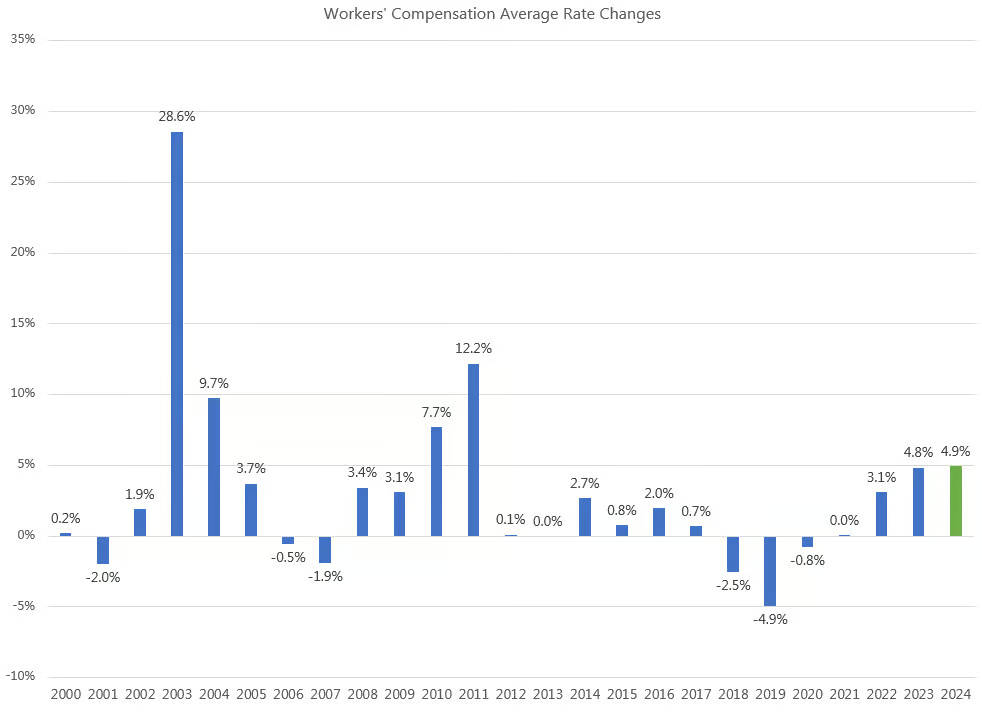
The Department of Labor & Industries is proposing a 4.9% increase in average workers’ compensation rates for next year. That would be the largest increase since 2011 (displacing this year’s increase of 4.8%). According to L&I, rates would increase for 283 of 325 risk classes.
L&I notes, “In part, the rate increase is needed because Washington has had higher-than-normal increases in the state’s average wage in recent years.” Indeed, the state average wage—which is used to calculate workers’ comp time-loss and pension benefits—increased by record amounts in 2020 and 2021. However, the state average wage in 2022 increased by just 2.0%.
Meanwhile, according to L&I, the break-even average rate increase for next year is 10%. But, as it has done for the past several years, L&I is proposing a smaller rate increase and making up the difference by using contingency reserve funds. (Our workers’ compensation system is costly compared to those of other states. The policy of proposing below break-even rates hides the system’s true costs.)
Finally, one component of the workers’ compensation rate is the supplemental pension fund, which provides cost-of-living adjustments (COLAs) for pensions and long-term time-loss benefits. As noted above, the COLAs are determined by increases in the state average wage.
Apparently, the supplemental pension fund had a $55 million cash shortfall at the end of 2022. (It was covered by a loan from the pension reserve fund, and the loan was repaid in March.) L&I reported in March that this was caused in part by “rising expenditures due to changes in the State average wage and increasing COLAs” and “rate inadequacy caused by multiple years of adopting rates below break even indication.”
Tags: workers' compensation