
8:43 am
November 9, 2022
According to the National Academy of Social Insurance (NASI), Washington once again had the nation’s highest workers’ compensation benefit costs per covered worker in 2020. They were $824.53 in 2020 (up from $777.91 in 2019); the second-highest benefit costs per covered worker were $804.30 in Wyoming. (There is a two-year data lag.)
As a percent of covered wages, Washington’s workers’ compensation benefit costs were 1.08% in 2020, which was the seventh highest in the country. NASI reports that covered wages in Washington grew by 32.3% from 2016–2020, which was the strongest wage growth in the country.
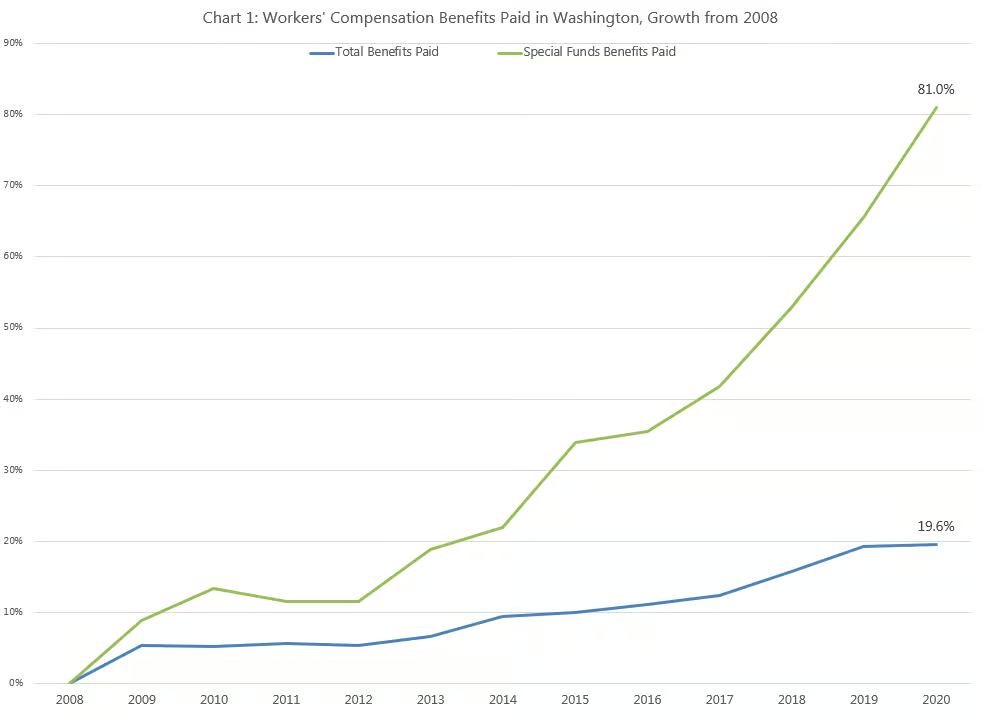
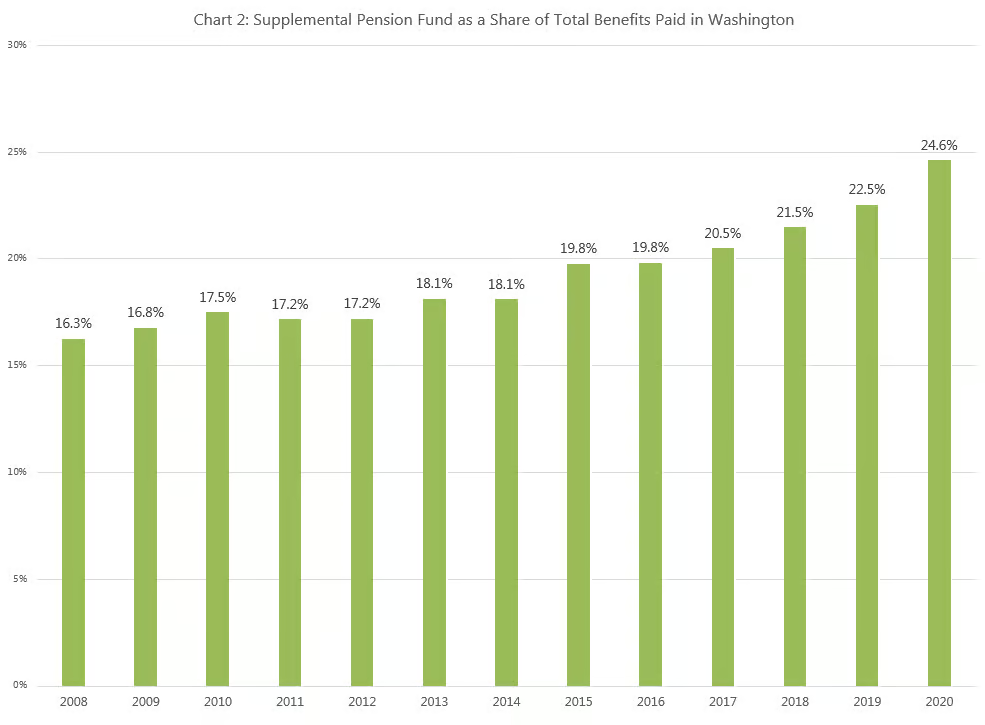
Benefits can be either medical or cash. Medical benefits as a percent of total benefits are lowest in Washington (27.3%). Some states use special funds to administer benefits to certain types of workers; these special funds are a component of total benefit costs. Washington’s supplemental pension fund is accounted for by NASI as a special fund. It provides cost-of-living adjustments (COLAs) for pensions and long-term time-loss benefits. According to NASI, from 2008 to 2020, total benefits paid in Washington increased by 19.6%; supplemental pension fund benefits grew by 81.0%. (See chart 1. Note that as part of workers’ compensation reforms made in 2011, the COLAs were suspended for FY 2012.) Supplemental pension fund benefits as a share of total benefits paid in Washington have increased from 16.3% in 2008 to 24.6% in 2020. (See chart 2.)
The COLAs are determined by the state average wage. As I showed earlier this year, growth in the state average wage has been the highest ever over the past few years. The special funds numbers included in the current NASI report reflect the average wage growth in 2018 and 2019. The higher wage growth of 2020 and 2021 has not yet shown up in the NASI data.
Meanwhile, the Department of Labor & Industries (L&I) has proposed increasing average workers’ compensation rates by 4.8% next year. Although that would be the largest increase since 2011, it is lower than the break-even point. According to L&I, the break even for next year is 17.8%. (That is, they are using reserve funds to buy down the rates, masking the true cost of the system.) The supplemental pension component of the rate would increase by 7.0% under the proposal.
Tags: workers' compensation