11:34 am
April 14, 2026
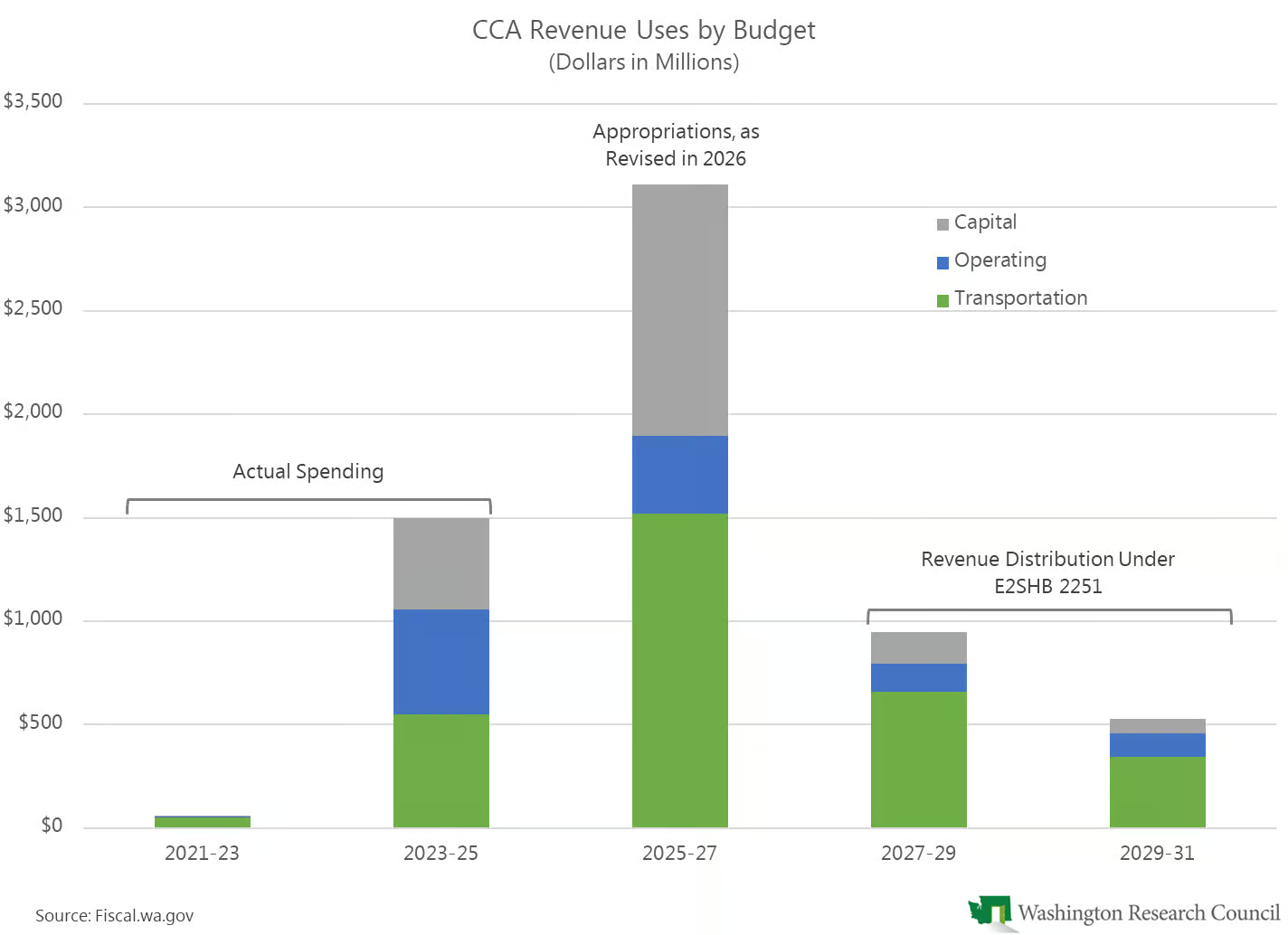
In the supplemental budgets, the Legislature increased 2025–27 appropriations from climate commitment act (CCA) accounts by $1.125 billion. Of that, $89.0 million was in the operating budget, $839.9 million was in the capital budget, and $196.5 million was in the transportation budget. (As I showed last month, $539.9 million of the capital CCA appropriations is effectively used to shift funding from the capital budget to the operating budget.) This brings the total amount spent or appropriated from CCA accounts to date to $4.667 billion.
Additionally, the Legislature made changes to how CCA funds will be distributed in the future. E2SHB 2251 repeals the current account structure on July 1, 2027, and instead creates the climate commitment act operating account and the climate commitment act capital account. It also renames the carbon emissions reduction account as the climate commitment act transportation account. The current account structure does not specify how much money in each account should be used for capital versus operating budget purposes. That said, the allowable uses of the new accounts largely mirror those of the original CCA accounts overall. (For more on the CCA, see this report.)
Under E2SHB 2251, after 2025–27, any remaining amounts in the previous accounts (climate investment account, climate commitment account, and natural climate solutions account) will be transferred to the CCA capital account. The fiscal note for the bill estimates that the transfer could total $1.172 billion, but it’s not clear to what extent that estimate accounts for the appropriations in the 2026 supplementals.
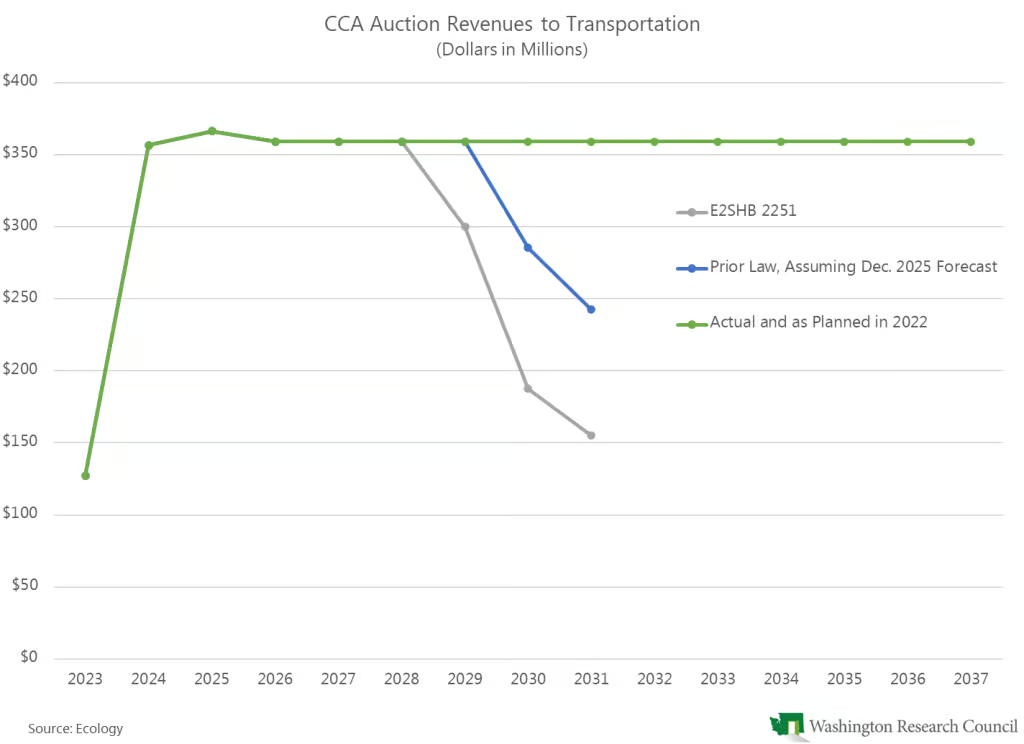
The new account structure will be more streamlined. However, E2SHB 2251 also changes how the carbon emission allowance auction revenues will be shared among the three budgets. According to the Department of Ecology’s most recent forecast of the auction revenues (from December), they are expected to decline significantly beginning in 2027–29.
Expected auction revenues are a significant component of the 2022 Move Ahead WA transportation revenue package; consequently, the first $359.1 million in annual auction revenues were directed by statute to the transportation budget through FY 2037. If Ecology’s forecast is correct, beginning in FY 2030, auction revenues will not be sufficient to provide the amount originally earmarked for the transportation budget.
E2SHB 2251 will further reduce the amount that goes to transportation, as shown in the chart. The 2026 supplemental transportation budget balances through 2029–31. Beyond that, the changes in E2SHB 2251 will make it even harder to sustain Move Ahead WA projects.
The reduction to the transportation distribution allows the state to direct some of the declining auction revenues to the operating and capital budgets moving forward. (They would otherwise get much less in FY 2029 and no distributions at all beginning in FY 2030.) The chart below shows how auction revenues have been used across the three budgets (including actual spending for 2021–23 and 2023–25 and revised appropriations for 2025–27) and how revenues will be distributed in the next two biennia under E2SHB 2251.