12:58 pm
March 18, 2022
The coronavirus state fiscal recovery fund (CSFRF) is the most flexible of the federal COVID relief money. The state of Washington received $4.428 billion from the CSFRF. (The funds must be obligated by Dec. 31, 2024 and spent by Dec. 31, 2026.)
Last year, the Legislature appropriated $102.6 million of the CSFRF as part of the 2021 supplemental to the 2019–21 operating budget. Also last year, the Legislature appropriated from the CSFRF—for 2021–23—$1.652 billion in the operating budget, $1.0 billion in the transportation budget, and $400.0 million in the capital budget. That left about $1.273 billion of the state’s share.
The 2022 supplemental operating budget appropriates $1.119 billion from the CSFRF for 2021–23, and the outlook assumes that this new policy spending will result in $8.2 million in spending from the CSFRF in 2023–25. Neither the capital nor transportation supplementals make net appropriations from the CSFRF. (That said, the capital supplemental shifts some CSFRF appropriations around to different projects than were funded in the original biennial budget.)
All told, it looks like the state has about $145.6 million left of its share of the CSFRF. The chart shows the policy changes in the supplemental operating budget, in terms of the CSFRF and funds subject to the outlook (NGFO). (I’ve removed the policy changes in the special appropriations budget area in order to make the CSFRF changes easier to see. Policy changes for other human services from the NGFO and CSFRF are negative because the Department of Corrections uses COVID relief funds in lieu of the NGFO and revised estimates of pandemic leave assistance grants mean CSFRF savings of $133.9 million in the Employment Security Department.)
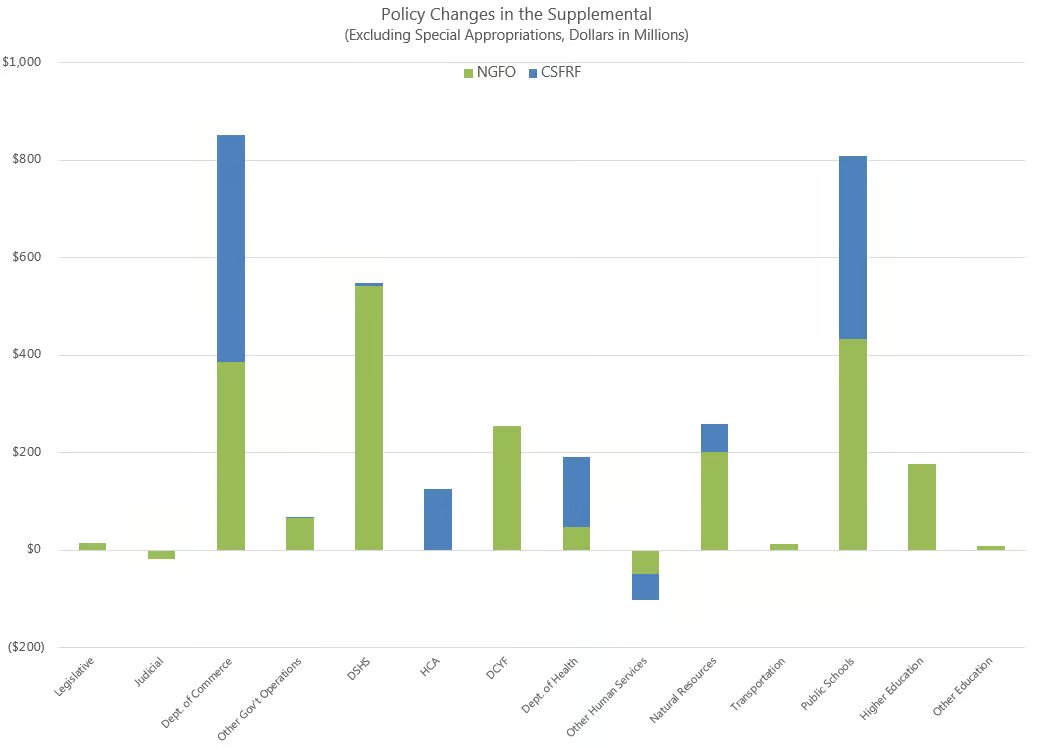
The CSFRF supplemental appropriations predominately go to the Department of Commerce and public schools. The major CSFRF-funded policy items are:
- $346.5 million for K–12 enrollment stabilization, as outlined in SHB 1590 (which has not yet been signed by the governor). Under the bill, districts whose SY 2021–22 revenue is less than what it would have been if based on SY 2019–20 enrollment will get stabilization funds of 50% of the difference in revenue.
- $125.3 million for COVID vaccination and other activities to contain the spread.
- $100.0 million for business assistance for the hospitality industry.
- $100.0 million for grants to utilities to address low-income customer arrearages.
- $100.0 million for behavioral health provider relief.
- $69.5 million for small businesses (disaster recovery, innovation fund, and resiliency network).
- $58.0 million for the farmers to families food box program.
- $55.0 million for homeless service provider stipends and for a homeless service provider workforce study (due Sept. 30, 2023).
- $45.1 million for right-of-way response and outreach.
- $45.0 million for eviction prevention rental assistance.
As part of the federal legislation establishing the CSFRF, Treasury was allowed to split the payments in two tranches, depending on the unemployment rate in the state. Washington is subject to this split because our unemployment rate at the date of certification was less than 2 percentage points above the Feb. 2020 unemployment rate. According to the final rule, the second tranche payments will be made May 10, 2022 (one year after the first payments were made).
Last week Route Fifty reported that Congress had considered rescinding about $7 billion from the 30 states subject to the split, to offset some new federal COVID-19 spending. Apparently, about $400 million would have come from Washington’s allocation. Although the U.S. House passed a spending bill last week that did not include this claw back, U.S. Senate Republicans are still considering the idea.
(Previous posts on the supplemental budget are here.)
Categories: Budget.Tags: 2022supp , ARP Act , COVID-19