1:49 pm
April 9, 2025
In legislative testimony and a Substack piece, UW economist Jacob Vigdor has suggested that Washington needs a wealth tax so that it can increase funding for higher education. This premise is belied by the House- and Senate-passed budgets. (I wrote about Vigdor’s taxation points yesterday.)
First, regarding poor educational outcomes in Washington, Vigdor writes,
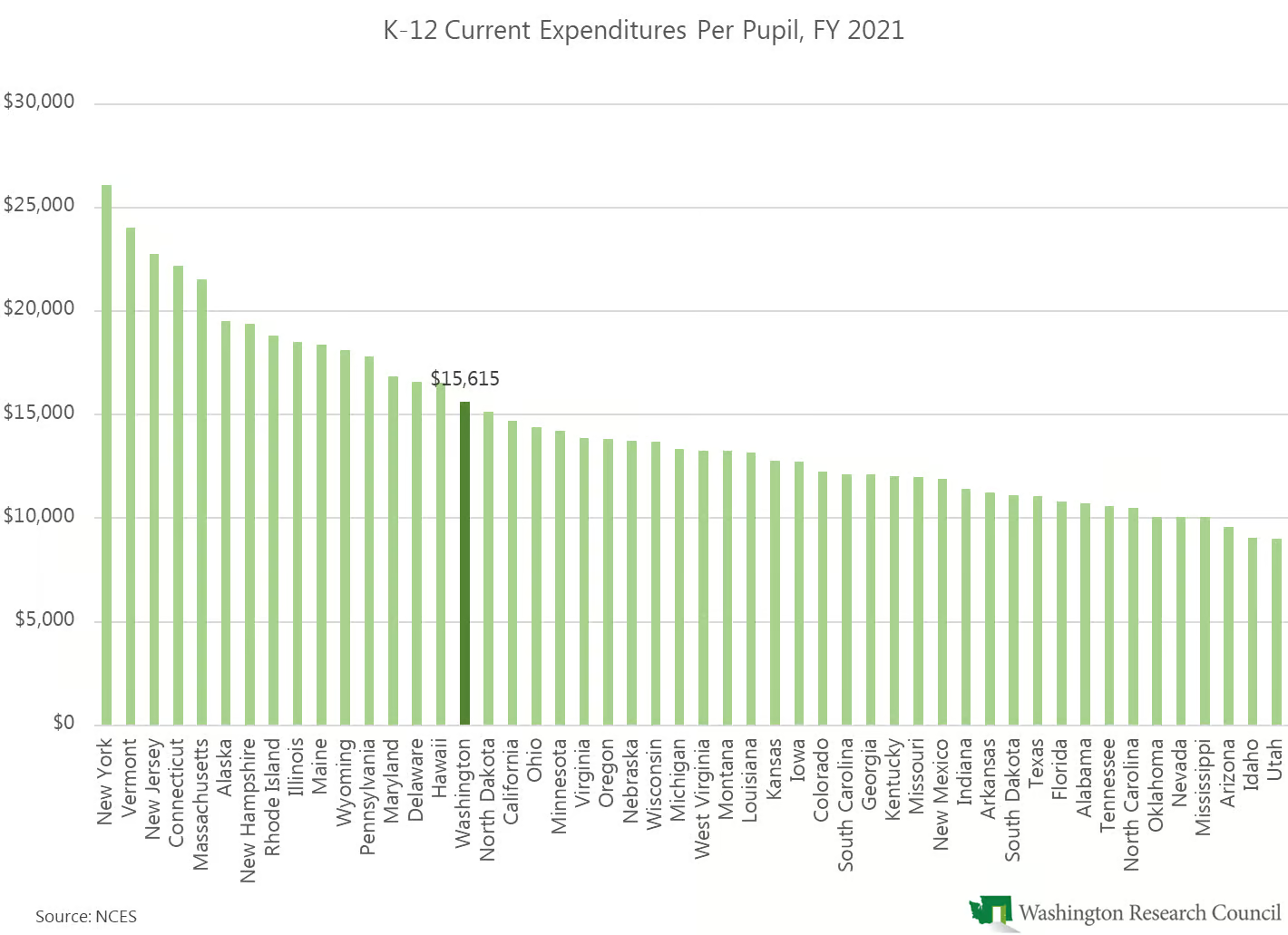
Any time you have a systemic failure like this it’s hard to pin things down on any one cause, but it should be stated that Washington is by no means spending lavishly on its education system. In a state with a cost of living among the highest in the nation, we’re nowhere near the highest in terms of per-pupil funding in our K-12 system.
He includes a map that suggests that K–12 per pupil current spending in Washington was somewhere in the top half of states in FY 2022. (He doesn’t provide a source for his data.) According to the National Center for Education Statistics, Washington’s per pupil current spending on K–12 was 16th highest among the states in FY 2021 (the most recent year in this data source). Washington’s K–12 revenues per pupil from state and local sources ranked 14th highest that year. I wouldn’t call that “nowhere near the highest.”

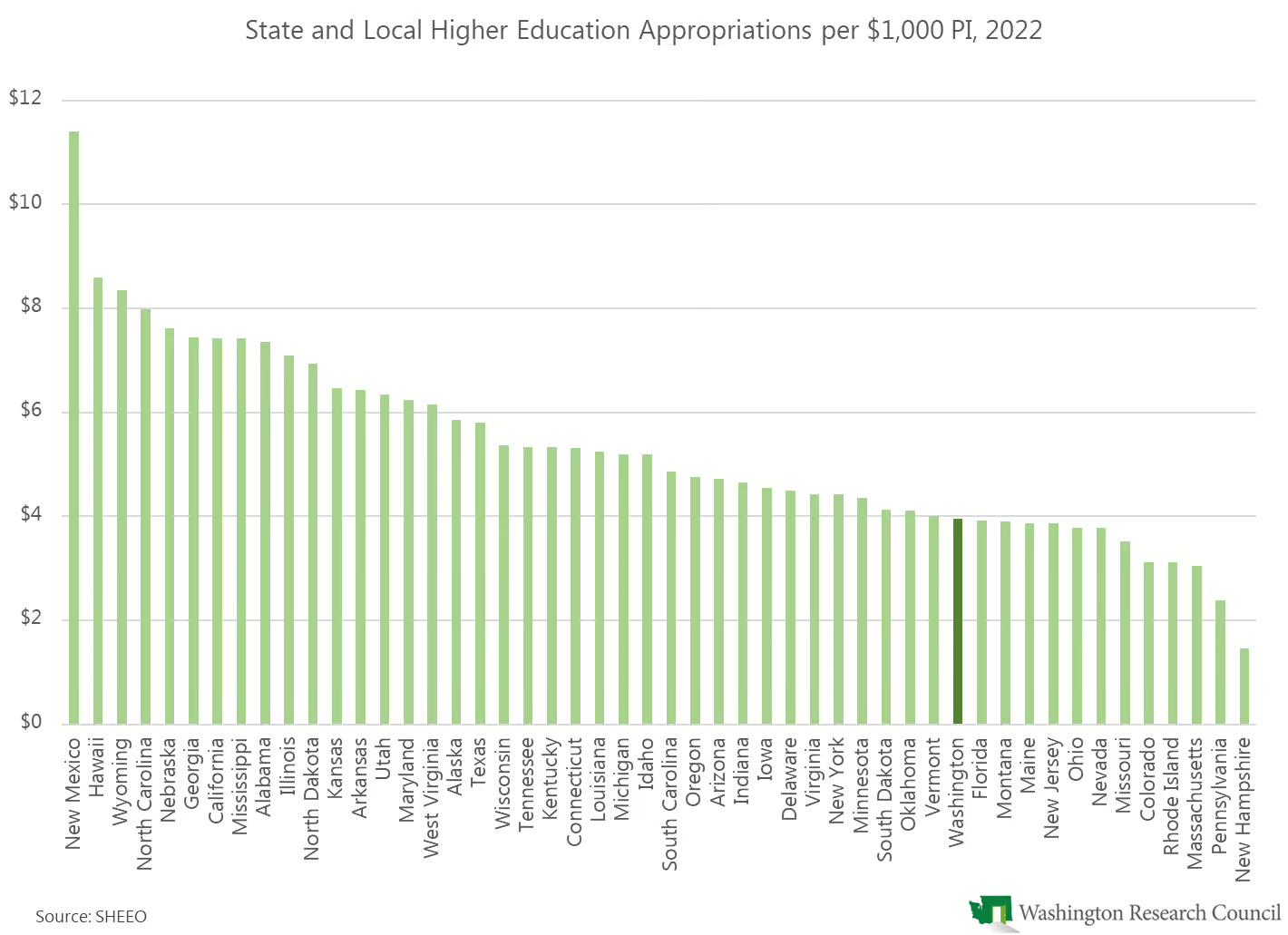
Second, Vigdor writes, “And particularly given our state’s wealth, we aren’t investing a lot of public dollars in our higher education system either.” Here he includes a map showing state and local appropriations for higher education per $1,000 of personal income in 2022. The map makes it look like Washington’s higher education spending is low compared to other states.
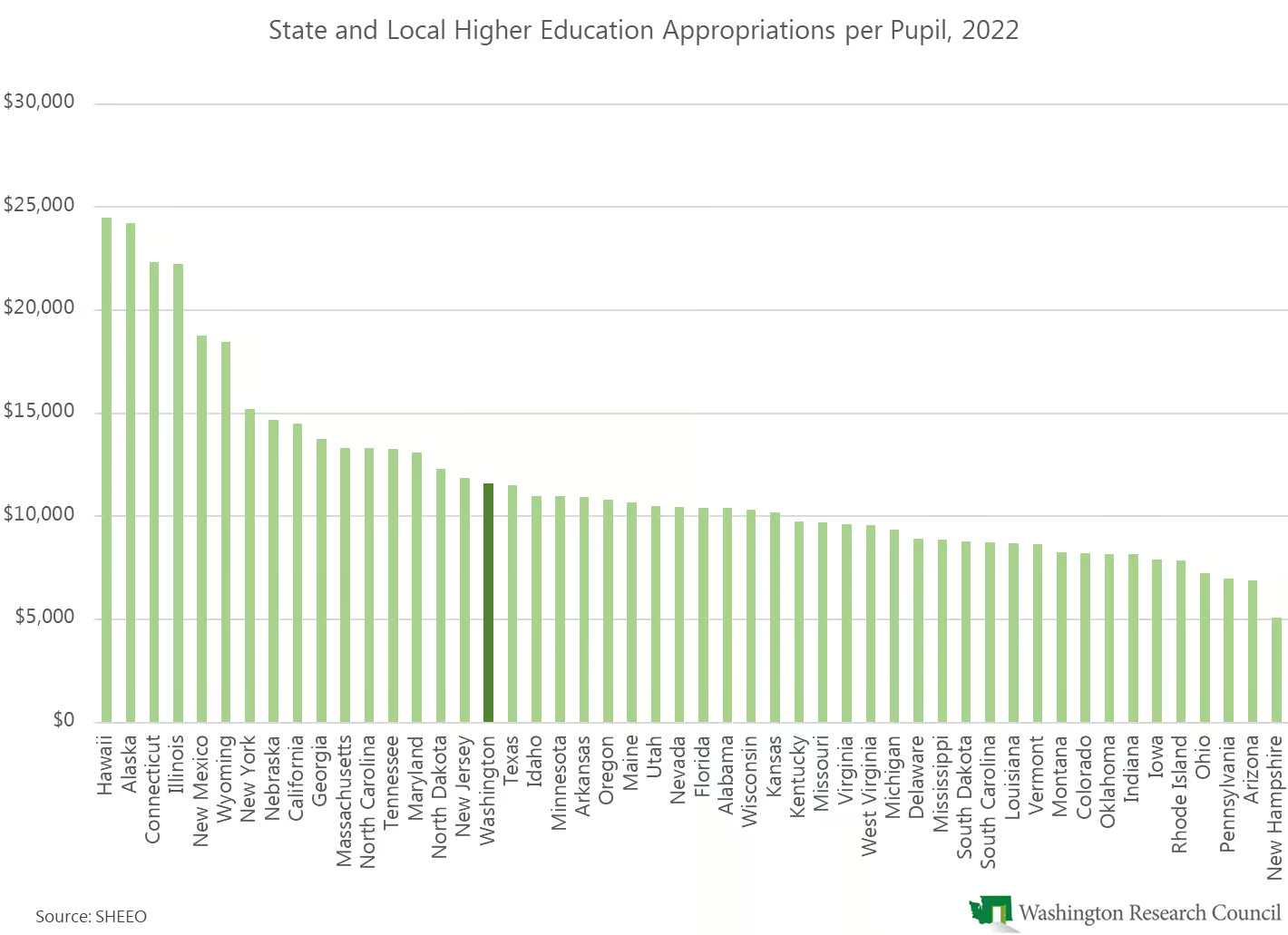
Using data from the State Higher Education Executive Officers Association’s (SHEEO) State Higher Education Finance report, I estimate that Washington ranks 38th in state and local appropriations per $1,000 of personal income. But Washington ranks 17th in state and local appropriations per pupil.
Vigdor testified in favor of the Senate wealth tax proposal, saying, “Between 2010 and 2022, per capita income rose 47% faster than inflation in Washington state, but per capita funding for higher education fell 6% relative to inflation.” (The Seattle Times and Everett Herald picked up this data point.)
The SHEEO data does show that per capita state and local appropriations (adjusted for inflation) for higher education in Washington decreased by 5.7% from 2010 to 2022. This measures the higher education appropriations per person in Washington, not per higher education pupil.
Indeed, per capita appropriations decreased because higher education enrollment declined. Appropriations per higher education pupil (adjusted for inflation) increased by 33.4% from 2010 to 2022.
Finally, Vigdor writes, “We don’t spend very much because, in the grand scheme of things, we don’t tax very much.” This idea is the premise of his support for the wealth tax: If there are more tax revenues, the Legislature will appropriate more for higher education. But experience and the budget proposals themselves prove that to be false. The Legislature has other priorities.
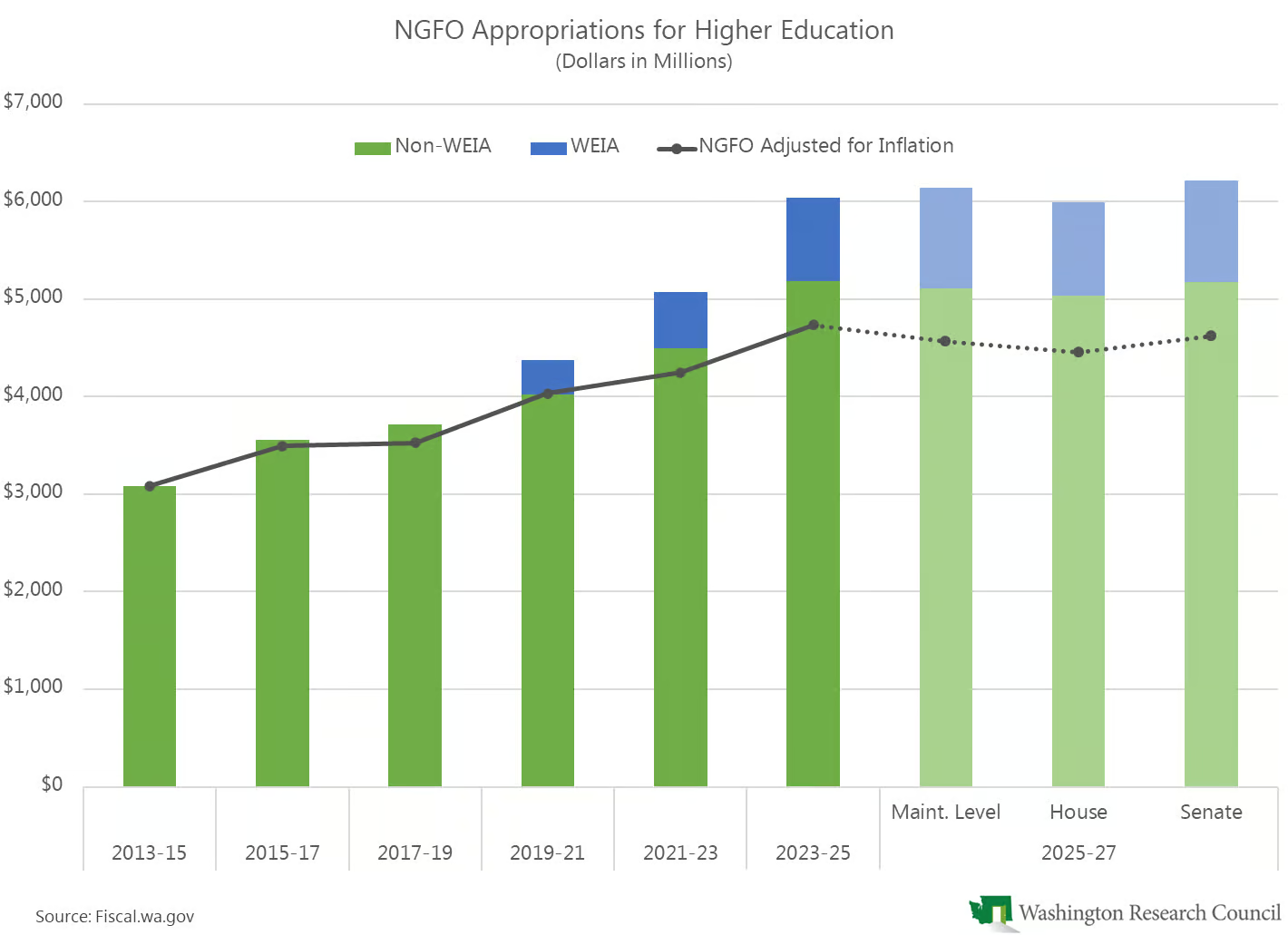
As the chart shows, 2025–27 appropriations from funds subject to the outlook (NGFO) for higher education in the House- and Senate-passed budgets would be below or barely above current appropriations. Compared to 2023–25, the House-passed budget would increase total NGFO appropriations by 8.1%, but it would decrease higher education appropriations by 0.7%. The Senate-passed budget would increase total NGFO appropriations by 9.1%, but it would increase higher education appropriations by just 2.9%. Thus, neither budget would significantly increase higher education spending even though they assume revenues from a wealth tax.
Further, the appropriations for higher education would be even lower, but for the fact that an increasing percentage of higher education spending is coming from the workforce education investment account (WEIA). The WEIA (part of the NGFO) is funded by a B&O tax surcharge and WEIA appropriations are statutorily required to supplement and not supplant other funding for higher education. None of the new taxes included in the budget proposals would be dedicated to higher education.