
2:07 pm
April 3, 2025
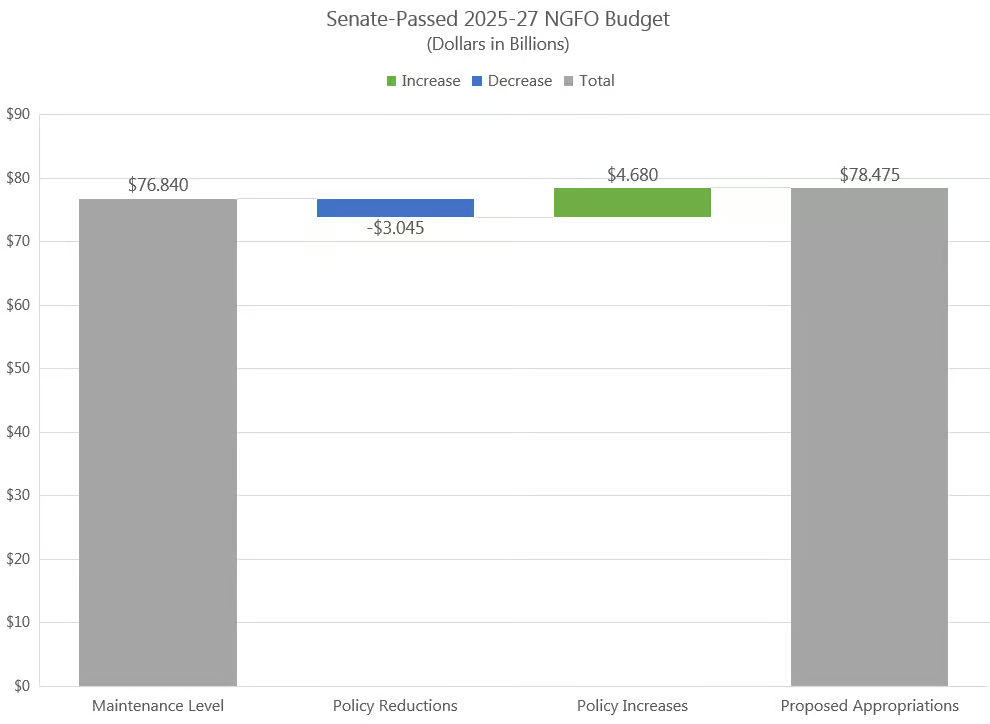
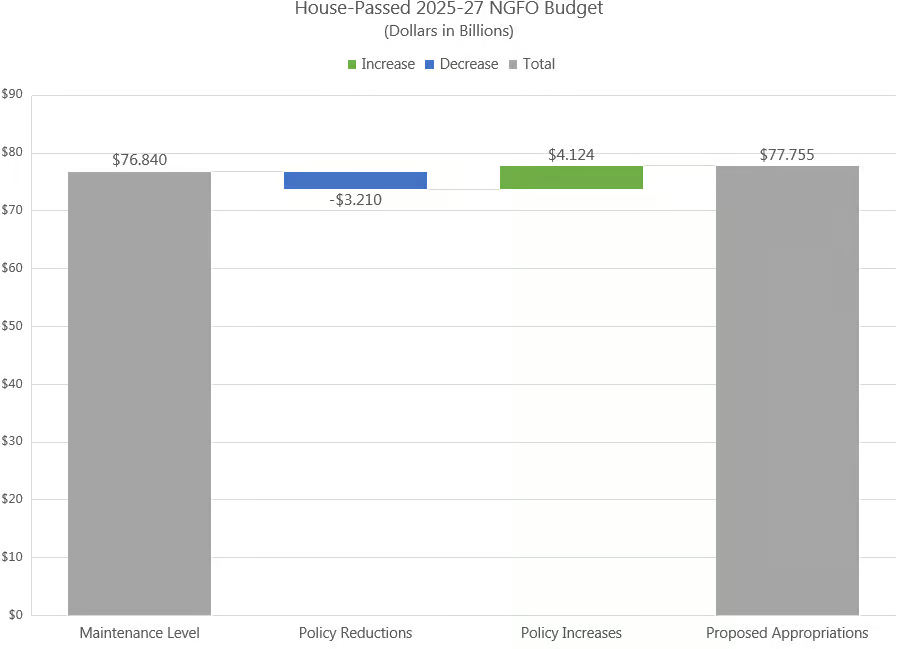
Both the Senate- and House-passed operating budgets for 2025–27 would increase appropriations from funds subject to the outlook (NGFO) above the maintenance level. The maintenance level (the cost of continuing current services, adjusted for inflation and enrollment) is estimated to be $76.840 billion.
The Senate would make policy level reductions of $3.045 billion and add $4.680 billion for new policy items. Similarly, the House would make policy level reductions of $3.210 billion and add $4.124 billion for new policy. We highlighted some of the major policy changes (both increases and decreases) in our side-by-side of the budgets as proposed. This post focuses on just the new policy increases.
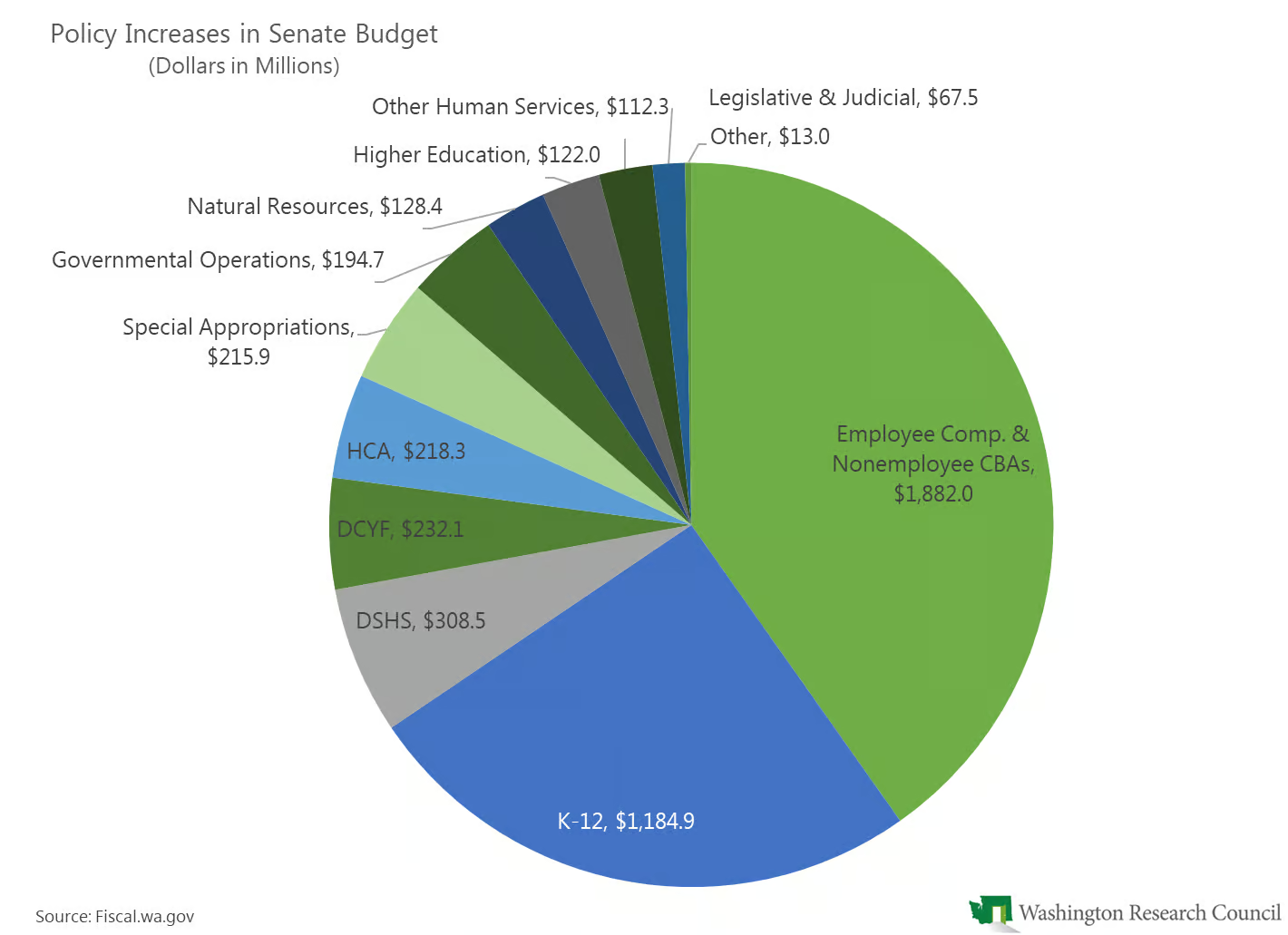
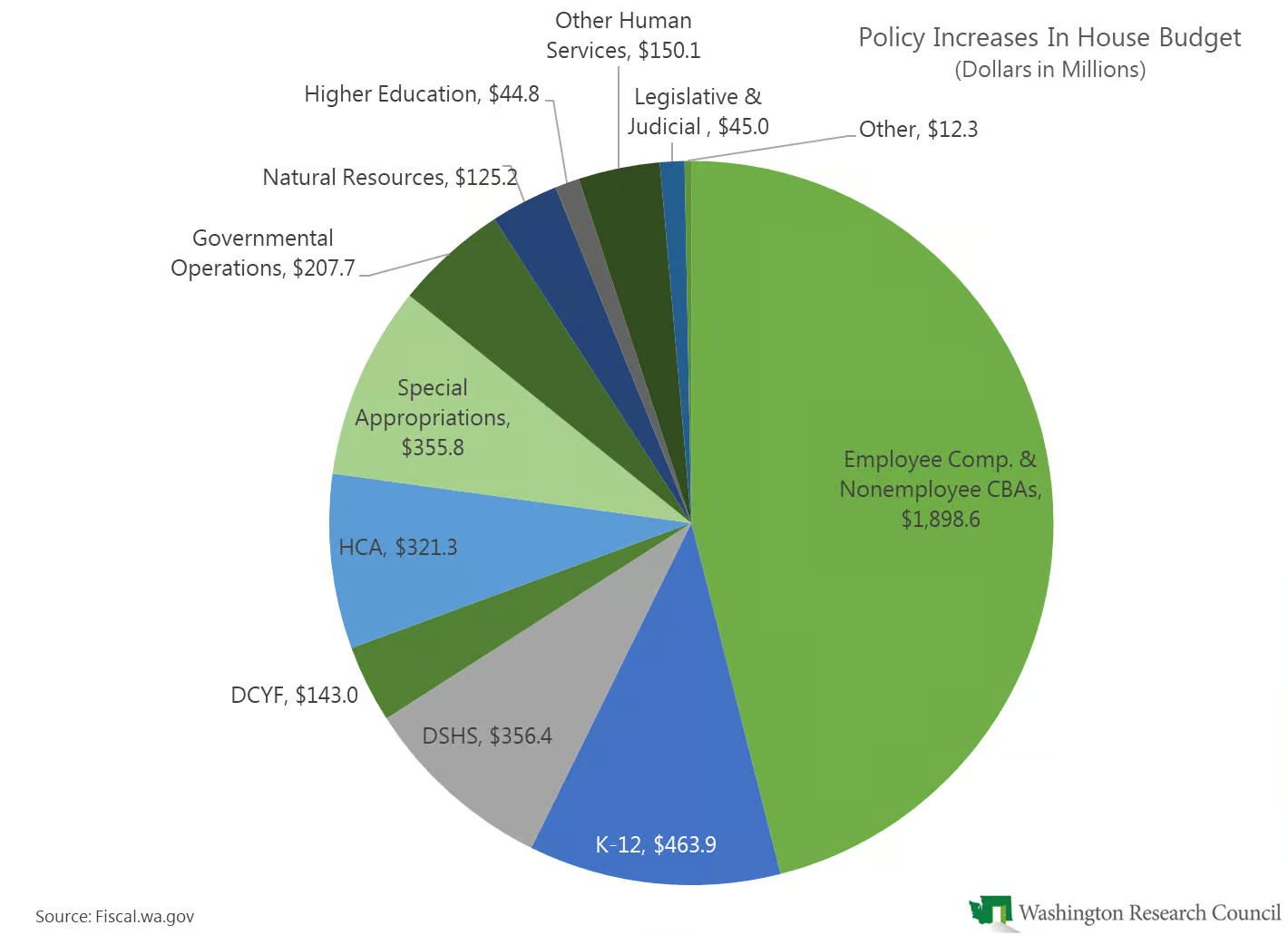
In both budgets, compensation increases for state employees and collective bargaining agreements with non-state employees make up the largest share of the total increases—$1.882 billion (40.2%) in the Senate and $1.899 billion (46.0%) in the House.
Some of the next largest increases in the Senate include:
- $967.6 million in 2025–27 and $1.121 billion in 2027–29 to change K–12 special education enrollment and funding formulas (E2SSB 5263)
- $174.9 million in 2025–27 and $247.6 million in 2027–29 to increase K–12 allocations for materials, supplies, and operating costs (E2SSB 5192)
- $93.3 million in 2025–27 for emergency food assistance
- $77.7 million in 2025–27 for local housing programs
- $72.5 million in 2025–27 and $75.8 million in 2027–29 for community behavioral health support services enhanced supervision
- $35.4 million in 2025–27 to increase nursing home rates
- $30.4 million in 2025–27 and $31.9 million in 2027–29 for the Transitional Care Center of Seattle
- $55.0 million in 2025–27 and -$10.2 million in 2027–29 for the state health care affordability account
- $47.7 million in 2025–27 and $54.2 million in 2027–29 to increase special education multipliers for the Early Support for Infants and Toddlers program (E2SSB 5263)
- $38.1 million in 2025–27 and $38.7 million in 2027–29 to expand full-day Early Childhood Education & Assistance Program (ECEAP) slots
- $31.2 million in 2025–27 and $31.6 million in 2027–29 to increase ECEAP rates
Some of the next largest increases in the House include:
- $216.9 million in 2025–27 and $392.8 million in 2027–29 to increase the local effort assistance threshold (HB 2049)
- $159.7 million in 2025–27 and $198.8 million in 2027–29 to increase the special education multiplier (SHB 1357 or E2SSB 5263)
- $117.6 million in 2025–27 for local housing programs
- $90.0 million in 2025–27 and $2.160 billion in 2027–29 for “accelerated debt payments on callable bonds”
- $93.3 million in 2025–27 for emergency food assistance
- $72.8 million in 2025–27 to increase nursing home rates
- $72.4 million in 2025–27 and $75.7 million in 2027–29 for community behavioral health support services enhanced supervision
- $71.0 million in 2025–27 and $148.1 million in 2027–29 to restore assumed program integrity savings that will not be realized
- $51.5 million in 2025–27 and $76.8 million in 2027–29 to reimburse tribal facilities for non-native substance use disorder clients
- $55.0 million in 2025–27 and -$10.2 million in 2027–29 for the state health care affordability account
Both budgets would fund significantly fewer studies and workgroups than normal. However, despite the maintenance level shortfall, both budgets still include a lot of small budget provisos. The list of new policy provisos below is just a sample of what is included in the budgets.
- $238,000 in 2025–27 and $241,000 in 2027–29 for an art curator at Eastern Washington Historical Society (both)
- $300,000 in 2025–27 for a study on reparations (Senate)
- $88,000 in 2025–27 for a pilot program of a biometric monitoring system (Senate)
- $300,000 in 2025–27 for UW’s Harry Bridges Center for Labor Studies (Senate)
- $200,000 in 2025–27 for UW “to construct a formal structure for lasting cooperation between the state and Nordic non-governmental organizations and academic institutions.” (Senate)
- $232,000 in 2025–27 (Senate) to study alcohol taxes and fees ($480,000 in House)
- $270,000 in 2025–27 and $277,000 in 2027–29 to develop a plan “on how to create a complete and interactive registry of the health care landscape in Washington” (House)
- $300,000 in 2025–27 (House) for security grants for nonprofits ($200,000 in Senate)
- $250,000 in 2025–27 for a nonprofit in Issaquah providing cultural programs (House)
Tags: 2025-27