12:34 pm
February 10, 2023
HB 1732 and SB 5650 would both specify an inflationary adjustment for school employees for school year (SY) 2023–24 of 3.8%. Additionally, under current law, the inflationary adjustment is the implicit price deflator (IPD) for the fiscal year (FY). Under the bills, beginning in SY 2024–25, the adjustment would be based on IPD for the calendar year (CY) prior to the beginning of the school year.
According to the fiscal notes, the bills would increase spending from funds subject to the outlook (NGFO) by $355.5 million in 2023–25 and by $692.0 million in 2025–27.
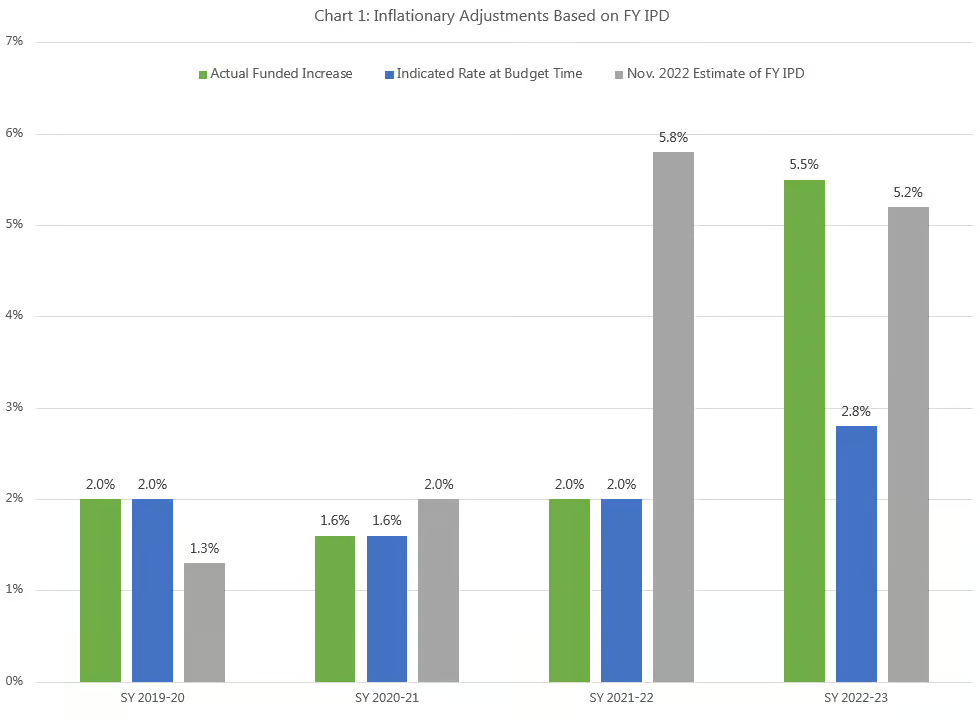
Currently, the inflationary measure is set in the state budget, and it is based on the IPD that is projected at the time. This means that there will be revisions to IPD that won’t be reflected in salaries. For example, the 2019–21 budget set the inflationary adjustment for SY 2019–20 at 2.0%. That was the IPD that was estimated in the March 2019 economic forecast for FY 2020. Ultimately, though, IPD for FY 2020 ended up being just 1.3%.
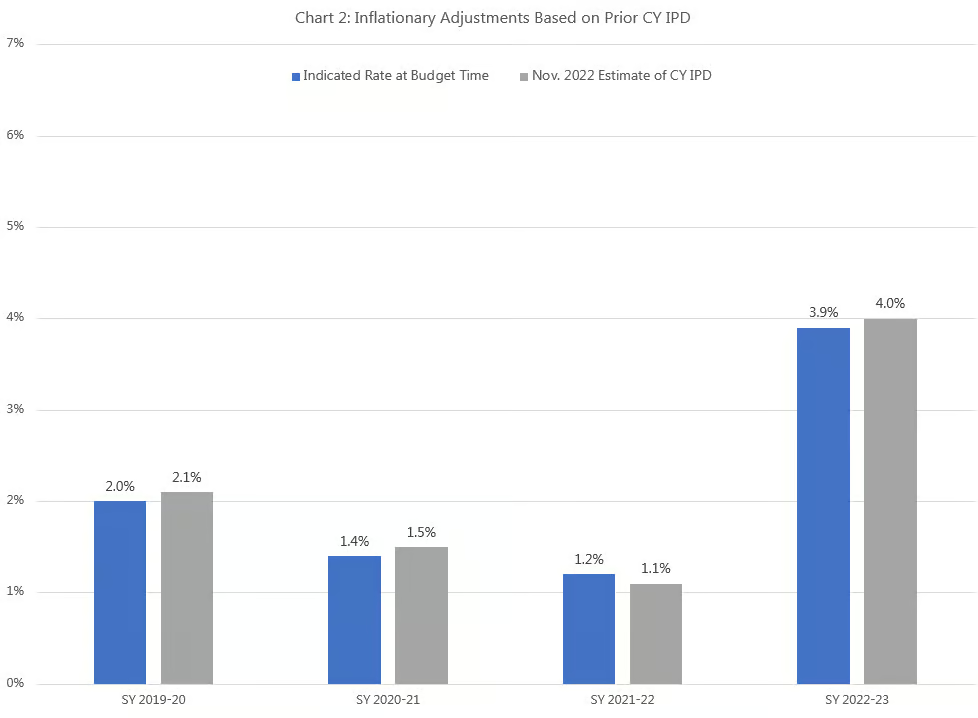
Meanwhile, if the inflationary adjustment had been based on the prior CY IPD, the inflationary adjustment for SY 2019–20 would have been based on the IPD for CY 2018, as estimated in March 2019 (2.0%). IPD for CY 2018 ultimately ended up being 2.1%.
The mismatch between forecast and actual FY IPD was especially large in FY 2022. The March 2021 economic forecast estimated that the IPD for FY 2022 would be 2.0%, so the 2021–23 budget increased salaries by that amount for SY 2021–22. The current estimate of IPD for FY 2022 is 5.8%.
The Legislature is supposed to rebase state basic education compensation allocations this year. Legislators got a head start on that last year by funding an inflationary increase of 5.5% for SY 2022–23, even though the rate indicated by the IPD forecast was 2.8%. (See this post from last month for more background.)
Chart 1 shows how the actual funded increases have compared to the FY IPD that was indicated at the time the state budget was enacted and the updated estimate of FY IPD for the same year (as estimated in the Nov. 2022 economic forecast).
Chart 2 shows what the indicated inflationary increases would have been if they were based on IPD in the prior CY, compared to the updated estimates of CY IPD for those years. The lag isn’t enough to make the indicated salary increases exactly match the updated IPD for the previous year, but the discrepancies are smaller than they are using the projected FY IPD.
Gov. Inslee proposed an inflationary adjustment of 4.5% for SY 2023–24, and he would continue to tie future adjustments to the fiscal year IPD. His budget proposal included $351.9 million in 2023–25 for this purpose. (If the Legislature were to simply use the forecast FY IPD for FY 2024, the inflationary increase for SY 2023–24 would be 2.6%.)
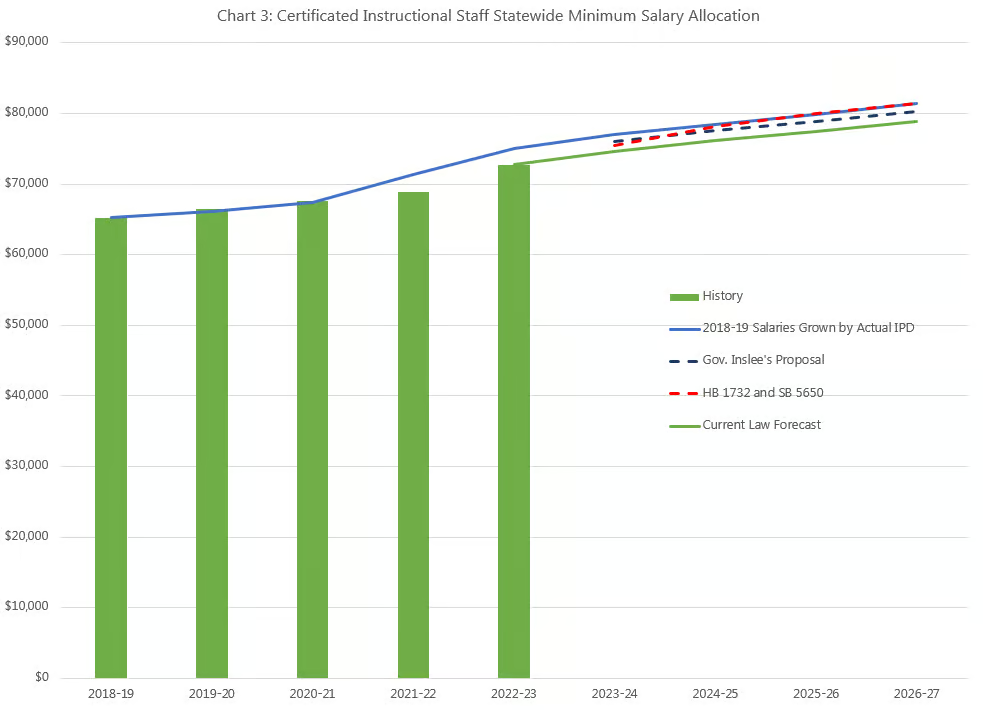
Chart 3 shows actual base salaries for certificated instructional staff, what those salaries would have been if they had grown by actual IPD (rather than forecasted IPD at the time the budgets were enacted), and what they would be going forward under current law and under the proposals from the governor and the Legislature. The minimum salary allocation under HB 1732 and SB 5650 would be slightly lower than under the governor’s proposal in SY 2023–24, but slightly higher in the following three years.