1:44 pm
September 17, 2026
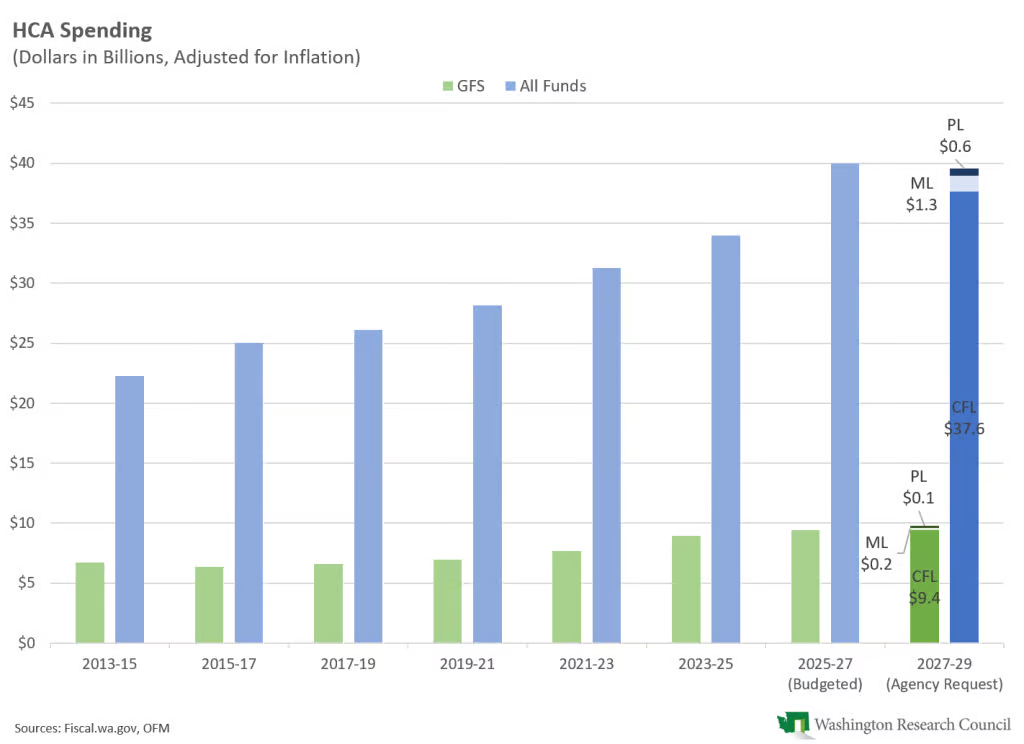
The Health Care Authority (HCA) is requesting $9.762 billion from the general fund–state (GFS) for 2027–29, which is $327.3 million (3.5%) higher than enacted appropriations for 2025–27. That change is comprised of a carry-forward level reduction of $21.8 million, a maintenance level increase of $200.9 million, and a policy level increase of $148.2 million. The new policy would increase appropriations in 2029–31 by $144.9 million
Note, however, that there are numerous placeholders for both maintenance level items and new policy items; these are not factored into the totals. For example, the request does not make any assumptions about how caseloads and utilization might change compared to the current budget.
The largest request is $142.0 million in 2027–29 and $142.0 million in 2029–31 at the maintenance level to restore Medicaid program integrity savings. As I wrote last year, HCA’s base budget includes an assumption that program integrity efforts will produce $142 million in savings a biennium. These savings have not been realized, and the budgets for 2021–23 and 2023–25 consequently increased appropriations by $142 million. The 2026 supplemental budget added $71 million to partially restore the savings in 2025–27. (These previous restorations have been policy level, not maintenance level, changes.)
The request notes, “oversight has expanded beyond traditional retrospective audits and recoveries to include encounterdata validation, financial audits, contract monitoring, providernetwork oversight, corrective actions, payment controls, and preventive system and policy changes.” Nevertheless, HCA writes, “The Apple Health (AH) Medicaid program faces a projected budget deficit for the 2025–2027 biennium. This shortfall stems from overestimating Program Integrity (PI) savings within the February 2026 medical assistance expenditure forecast.”
The maintenance level also includes $36.0 million in 2027–29 and $40.0 million in 2029–31 to align appropriations with projected expenditures for community behavioral health support.
At the policy level, the request includes:
- $33.7 million in 2027–29 and $32.0 million in 2029–31 to complete the development and implementation of the statewide Health Care Management and Coordination System electronic health records solution.
- $29.3 million in 2027–29 and $47.8 million in 2029–31 to support the cost of uninsured clients using crisis recovery centers or crisis stabilization units.
- $20.3 million in 2027–29 and $20.2 million in 2029–31 to continue the Health Homes program, which is set to expire at the end of the current biennium.
- $19.9 million in 2027–29 and $19.9 million in 2029–31 to provide state-funded Medical Care Services coverage for clients who could lose Medicaid coverage due to the federal H.R. 1 changes to eligibility for certain lawfully-present non-citizens.
- $10.7 million in 2027–29 and $10.4 million in 2029–31 for operational funding to handle Medicaid eligibility verification, work requirement determination, and other compliance obligations related to H.R. 1.
Additionally, the HCA is requesting $80.0 million in 2027–29 and $110.0 million in 2029–31 from the health care affordability account to maintain Cascade Care Savings, which is the state health care premium assistance program for individuals with incomes up to 250% of the federal poverty level who are not eligible for Medicaid. These amounts are not included in the GFS totals, but this is effectively a request for GFS funding, because the revenue source for the health care affordability account is GFS appropriations. To date (beginning in 2021–23), the state has appropriated $275.0 million from the GFS to the health care affordability account. Current appropriations from the health care affordability account are expected to fund the program through CY 2027.
Finally, the GFS totals do not include any policy level budget reductions. However, HCA does provide a list of 25 items that could be cut. The potential savings for 2027–29, in terms of the GFS, total $245.6 million. The four largest items are:
- Savings of $147.4 million from eliminating the expansion of Apple Health to non-citizens.
- Savings of $43.1 million from eliminating the Medical Care Services program, which “provides health coverage to lawfully present recipients of aged, blind, or disabled cash assistance and the Housing and Essential Needs referral program who are unable to access other Federally funded programs due to their citizenship/immigration status.”
- Savings of $24.5 million from re-establishing the asset test for the Medicare Savings Program, which was eliminated in 2022.
- Savings of $8.3 million from eliminating adult denture coverage.
(Previous posts on the 2027–29 budget requests are available here.)

Tags: 2027 agency requests