2:26 pm
August 27, 2026
The root cause of the state budget shortfall is that in 2023–25, spending from funds subject to the outlook (NGFO) exceeded revenues by $4.842 billion. Budgets adopted for 2025–27 have not narrowed the gap. (Budgets have still balanced by using one-time funds, including reserves and transfers from other accounts.)
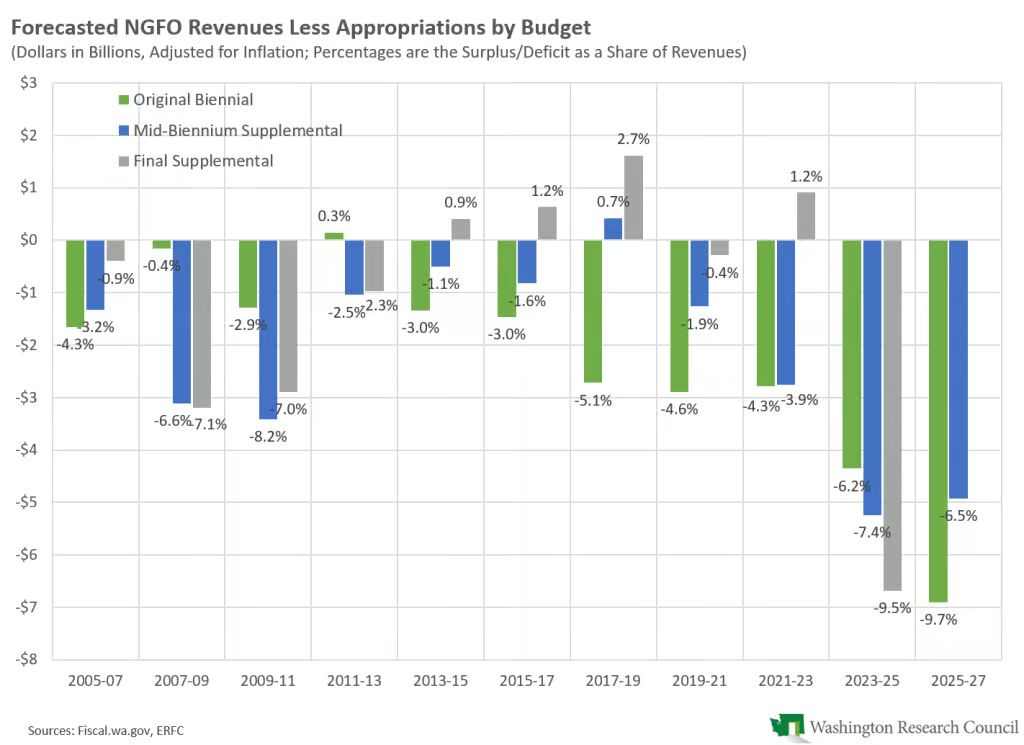
The gap was not the result of revenues coming in below forecast. As we showed in our 2024 report on the causes of the budget shortfall, legislators regularly appropriate more than they expect to collect in revenues. They have done so in nearly all biennial and mid-biennium supplemental budgets going back to at least 2005–07. Prior to 2023–25, aside from the Great Recession budgets, forecasted revenues often increased over the course of a biennium, decreasing the gap between appropriations and revenues. Several of the final supplemental budgets also reduced appropriations compared to the mid-biennium supplemental.
Since our 2024 report, we have data for three additional budgets. As the chart shows, the final supplemental budget in 2023–25 reversed trend and increased the gap between appropriations and revenues. Even as a percent of revenues for the biennium, the gaps in the 2025 supplemental budget (for 2023–25) and the 2025–27 biennial budget exceed those of the Great Recession. Ending this practice of appropriating significantly more than the revenue forecast would help make state budgets more sustainable.