
1:43 pm
July 23, 2025
According to the National Academy of Social Insurance (NASI), Washington’s workers’ compensation benefit costs per covered worker are still the highest in the country. The most recent report was released in November 2024, and it covers data from 2022.
In 2022, benefit costs in Washington were $854.28 per covered worker (up from $844.67 in 2021, as revised). The next highest was $770.37 per worker in Wyoming. As a share of covered wages, benefit costs in Washington were the third highest in 2022, at 1.02% (behind Wyoming and West Virginia).
From 2018 to 2022, covered wages in Washington grew by 32.9% (the ninth largest percentage increase in the country) and total benefit costs in Washington increased by 15.8% (the fourth largest percentage increase).
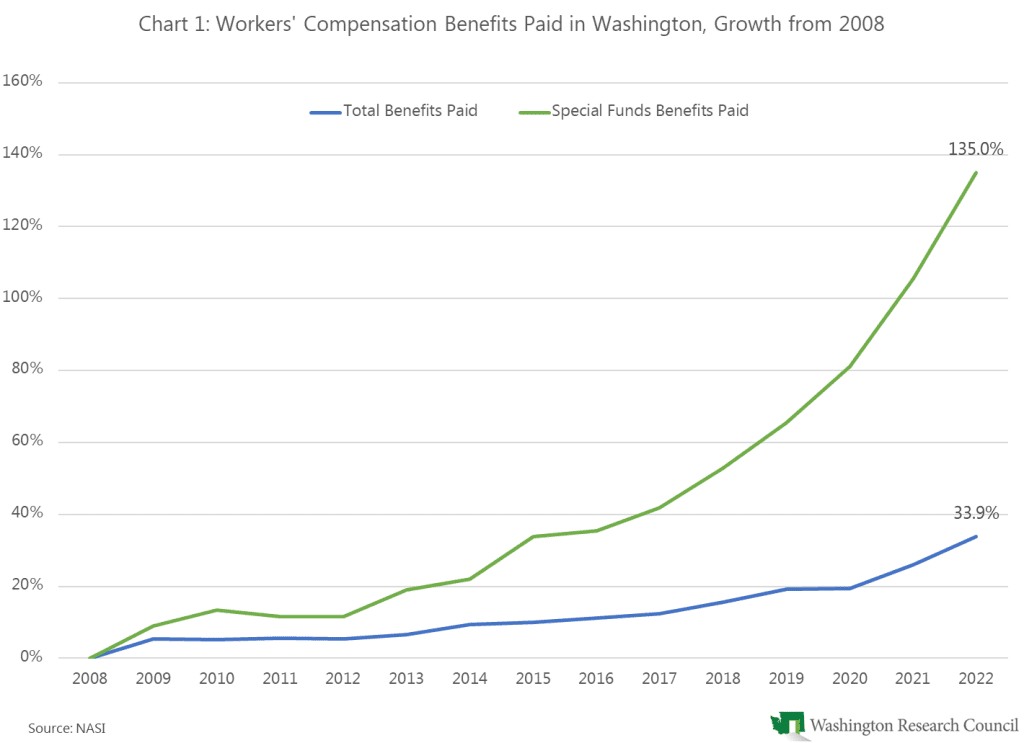
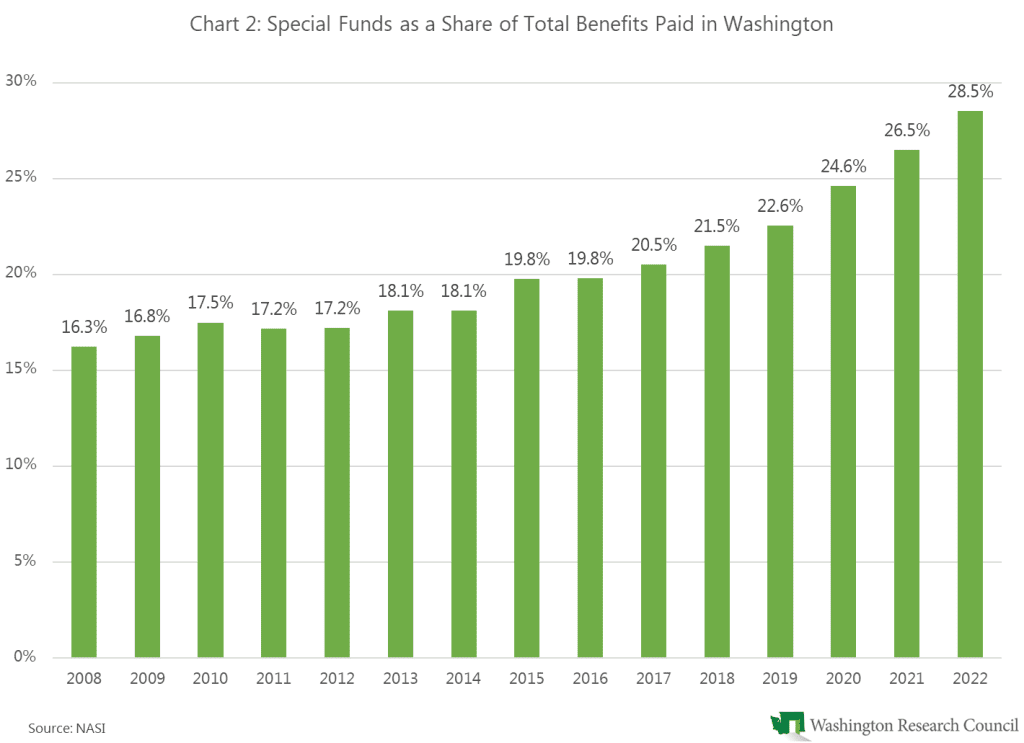
Some states use special funds to administer benefits to certain types of workers; these special funds are a component of total benefit costs. Washington’s supplemental pension fund is accounted for by NASI as a special fund. It provides cost-of-living adjustments (COLAs) for pensions and long-term time-loss benefits. According to NASI, from 2008 to 2022, total benefits paid in Washington increased by 33.9% but special fund benefits grew by 135.0%. (See Chart 1. Note that as part of workers’ compensation reforms made in 2011, the COLAs were suspended for FY 2012.) Special fund benefits as a share of total benefits paid in Washington have increased from 16.3% in 2008 to 28.5% in 2022. (See Chart 2.)
The COLAs are determined by the state average wage. The Department of Labor & Industries (L&I) announced this month that workers’ compensation time-loss and pension payments will increase by 6.8% due to the increase in the state average wage.
Additionally, last month, the Oregon Department of Consumer and Business Services released its 2024 workers’ compensation premium rate ranking study. It finds that Washington’s premium rates are the 12th highest in the country (up from 24th highest in 2022). Further, according to the report, Washington was one of only two states in which payroll-weighted industry rates increased from 2022 to 2024. (The Oregon study is often cited in cost discussions, but we do not consider it to be the best measure of Washington’s workers’ compensation system costs, as outlined in this report.)
Average workers’ compensation rates in Washington increased by 3.8% on Jan. 1, 2025. However, as I noted when the rates were proposed, the break-even average rate increase was 5.5%. L&I implemented lower average rates by tapping reserves; this policy understates the true cost of the system.
Categories: Employment Policy.Tags: workers' compensation