3:44 pm
February 6, 2026
The Department of Revenue (DOR) has now published a fiscal note for the income tax bill.
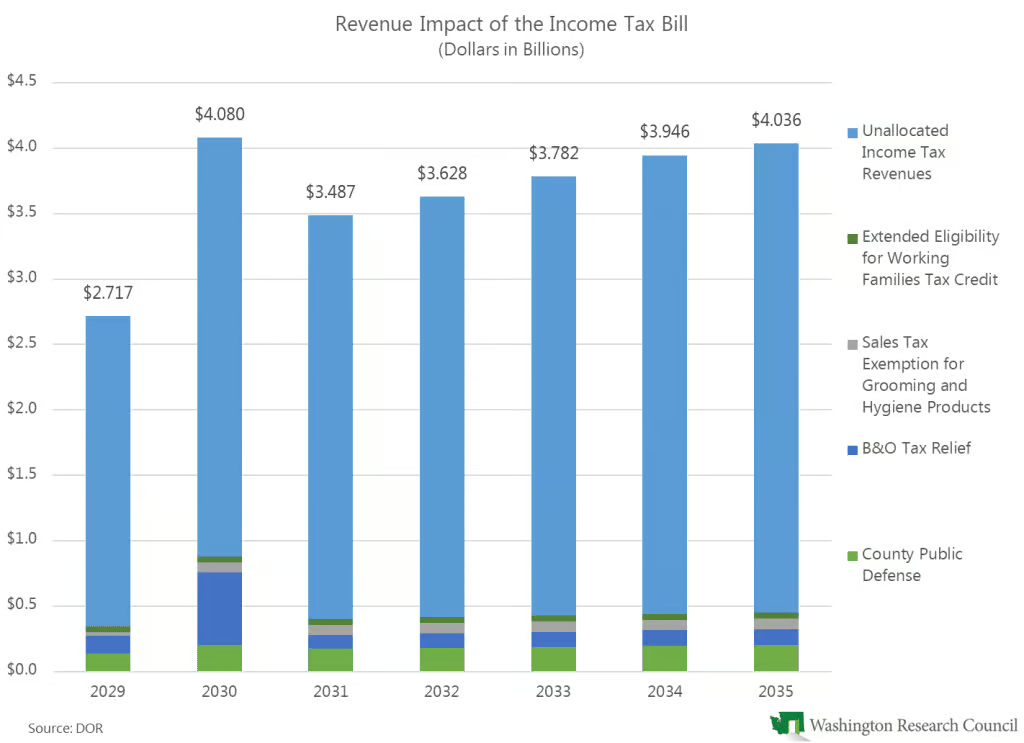
According to DOR, the income tax would increase revenues by $2.717 billion in fiscal year 2029, $4.080 billion in 2030, and $3.487 billion in 2031. A small portion of these revenues would be allocated by the bill to specific purposes:
- The bill would reduce business and occupation (B&O) taxes for small businesses and sunset a temporary B&O tax surcharge a year early. These provisions would reduce revenues by $137.1 million in 2029, $555.3 million in 2030, and $108.3 million in 2031.
- The bill would exempt certain grooming and hygiene products from sales and use tax. This would reduce revenues by $31.2 million in 2029, $76.2 million in 2030, and $77.4 million in 2031.
- The bill would extend eligibility for the Working Families Tax Credit. This would increase spending on remittances by $44.0 million each year. (Note that when the program began, the state decided to account for the Working Families Tax Credit as spending instead of revenues, so the fiscal note includes this change to remittances as part of the expenditures necessary to implement the bill.)
- The bill would dedicate the first 5% of income tax revenues to county public defense. This would total $135.9 million in 2029, $204.0 million in 2030, and $174.4 million in 2031.
All told, the allocated uses of the revenues would account for 7.8% of income tax revenues in 2029, 16.6% in 2030, and 6.6% in 2031. (In each year thereafter, the percentage allocated to specific purposes would decline.) The rest of the revenues would go to the general fund–state and could be used for any purpose.
DOR estimates that the bill would affect 30,000 individuals. The fiscal note assumes, “In response to the new tax, affected taxpayers do not reduce taxable income.”
On net, the bill would increase revenues to funds subject to the outlook by 6.0% in 2029, compared to the current forecast for that year.