2:11 pm
December 3, 2019
Qualified health plan (QHP) enrollment through the Washington Health Benefit Exchange is down for the first time (year over year), according to the Exchange’s Spring 2019 enrollment report. (The Fall report has not yet been released.)

In February 2019, total QHP enrollment was 196,328. That’s down from 212,736 in February 2018. Additionally, the number of non-subsidized enrollees (68,029) has dropped below the 2017 level. (Non-subsidized enrollees now make up 34.7 percent of total QHP enrollments.) New QHP enrollments (as opposed to returning customers) are down too—especially in the non-subsidized category, but also in the subsidized category (the table below is from the Exchange). (Note that the individual mandate to have health insurance was repealed as part of the Tax Cuts and Jobs Act in 2017, effective Jan. 1, 2019.)

The average QHP monthly premium cost for non-subsidized enrollees increased by $56 over 2018 and by $175 over 2017. (Meanwhile, the average QHP monthly premium cost for subsidized enrollees decreased by $11 over 2018 and by $18 over 2017.) Non-subsidized enrollees pay up to 32 percent of their incomes on premiums, and 57,979 enrollees have deductibles over $9,000.
The decrease in QHP enrollment is not unique to Washington. The Centers for Medicare & Medicaid Services (CMS) reported this summer that unsubsidized national enrollment declined by 40 percent from 2016 to 2018. Further, nationally, “The gap between subsidized and unsubsidized average monthly enrollment in the individual market has grown larger since 2014.”
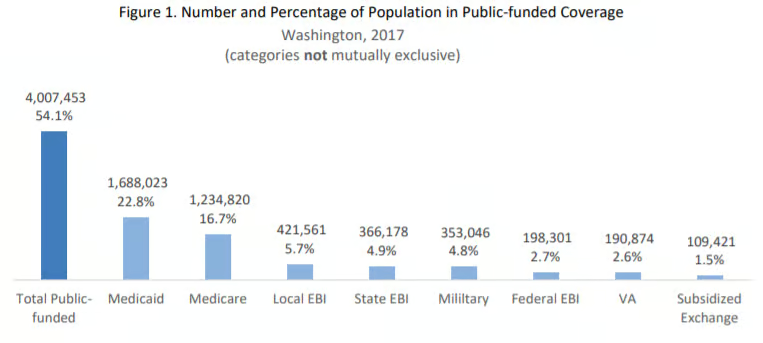
Finally, the Office of Financial Management (OFM) published a research brief this summer on publicly funded health coverage in Washington. It found, “In 2017, there were 54.1 percent or four million of Washington’s population having public-funded coverage.” (OFM includes Medicare, Medicaid, subsidized coverage through the Exchange, coverage by the military and Veterans Affairs, and health insurance for government employees as public-funded health coverage.) Of the population with public-funded coverage, 22.8 percent was covered by Medicaid and 1.5 percent had subsidized coverage on the Exchange. (The chart below is from OFM.)